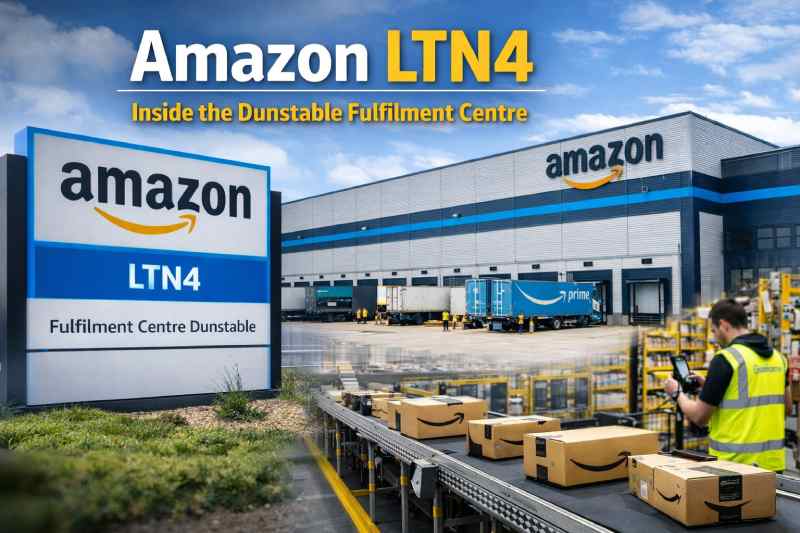
Amazon Ltn4 is one of the most important fulfilment centres in the United Kingdom, playing a central role in how millions of parcels reach customers every year. Located in Dunstable, Bedfordshire, this large-scale logistics hub forms part of Amazon’s sophisticated distribution network. While many customers may only notice the speed of their deliveries, behind the scenes facilities like Amazon Ltn4 operate around the clock to ensure efficiency, accuracy, and reliability.
From receiving inventory and managing stock to picking, packing and dispatching orders, the centre represents modern logistics at scale. It also provides significant employment opportunities within the local area and contributes to the broader regional economy.
Location and Strategic Importance
Situated in Dunstable, close to the M1 motorway and within reach of Luton Airport, Amazon Ltn4 benefits from excellent transport links. This strategic location allows for efficient distribution across London, the Midlands, and other major regions of England.
Proximity to key road networks reduces transit times and supports next-day and same-day delivery services. The logistics positioning is no accident; Amazon’s site selection is based on data-driven modelling that prioritises speed, scalability, and connectivity.
The centre also serves as a critical link in Amazon’s wider European supply chain. Inventory can flow between multiple fulfilment centres depending on demand patterns, seasonal trends, and stock availability.
What Happens Inside the Facility?
Receiving and Inventory Management
When goods arrive at the centre, they are checked, scanned, and logged into Amazon’s system. Products may come directly from manufacturers, distributors, or third-party sellers using Fulfilment by Amazon (FBA).
Every item is assigned a unique barcode, allowing it to be tracked at every stage. Advanced inventory systems ensure that stock is stored efficiently and can be retrieved quickly when an order is placed.
Robotic Assistance and Automation
One of the defining features of Amazon Ltn4 is its use of robotics and automation. Autonomous mobile robots move shelving units across the warehouse floor, bringing products directly to human associates. This reduces walking distances and increases picking speed.
Automation does not eliminate human roles; instead, it enhances productivity. Employees oversee processes, perform quality checks, and manage complex tasks that require judgement and precision.
Picking, Packing and Dispatch
Once a customer places an order, the system identifies the item’s location. Staff retrieve the product, verify its accuracy, and send it to the packing area. Packaging is selected based on size and weight to minimise waste while protecting the item.
After packing, parcels are labelled and sorted by destination. From there, they are transferred to delivery stations or partner carriers who complete the final stage of the journey.
The Role of Amazon Ltn4 in UK E-Commerce
The rapid growth of online shopping in the UK has placed enormous pressure on fulfilment infrastructure. Consumers now expect faster deliveries, real-time tracking, and seamless returns.
Amazon Ltn4 supports these expectations by handling high order volumes with remarkable precision. During peak seasons such as Black Friday and Christmas, the centre significantly scales up operations. Additional temporary staff are hired, and shifts may be extended to meet demand.
For third-party sellers, the centre is particularly important. Businesses that use FBA can store their products at Amazon Ltn4, allowing Amazon to handle customer service, shipping, and returns. This service enables small and medium-sized enterprises to compete nationally without building their own logistics network.
Employment and Workforce Culture
Job Opportunities
The facility employs hundreds, sometimes thousands, of workers across various roles. Positions range from warehouse associates and team leaders to engineers, HR professionals, and safety specialists.
Many roles do not require prior experience in logistics. Amazon provides on-the-job training and structured onboarding programmes.
Working Environment
The working environment combines technology-driven processes with clear performance metrics. Employees are trained to follow safety guidelines strictly, and modern fulfilment centres are designed with ergonomics in mind.
There are rest areas, break rooms, and support systems in place. Shifts may include days, nights, or weekends, reflecting the 24-hour nature of e-commerce fulfilment.
Career Development
Amazon promotes internal progression, and many employees begin in entry-level roles before advancing into management or specialist positions. Skills developed at Amazon Ltn4 include teamwork, process optimisation, inventory management, and data-driven decision-making.
Technology and Innovation
The centre relies on a sophisticated digital backbone. Every product movement is recorded, and predictive algorithms help forecast demand.
Machine learning systems analyse purchasing trends to determine optimal stock levels. If an item begins trending in a particular region, inventory can be reallocated accordingly.
Barcode scanning, handheld devices, automated sorting systems, and robotics all work together in a coordinated ecosystem. This integration reduces human error and enhances customer satisfaction.
Environmental and Sustainability Considerations
Sustainability has become increasingly important within the logistics industry. Facilities like Amazon Ltn4 are designed to improve energy efficiency and reduce waste.
Efforts may include:
- Energy-efficient lighting systems
- Recycling programmes
- Optimised packaging to reduce excess materials
- Route planning to minimise fuel consumption
Although logistics operations inevitably involve transportation emissions, technological improvements and operational efficiencies contribute to lowering the environmental footprint over time.
Safety Standards and Compliance
Health and safety regulations in the UK are stringent, and large fulfilment centres must comply with national standards.
Employees receive safety training covering equipment use, lifting techniques, emergency procedures, and hazard awareness. Automated systems also reduce risks by minimising unnecessary manual movement.
Regular inspections and audits ensure compliance with workplace safety requirements.
Economic Impact on Dunstable and Bedfordshire
The presence of Amazon Ltn4 has had a measurable economic impact on the surrounding area. Large fulfilment centres generate direct employment and stimulate secondary economic activity.
Local suppliers, maintenance contractors, catering services, and transport providers often benefit indirectly. Increased employment can lead to higher local spending, supporting shops and service providers in the region.
Infrastructure investment linked to logistics hubs may also improve roads and transport connectivity.
Challenges and Public Perception
Like many large-scale distribution centres, Amazon Ltn4 operates within a competitive and high-pressure environment. Public discussions sometimes focus on working conditions, performance targets, or the broader implications of e-commerce dominance.
However, the facility also represents innovation in logistics, job creation, and technological advancement. The conversation surrounding modern fulfilment centres reflects the evolving relationship between technology, labour, and consumer expectations.
Understanding both the operational strengths and public concerns provides a balanced perspective.
The Future of Fulfilment Centres in the UK
As online shopping continues to expand, fulfilment centres will likely become even more advanced. Robotics, artificial intelligence, and predictive analytics will further streamline operations.
Facilities such as Amazon Ltn4 may adopt additional automation layers, including more sophisticated sorting systems and improved energy management solutions.
The integration of electric delivery fleets and carbon-reduction initiatives may also shape the next generation of logistics infrastructure.
Ultimately, customer expectations will continue to drive innovation. Faster delivery windows, precise tracking, and frictionless returns will require fulfilment centres to remain highly adaptable.
FAQs
Where is Amazon Ltn4 located?
It is located in Dunstable, Bedfordshire, with strong road links to major UK transport routes including the M1 motorway.
What type of work is available at the site?
Roles include warehouse associates, team leaders, engineers, HR staff, and operational managers, among others.
Does the centre handle third-party seller inventory?
Yes, it supports Fulfilment by Amazon services, allowing sellers to store stock and have Amazon manage shipping and returns.
Is the facility automated?
The site uses advanced robotics and automated systems alongside human employees to maximise efficiency.
How does it impact local communities?
It provides employment opportunities, supports regional suppliers, and contributes to the local economy.
Conclusion
Amazon Ltn4 stands as a powerful example of modern logistics in action. From its strategic location in Dunstable to its integration of robotics and digital systems, the facility plays a vital role in keeping the UK’s e-commerce ecosystem moving smoothly.
Behind every rapid delivery is a complex network of technology, skilled workers, and carefully coordinated processes. As consumer expectations continue to evolve, facilities like this will remain central to meeting demand with speed, precision, and scale.