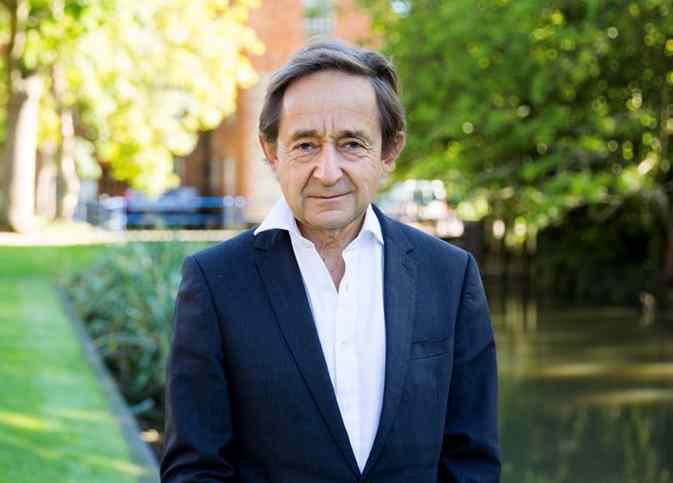
Anthony Seldon stands as one of Britain’s most influential contemporary historians and educational reformers. Over several decades, he has combined scholarship, leadership and public engagement to shape debates about politics, schooling and national identity. Known for his authoritative biographies of modern Prime Ministers and his bold approach to educational reform, Anthony Seldon has built a reputation that bridges academia and public life.
Early Life and Academic Foundations
Born in 1953, Anthony Seldon was educated at some of the country’s leading institutions before reading Politics, Philosophy and Economics at Worcester College, Oxford. His interest in political history developed early, shaped by a desire to understand not just events, but the personalities and decisions that define leadership.
He later completed a doctorate at the London School of Economics and gained a PGCE from King’s College London. This dual foundation in research and teaching would become central to his career. While many historians remain within universities, Anthony Seldon consistently sought to connect academic insight with classroom practice and institutional reform.
His early academic work focused on contemporary British political history, a field that demands careful judgement, access to sources, and a willingness to analyse leaders who remain within living memory.
A Distinguished Career in Education
Headship at Brighton College
One of the defining phases of his professional life began when he became Head Master of Brighton College. During his tenure, the school experienced significant academic and reputational growth. He championed pastoral care, broad intellectual development and a forward-looking curriculum.
Anthony Seldon emphasised that schools should educate the whole person, not merely prepare pupils for examinations. Under his leadership, Brighton College gained recognition for both academic results and innovation.
Transforming Wellington College
In 2006, he became Master of Wellington College. This period marked one of the most transformative chapters in his career. He introduced a pioneering well-being curriculum, integrating happiness, resilience and character education into mainstream schooling.
His work at Wellington College helped establish the International Positive Education Network (IPEN), which promotes well-being and character education globally. Through conferences, research partnerships and international collaboration, the school became a centre for progressive educational thinking.
Anthony Seldon argued that mental health, character and purpose are as important as academic attainment. This perspective placed him at the forefront of a broader conversation about how education should evolve in the twenty-first century.
University Leadership
Between 2015 and 2020, he served as Vice-Chancellor of the University of Buckingham. In higher education, he continued to advocate academic freedom, rigorous standards and innovation. His leadership focused on strengthening research output while preserving the institution’s distinctive independence.
Later, he returned to Wellington College in a strategic educational role, further demonstrating his enduring commitment to school leadership and system-wide reform.
Anthony Seldon as a Contemporary Historian
Beyond school leadership, Anthony Seldon is widely recognised for his work as a historian of modern British politics. He has written or edited more than fifty books, many of them detailed studies of Prime Ministers and key political periods.
The “At 10” Prime Ministerial Series
Perhaps his most famous contributions are the “At 10” biographies, which examine Prime Ministers during their time in office. These works analyse leadership style, cabinet dynamics, policy decisions and political context.
His studies of figures such as John Major, Tony Blair, David Cameron, Theresa May, Boris Johnson and Liz Truss have become important reference texts. By writing close to events, he captures immediacy while still applying scholarly discipline.
Anthony Seldon approaches political biography with balance. Rather than partisan judgement, he focuses on structure, decision-making and personal character. This method has earned respect across political divides.
Understanding Leadership
A recurring theme in his writing is leadership under pressure. He explores how individuals respond to crises, how institutions constrain power, and how personality shapes policy outcomes.
Anthony Seldon often examines the psychological dimension of leadership, recognising that politics is not purely ideological but deeply human. This approach makes his books accessible to both academic and general audiences.
Educational Philosophy and Reform
Well-Being in Schools
One of his most distinctive contributions has been the integration of well-being into formal education. He believes that schools should nurture resilience, empathy and ethical awareness alongside intellectual achievement.
Anthony Seldon has argued that modern pressures, including social media and academic competition, demand a more holistic educational model. By embedding character education into the curriculum, he sought to equip students with tools for life, not simply examination success.
Technology and Artificial Intelligence
In recent years, he has spoken about the transformative potential of artificial intelligence in education. Rather than fearing technological change, he advocates thoughtful integration, where AI supports personalised learning while teachers retain moral and pastoral leadership.
Anthony Seldon predicts that AI will reshape assessment, curriculum design and classroom dynamics. However, he consistently emphasises that human connection remains irreplaceable.
Bridging State and Independent Education
He has also been active in building partnerships between independent and state schools. By supporting academies and collaborative networks, he aims to reduce inequality and share best practice across sectors.
This commitment reflects a broader vision of national education reform rather than isolated institutional success.
Public Engagement and Media Presence
Anthony Seldon is not confined to lecture halls or school assemblies. He frequently contributes to national newspapers, radio programmes and television debates. His commentary often addresses political leadership, education policy and cultural change.
He has served as an honorary historical adviser to Downing Street and has been involved in organisations promoting happiness and social well-being. Through these roles, he brings historical perspective to contemporary challenges.
His public voice combines academic authority with clarity. He explains complex political developments in accessible language, helping wider audiences understand leadership and governance.
Honours and Recognition
In 2014, he was knighted for services to education and history. This recognition reflected decades of contribution across multiple domains.
Anthony Seldon has received honorary degrees and holds fellowships in several institutions. However, beyond formal honours, his influence is measured by the number of schools adopting well-being programmes, readers engaging with his political histories, and students shaped by his leadership.
Criticism and Debate
No public intellectual escapes scrutiny. Some critics argue that writing contemporary political history risks insufficient distance from events. Others question aspects of education reform, particularly the balance between well-being and academic rigour.
Anthony Seldon has responded to such debates with openness. He acknowledges that education and politics are contested fields, yet maintains that reform requires courage and experimentation.
Rather than retreating from criticism, he engages in discussion, reinforcing his role as an active participant in national dialogue.
The Broader Impact on British Society
The significance of Anthony Seldon lies not merely in his positions held or books written, but in the connections he has forged between ideas and institutions.
He has helped reshape how schools think about character education. He has documented the evolution of British leadership at close quarters. He has encouraged public conversation about the purpose of education in a rapidly changing world.
In combining scholarship with leadership, Anthony Seldon exemplifies the engaged intellectual tradition. He operates where history, policy and practice intersect.
FAQs
What is Anthony Seldon best known for?
He is best known for his biographies of modern British Prime Ministers and his leadership roles at Brighton College and Wellington College.
Has Anthony Seldon influenced education policy?
Yes, particularly through his promotion of well-being and character education within schools and through international networks.
Did Anthony Seldon serve as a university leader?
He served as Vice-Chancellor of the University of Buckingham from 2015 to 2020, contributing to academic development and institutional growth.
What makes his political biographies distinctive?
They focus on leadership psychology, decision-making under pressure and close analysis of time in office.
Why is Anthony Seldon considered influential?
Because he bridges historical scholarship and practical education reform, shaping debate in both fields.
Conclusion
Anthony Seldon has built a career that defies narrow categorisation. Historian, headmaster, reformer and commentator, he has shaped conversations about leadership and learning across Britain.
Through detailed political biographies, he has documented the character and challenges of modern Prime Ministers. Through school and university leadership, he has reimagined how education can support intellectual and personal growth.