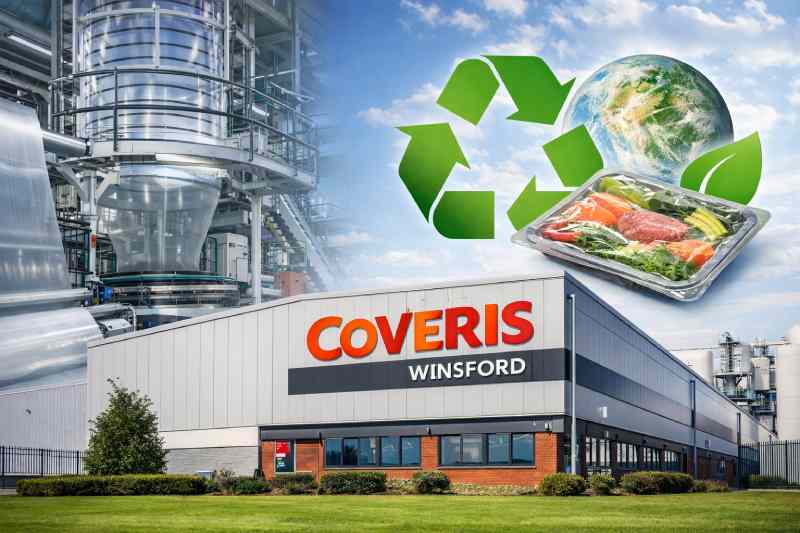
Coveris Winsford stands as one of the United Kingdom’s most important flexible packaging manufacturing facilities, playing a central role in the production of high-performance, recyclable films for food and industrial markets. Located in Cheshire, this site represents a significant investment in British manufacturing, sustainability, and technical innovation. Over recent years, Coveris Winsford has expanded its capabilities, strengthened its environmental commitments, and reinforced its position as a strategic hub within the wider Coveris network.
The Background of Coveris in the UK
Coveris is a European packaging manufacturer specialising in flexible and rigid packaging solutions across food, medical, industrial, agricultural, and consumer markets. The company operates multiple production sites across the continent, with the UK forming a crucial part of its operational footprint.
Within this network, Coveris Winsford has developed into a centre of excellence for technical films and sustainable packaging innovation. Its growth reflects broader industry trends: increasing demand for recyclable materials, stricter environmental regulations, and heightened expectations from retailers and consumers regarding packaging performance and environmental impact.
Location and Strategic Importance
Winsford Industrial Estate
The site is situated within Winsford Industrial Estate in Cheshire, a well-established manufacturing zone with strong transport links. Proximity to motorway networks and distribution corridors enables efficient logistics across the UK and into mainland Europe.
This strategic location supports rapid supply chain movements, a critical factor for food producers and retailers who require dependable delivery schedules. The positioning of Coveris Winsford within this industrial cluster also encourages collaboration with suppliers, technical partners, and local services.
Contribution to the Regional Economy
The facility provides employment to a significant workforce in the Cheshire area. Skilled roles range from extrusion technicians and quality assurance specialists to engineers, product developers, and sustainability experts. Through long-term investment in equipment and staff development, Coveris Winsford contributes directly to the resilience of regional manufacturing.
The presence of a major packaging plant also supports secondary economic activity, including logistics providers, maintenance contractors, and recycling operators.
Core Manufacturing Capabilities
Advanced Film Extrusion
At the heart of operations is blown polyethylene film extrusion. This process involves melting polymer resin and forming it into thin films used for packaging applications. Precision control over thickness, strength, clarity, and barrier properties ensures that films meet strict performance standards.
Coveris Winsford specialises in high-performance technical films, many of which are designed for demanding food packaging uses. These films must maintain freshness, protect against contamination, and withstand transportation stresses.
Conversion and Finishing
In addition to extrusion, the facility carries out conversion processes such as printing, laminating, and sealing. These finishing steps allow packaging to meet brand requirements while retaining functional integrity.
Retailers increasingly require packaging that not only performs technically but also communicates environmental credentials. As such, conversion processes are closely aligned with sustainability objectives, ensuring compatibility with recycling systems.
Vacuum Skin Packaging (VSP)
One of the most notable developments has been investment in vacuum skin packaging technology. VSP solutions extend the shelf life of fresh meat, fish, and ready meals by tightly sealing the product to a base film under vacuum.
This innovation reduces food waste, enhances product presentation, and improves transport efficiency. By integrating advanced VSP production, Coveris Winsford has strengthened its offering to UK food producers seeking premium packaging solutions.
Commitment to Sustainability
The “No Waste” Vision
Sustainability is not treated as a marketing slogan but as a structural objective. The broader corporate strategy focuses on eliminating waste throughout the packaging lifecycle. This includes designing products that are recyclable, reducing material usage, and incorporating recycled content where possible.
At site level, Coveris Winsford actively supports these objectives through process optimisation, waste reduction initiatives, and energy efficiency improvements.
Recyclable Mono-Material Films
One of the major shifts in packaging design involves moving away from multi-layer materials that are difficult to recycle. Instead, mono-material polyethylene films can be recycled within existing streams.
The engineering teams at Coveris Winsford have developed technical film structures that retain strength and barrier performance while remaining recyclable. This approach aligns with UK Extended Producer Responsibility (EPR) reforms and retailer sustainability commitments.
Internal Recycling and Waste Management
Manufacturing waste is carefully managed. Scrap material generated during production is often reprocessed internally where feasible. Energy usage is monitored closely, with ongoing investment in efficiency improvements.
By integrating environmental management into daily operations, Coveris Winsford reduces both operational costs and environmental impact.
Technological Investment and Innovation
Continuous Capital Investment
The packaging sector is highly competitive, requiring constant innovation. Over recent years, significant capital investment has been directed towards upgrading extrusion lines, expanding technical capacity, and installing modern quality control systems.
These investments allow for tighter tolerances, improved film consistency, and enhanced traceability. Such capabilities are particularly important for food packaging, where compliance with hygiene and safety standards is paramount.
Research and Development
Innovation does not happen by accident. Dedicated technical teams work on material development, product testing, and process optimisation. New film formulations are trialled to improve recyclability, reduce gauge thickness, and enhance mechanical strength.
The site’s technical expertise positions Coveris Winsford as more than a manufacturing unit; it functions as a development centre contributing to next-generation packaging solutions.
Quality Assurance and Compliance
Food Safety Standards
Food packaging manufacturers must comply with stringent UK and European regulations. Quality management systems ensure that raw materials, processing conditions, and finished products meet required standards.
Routine testing for seal strength, puncture resistance, oxygen transmission, and clarity ensures consistency. Traceability systems enable rapid identification of production batches should issues arise.
Certification and Audits
Regular audits and certifications underpin operational credibility. Compliance with recognised food safety standards reassures clients that packaging meets both legal and commercial expectations.
Through disciplined quality systems, Coveris Winsford maintains strong relationships with major food producers and retailers.
Employment and Skills Development
Skilled Workforce
Modern film extrusion is technologically complex. Operators require training in machine control, polymer behaviour, and safety procedures. Engineering teams must manage maintenance schedules and implement process improvements.
The company invests in apprenticeships and training schemes, enabling new entrants to build long-term careers in advanced manufacturing.
Workplace Culture
Manufacturing today demands collaboration across departments. Production, maintenance, quality, and logistics teams must work in synchronisation. The culture at Coveris Winsford emphasises safety, continuous improvement, and accountability.
This structured approach reduces downtime, enhances productivity, and fosters professional development.
Role in the UK Packaging Landscape
Supporting British Food Producers
The UK food sector depends heavily on reliable packaging supply. Delays or inconsistencies can disrupt supermarket shelves nationwide.
By providing locally manufactured film solutions, Coveris Winsford reduces dependency on overseas imports and shortens supply chains. This resilience became particularly important during periods of global disruption.
Responding to Regulatory Change
Environmental regulation continues to reshape packaging design. Plastic packaging taxes, recycling targets, and carbon reduction policies influence purchasing decisions.
The ability of Coveris Winsford to adapt its product portfolio to regulatory shifts gives clients confidence that their packaging remains compliant and future-proof.
Industry Challenges and Adaptation
Raw Material Volatility
Polymer prices fluctuate based on global oil markets and supply constraints. Managing cost pressures while maintaining product quality requires strategic procurement and efficiency improvements.
Operational discipline at Coveris Winsford helps mitigate these risks through process optimisation and waste minimisation.
Public Perception of Plastics
Plastic packaging faces scrutiny from environmental campaigners. While flexible plastics can reduce food waste and improve logistics efficiency, public debate often overlooks these benefits.
Through innovation in recyclability and material reduction, Coveris Winsford contributes to reshaping perceptions of flexible packaging as part of a circular economy rather than a linear waste problem.
Future Outlook
The future of packaging lies in circularity, material efficiency, and data-driven manufacturing. Automation, digital monitoring, and advanced material science will continue to influence production processes.
As sustainability standards tighten and retailer expectations evolve, facilities like Coveris Winsford are likely to expand their technical scope further. Investment in recyclable films, lightweight materials, and low-carbon production methods will define the next phase of growth.
The combination of strategic location, technical expertise, and sustainability focus positions the site strongly within the UK manufacturing sector.
FAQs
What does Coveris Winsford manufacture?
The facility manufactures high-performance polyethylene films used in food and industrial packaging, including recyclable mono-material solutions and vacuum skin packaging films.
Where is Coveris Winsford located?
It is based in Winsford, Cheshire, within the Winsford Industrial Estate, offering strong transport links across the UK.
Is Coveris Winsford focused on sustainable packaging?
Yes. A major focus is on recyclable films, waste reduction, and supporting circular economy objectives within the packaging industry.
Does Coveris Winsford supply the food sector?
Yes. Many of its products are designed specifically for fresh food packaging, helping extend shelf life and maintain safety standards.
Does the site offer employment opportunities?
The facility provides roles in manufacturing, engineering, quality assurance, and technical development, often supporting apprenticeships and training initiatives.
Conclusion
Coveris Winsford represents a significant example of modern British manufacturing in action. Through advanced extrusion technology, continuous capital investment, and a firm commitment to sustainability, the site plays a vital role in supplying recyclable, high-performance packaging to the UK market.
Its strategic location in Cheshire, skilled workforce, and focus on innovation ensure it remains competitive within a challenging global industry. As environmental expectations rise and regulatory frameworks evolve, Coveris Winsford is well positioned to contribute to a more sustainable and resilient packaging future in the United Kingdom.