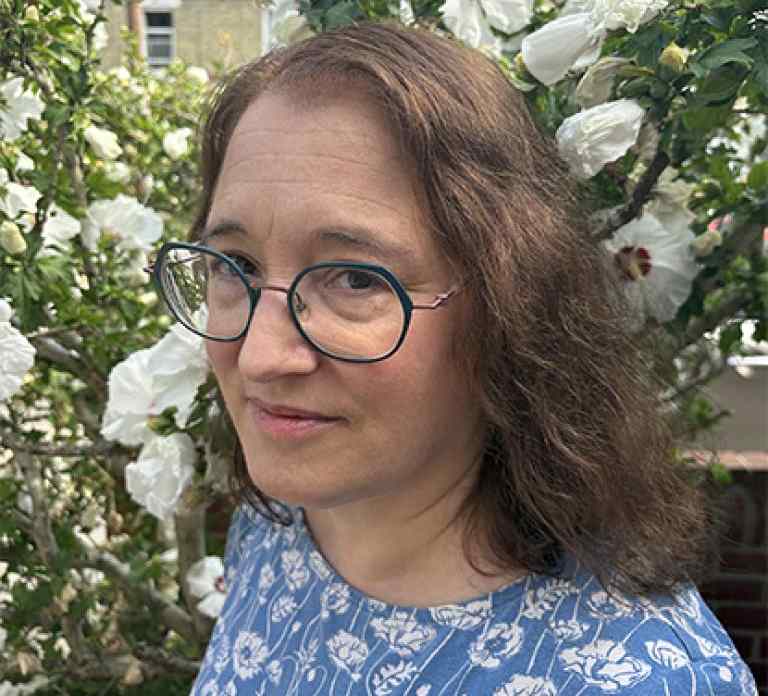
Joanne Limburg is a distinctive and influential voice in contemporary British literature, known for her ability to weave intellect, emotional honesty, and lyrical precision into poetry, memoir, and fiction. Her work stands out for its depth of thought and fearless engagement with subjects that many writers approach cautiously, including mental health, neurodiversity, grief, feminism, and identity. Through carefully crafted language and a reflective narrative style, she has built a body of work that resonates with readers seeking literature that is both challenging and deeply humane.
Early Life and Academic Background
Joanne Limburg was born in London in 1970 and grew up in an environment shaped by books, ideas, and curiosity. From an early age, she demonstrated a strong inclination towards language and reflective thinking, qualities that would later become central to her writing style. Her formative years laid the groundwork for a literary career rooted in careful observation and intellectual engagement.
She went on to study Philosophy at the University of Cambridge, an academic background that has had a lasting impact on her work. Philosophy trained her to question assumptions, examine thought processes, and explore the nature of selfhood and perception. These elements frequently surface in her poetry and prose, where internal dialogue and reflection are often as important as external events.
In addition to philosophy, joanne limburg pursued advanced studies in psychoanalytic theory and creative writing, eventually completing a PhD in Creative Writing. This combination of disciplines gave her a rare blend of analytical rigour and artistic sensitivity, enabling her to write with both emotional openness and conceptual clarity.
Entry into the Literary World
Joanne Limburg first gained significant attention with the publication of her debut poetry collection, which immediately marked her as a writer of unusual originality. Her early work displayed a confident command of language and a willingness to explore complex emotional landscapes without simplification.
From the outset, her poetry was recognised for its intelligence and formal control. Critics noted her ability to balance humour and seriousness, intimacy and detachment, often within the same poem. This duality would become a defining feature of her writing across genres.
As her career progressed, joanne limburg expanded beyond poetry into memoir and fiction, demonstrating a versatility that few writers manage with such consistency. Each genre allowed her to approach similar themes from different angles, enriching her overall body of work.
Poetry as a Foundation
Early Poetry Collections
Poetry remains the foundation of joanne limburg’s literary identity. Her early collections established her reputation for precise language and emotionally charged imagery. Rather than relying on overt sentiment, she often uses understatement and irony to convey feeling, trusting the reader to engage actively with the text.
Her poems frequently examine the act of thinking itself, capturing moments of hesitation, doubt, and insight. This meta-awareness gives her poetry a reflective quality that appeals to readers interested in the inner workings of the mind.
Later Developments in Style
In later collections, joanne limburg’s poetry became increasingly concerned with neurodiversity and difference. These works explore what it means to experience the world in ways that do not always align with social expectations. The poems are neither explanatory nor defensive; instead, they invite readers into a perspective shaped by heightened awareness and sensitivity.
Her poetic voice matured into one that is confident yet vulnerable, capable of addressing difficult subjects without losing musicality or control. This balance has helped her poetry reach audiences beyond traditional literary circles.
Memoir and Non-Fiction
Writing About Mental Health
One of the most significant aspects of joanne limburg’s career is her contribution to memoir and non-fiction, particularly her writing on mental health. Drawing on personal experience, she has written candidly about living with obsessive-compulsive disorder and anxiety, offering insight without sensationalism.
Her memoirs are notable for their refusal to simplify or romanticise mental illness. Instead, she presents it as a complex, ongoing reality that shapes thought patterns, relationships, and self-perception. This honesty has made her work valuable not only to general readers but also to those seeking understanding and representation.
Autism and Identity
In later non-fiction works, joanne limburg turned her attention to autism, particularly in women. Her writing challenges stereotypes and highlights how autism can be overlooked or misunderstood, especially in individuals who develop sophisticated coping strategies.
These books combine personal reflection with broader cultural analysis, examining how societal norms influence diagnosis, self-understanding, and acceptance. Her approach is thoughtful rather than polemical, encouraging dialogue rather than confrontation.
Fiction and Historical Imagination
Although best known for poetry and memoir, joanne limburg has also written fiction, including a historical novel set in the early eighteenth century. This work demonstrates her ability to inhabit voices and settings far removed from her own experience while maintaining psychological depth.
Her fiction is characterised by careful research, rich detail, and an interest in moral complexity. Rather than focusing on grand historical events, she often centres her narratives on personal dilemmas and emotional conflicts, allowing readers to connect with characters on an intimate level.
Teaching and Mentorship
Beyond her published work, joanne limburg has made a significant contribution to literary culture through teaching. As a creative writing tutor associated with the University of Cambridge’s Institute of Continuing Education, she has mentored aspiring writers from diverse backgrounds.
Her teaching philosophy emphasises close reading, self-awareness, and disciplined craft. Students are encouraged to understand their own thinking processes and to approach writing as a form of exploration rather than self-display. This approach reflects her own practice and has helped shape a new generation of thoughtful writers.
She has also served as a fellow and mentor through literary organisations, supporting writers at various stages of their careers. Her commitment to teaching underscores her belief in literature as a shared, evolving practice.
Themes That Define Her Work
Thought and Consciousness
A central theme in joanne limburg’s writing is the nature of thought itself. Her work often captures the constant movement of the mind, including repetition, doubt, and sudden insight. This focus makes her writing particularly resonant for readers who experience intense or intrusive thought patterns.
Feminism and the Female Experience
Feminism is another key thread in her work, though it is expressed through lived experience rather than abstract theory. She writes about the pressures placed on women to conform, to mask difference, and to perform emotional labour, offering nuanced observations grounded in personal reality.
Grief and Loss
Grief appears in several of her books, explored with sensitivity and restraint. Rather than presenting grief as a linear process, joanne limburg depicts it as something that reshapes time, memory, and identity. This approach allows readers to recognise their own experiences within her writing.
Public Recognition and Influence
Over the years, joanne limburg has received numerous accolades for her contributions to literature, including recognition from respected literary institutions. These honours reflect not only the quality of her writing but also its cultural significance.
Her work is frequently discussed in academic contexts, book groups, and mental health forums, demonstrating its wide-ranging impact. By bridging literary artistry and social relevance, she has carved out a unique position in contemporary British writing.
FAQs
Who is joanne limburg best known as?
Joanne limburg is best known as a British poet, memoirist, and novelist whose work explores mental health, neurodiversity, feminism, and identity with intellectual depth and emotional honesty.
What themes appear most often in joanne limburg’s writing?
Her writing frequently addresses thought processes, anxiety, autism, grief, and the female experience, often blending personal reflection with broader cultural insight.
Has joanne limburg written about autism?
Yes, joanne limburg has written extensively about autism, particularly focusing on late diagnosis in women and how neurodiversity shapes identity and self-understanding.
Does joanne limburg teach creative writing?
She is actively involved in teaching creative writing and has worked with the University of Cambridge’s Institute of Continuing Education, mentoring emerging writers.
Is joanne limburg’s work suitable for academic study?
Her work is widely studied in academic settings due to its thematic depth, stylistic precision, and relevance to discussions around mental health and identity.
Conclusion
Joanne limburg occupies a distinctive and important place in modern British literature. Through poetry, memoir, and fiction, she has developed a body of work that speaks with clarity, courage, and compassion. Her writing does not seek easy answers; instead, it invites readers to think more deeply about themselves and the world around them.
By combining intellectual rigour with emotional openness, joanne limburg has shown that literature can be both challenging and accessible. Her influence extends beyond the page through teaching, mentorship, and public discourse, ensuring that her contribution to contemporary culture will continue to grow. For readers seeking writing that respects complexity and honours lived experience, her work remains both relevant and profoundly rewarding.