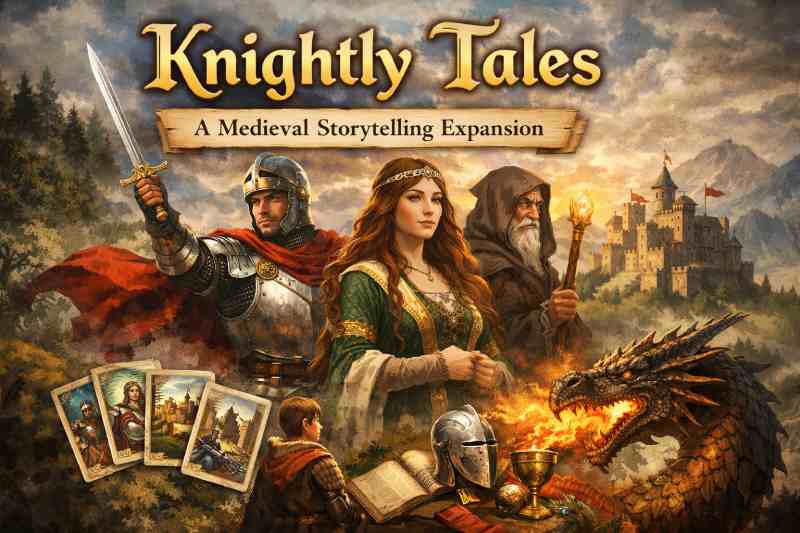
The world of collaborative storytelling games has long captured the imagination of families, friends, and fantasy enthusiasts alike. Among the most beloved expansions in this genre is Knightly Tales, a richly themed addition that brings medieval adventure, gallant heroes, and chivalric drama into the heart of interactive play. Designed to enhance the experience of the classic storytelling card game Once Upon a Time, this expansion allows players to craft stories filled with daring quests, noble knights, mysterious castles, and dramatic endings.
The Origins of Knightly Tales
Storytelling has always been a central part of British and European culture. From Arthurian legends to medieval romances, tales of bravery and honour have shaped literature for centuries. The expansion known as Knightly Tales draws heavily from this tradition, transforming it into a modern tabletop experience.
Created as a thematic extension to Once Upon a Time, this expansion focuses on medieval motifs. Rather than functioning as a standalone game, it integrates seamlessly into the base set, enriching the narrative possibilities available to players.
By adding a carefully curated collection of themed cards, the expansion encourages storytellers to weave narratives inspired by chivalry, courage, loyalty, betrayal, and heroic sacrifice.
What Is Knightly Tales?
At its core, Knightly Tales is a deck expansion that enhances collaborative storytelling through medieval imagery and narrative prompts. It introduces new characters, places, objects, and events that guide players toward knightly adventures.
Card Breakdown
The expansion typically includes 55 additional cards divided into several categories:
- Character cards featuring knights, squires, lords, and other medieval figures
- Place cards depicting castles, forests, towers, and battlegrounds
- Event cards that trigger duels, rescues, feasts, or royal decrees
- Thing cards representing swords, banners, steeds, and magical relics
- Aspect cards highlighting qualities such as bravery, wounded pride, or loyalty
- Ending cards that offer new medieval-themed story conclusions
These additions allow storytellers to build more focused narratives steeped in medieval atmosphere.
How Knightly Tales Enhances Gameplay
The beauty of Knightly Tales lies in how effortlessly it integrates into the base game. Players shuffle the expansion cards into their existing deck, immediately expanding their narrative toolkit.
Strengthening Thematic Direction
One of the challenges in open storytelling games is maintaining thematic cohesion. This expansion subtly guides stories towards medieval adventures without restricting creativity. If a player introduces a knight or enchanted castle, the rest of the group naturally follows the tone.
Encouraging Dramatic Conflict
Medieval settings are fertile ground for tension. Duels, rivalries, quests, and moral dilemmas create built-in drama. The expansion’s cards often prompt high-stakes situations that lead to memorable storytelling moments.
Fresh Endings
The addition of themed ending cards ensures that stories conclude in satisfying, era-appropriate ways. Rather than modern fairy-tale resolutions, players might steer towards royal marriages, restored honour, or victorious tournaments.
Why Medieval Themes Resonate So Strongly
The success of Knightly Tales is rooted in the timeless appeal of medieval storytelling. In the UK especially, tales of knights and castles hold deep cultural significance.
Cultural Connection
Britain’s landscape is dotted with castles and historic battlefields. From Warwick Castle to the Tower of London, medieval history is tangible and visible. This connection enhances immersion during gameplay.
Universal Storytelling Elements
Medieval tales are filled with universal themes:
- Honour versus betrayal
- Courage in the face of danger
- The triumph of good over evil
- Loyalty and sacrifice
These narrative foundations translate naturally into collaborative storytelling.
Educational Benefits of Knightly Tales
Beyond entertainment, Knightly Tales offers surprising educational value.
Developing Creative Writing Skills
Players practise:
- Structuring coherent narratives
- Using descriptive language
- Responding quickly to unexpected prompts
- Expanding vocabulary
For young players, this can significantly improve storytelling confidence.
Encouraging Teamwork
Since the game relies on collaborative narrative building, participants must listen carefully and build upon one another’s ideas. This strengthens communication and cooperation skills.
Historical Curiosity
Exposure to medieval elements may inspire players to learn more about history, literature, and folklore. Stories crafted during play can spark interest in Arthurian legend or medieval society.
Who Should Play Knightly Tales?
This expansion is suitable for:
- Families seeking creative group activities
- Secondary school students exploring storytelling
- Fantasy enthusiasts
- Casual tabletop gamers
- Creative writing clubs
Because the rules remain unchanged from the base game, experienced players will find the transition effortless, while newcomers can learn quickly.
Strategy Tips for Getting the Most Out of Knightly Tales
To fully enjoy Knightly Tales, consider these practical tips.
Embrace the Theme
Lean into medieval language and imagery. Even subtle touches—such as describing armour or banners—enhance immersion.
Build Tension Gradually
Rather than resolving conflicts immediately, allow quests or rivalries to develop across several turns.
Use Aspect Cards Creatively
Aspect cards provide emotional depth. A knight who is “wounded” could be physically injured or emotionally betrayed. Interpret prompts imaginatively.
Collaborate Generously
Avoid dominating the story. The richest tales emerge when every participant contributes meaningfully.
Comparing Knightly Tales with Other Expansions
The base game offers multiple expansions with different themes. However, Knightly Tales stands out for its strong narrative cohesion.
Other expansions may focus on darker fairy tales or whimsical fantasy, but this one maintains a consistent medieval focus. That thematic clarity often results in more satisfying and immersive storytelling sessions.
The Appeal of Knightly Tales in the UK
The UK tabletop gaming scene has grown steadily over the past decade. Independent board game cafés, hobby shops, and gaming conventions continue to flourish.
Medieval history holds particular resonance in Britain, making this expansion especially popular among UK players. Stories about castles, knights, and royal courts feel culturally familiar, enhancing engagement.
Moreover, the rise of historical dramas and fantasy series has renewed interest in medieval settings. As a result, storytelling games with such themes feel contemporary despite their historical inspiration.
Common Misconceptions About Knightly Tales
It Is Not a Standalone Game
One common misunderstanding is assuming the expansion functions independently. It requires the base game to operate.
It Does Not Restrict Creativity
Although themed, it does not force rigid storylines. Players remain free to mix genres if they wish.
It Is Not Only for Children
While accessible to younger players, adults often find the storytelling deeply engaging and surprisingly strategic.
Hosting a Medieval-Themed Game Night
To maximise immersion when playing Knightly Tales, consider hosting a themed evening.
- Dim lighting to evoke a castle hall atmosphere
- Medieval-inspired snacks such as bread, cheese, and fruit
- Background instrumental music with lute or harp sounds
- Encourage participants to adopt light roleplay elements
Such details can elevate an ordinary session into a memorable event.
FAQs
Do I need the base game to use this expansion?
Yes, the expansion cannot be played on its own and must be combined with the original game set.
How many players can enjoy it comfortably?
The game typically supports between two and six players, though four or five often creates the most dynamic storytelling.
Is it suitable for younger children?
It is generally recommended for ages twelve and above, though younger players with strong reading skills may also enjoy it.
How long does a session usually last?
A typical game lasts around thirty to sixty minutes, depending on the number of participants and narrative complexity.
Does it require knowledge of medieval history?
No prior historical knowledge is necessary. The cards provide enough prompts to inspire creative storytelling naturally.
Conclusion
In the ever-expanding world of tabletop storytelling, Knightly Tales remains a standout addition that brings medieval adventure vividly to life. By combining thematic depth with flexible gameplay, it offers players the opportunity to craft heroic quests, dramatic rivalries, and satisfying conclusions rooted in chivalric tradition.
Its enduring popularity in the UK reflects both the nation’s historical connection to medieval culture and the universal appeal of collaborative storytelling. Whether you are an experienced tabletop gamer or a family seeking a creative activity, this expansion provides hours of imaginative engagement.