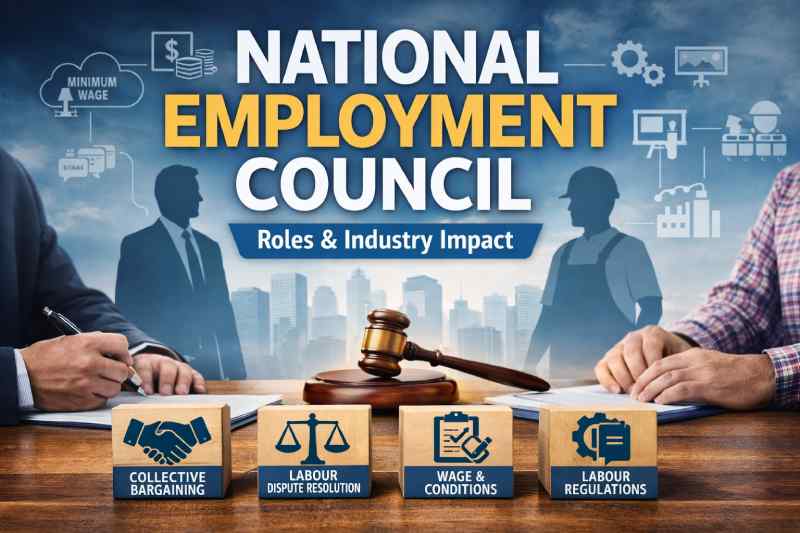
Employment relationships are a central part of every economy. Employers require skilled workers to run businesses effectively, while employees seek fair wages, safe working conditions, and opportunities for career growth. Maintaining a balance between these interests can be complex, especially in industries where large numbers of workers and employers operate under varying conditions. One mechanism that helps maintain this balance is the National Employment Council.
A National Employment Council serves as an organised platform where employers and employee representatives work together to negotiate employment conditions, resolve disputes, and promote fair labour practices. By providing a structured system for dialogue and regulation, these councils play a vital role in strengthening labour relations and ensuring that workplaces operate within agreed standards.
What Is a National Employment Council?
A National Employment Council is a regulatory or collaborative body typically formed within a specific industry or sector. It usually consists of representatives from employer organisations and employee unions who work together to establish employment standards and resolve labour matters.
These councils operate under national labour legislation in many countries. Their main aim is to regulate employment conditions within a particular industry while ensuring that both employers and employees have a voice in the decision-making process.
Rather than leaving workplace rules entirely to individual companies, the council provides sector-wide guidelines that create consistency across businesses. This helps ensure that workers receive fair treatment and employers compete on a level playing field.
Historical Development of Employment Councils
The concept of employment councils emerged during periods of industrial expansion in the twentieth century. As industries grew, labour disputes became more common, and governments recognised the need for structured negotiation systems.
Initially, labour issues were often resolved through direct negotiations between individual employers and workers. However, this approach proved inefficient in large industries with thousands of employees. As a result, governments and labour organisations introduced sector-based councils that could negotiate conditions collectively.
Over time, these councils evolved into formal institutions responsible for regulating employment conditions, setting wage guidelines, and mediating disputes. Today, they continue to play an important role in maintaining stable labour relations in many economies.
Structure of a National Employment Council
Although the structure may vary depending on the country or industry, most councils follow a similar organisational framework. They usually consist of representatives from both sides of the employment relationship.
Employer Representatives
Employer associations or industry groups nominate representatives to participate in council activities. These individuals represent the interests of businesses within the sector and help negotiate practical employment policies.
Employee Representatives
Trade unions typically nominate representatives who speak on behalf of workers. Their role is to ensure that employee rights and concerns are considered when employment conditions are discussed.
Administrative Secretariat
Many councils operate with an administrative team that manages records, meetings, dispute resolutions, and compliance monitoring. This team ensures that decisions made by the council are properly implemented.
Key Functions of a National Employment Council
The primary purpose of a National Employment Council is to manage employment relationships within a particular industry. To achieve this goal, the council performs several essential functions.
Collective Bargaining
Collective bargaining is one of the most important responsibilities of the council. During these negotiations, employer and employee representatives discuss wages, working hours, leave policies, and other employment conditions.
The agreements reached through this process are known as collective bargaining agreements. These agreements provide clear guidelines that businesses must follow when employing workers within the industry.
Wage Determination
Councils often establish minimum wage levels for workers in specific sectors. These wage guidelines help prevent unfair competition between companies while ensuring that employees receive fair compensation.
Wage structures may also include different salary levels based on job roles, skills, and experience.
Dispute Resolution
Workplace conflicts can arise for many reasons, including disagreements over pay, working conditions, or disciplinary actions. The council provides mechanisms for resolving such disputes in a fair and organised manner.
Dispute resolution processes typically include mediation, arbitration, and formal hearings.
Monitoring Compliance
Once employment standards are established, the council ensures that employers follow the agreed rules. Businesses operating within the sector may be required to register with the council and comply with its regulations.
Monitoring compliance helps maintain fairness across the industry and prevents exploitation of workers.
Labour Education and Guidance
Many councils also provide educational resources for employers and employees. These may include training sessions on labour law, workplace safety, and professional development.
By promoting awareness of employment rights and responsibilities, councils contribute to healthier workplace environments.
Benefits for Employees
Workers benefit significantly from the presence of an organised labour framework.
Fair Wages
Employment councils help establish minimum wage standards, ensuring that workers receive reasonable compensation for their labour.
Improved Working Conditions
Through negotiations and regulations, councils can promote safer workplaces and better employment benefits such as leave entitlements and medical support.
Protection from Exploitation
Because employment standards apply across the entire industry, workers are less likely to experience unfair treatment or underpayment.
Benefits for Employers
Employers also gain several advantages from the existence of these councils.
Industry Stability
When employment rules are consistent across the sector, businesses operate within a stable and predictable environment.
Reduced Labour Conflicts
Structured dispute resolution mechanisms help prevent prolonged industrial disputes, which could otherwise disrupt business operations.
Fair Competition
By ensuring that all companies follow similar employment standards, councils prevent unfair practices that might undermine responsible businesses.
Role in Economic Development
A well-functioning National Employment Council contributes to broader economic growth by supporting stable labour relations. When employers and employees work together within a structured framework, productivity tends to increase and industrial disruptions decrease.
Stable labour systems also encourage investment. Businesses are more likely to expand operations in environments where employment policies are clear and disputes can be resolved efficiently.
Furthermore, fair labour practices improve worker satisfaction, which in turn leads to higher productivity and stronger economic performance.
Challenges Faced by Employment Councils
Despite their importance, these councils sometimes face challenges that affect their effectiveness.
Changing Labour Markets
The rise of digital work, remote employment, and gig-based jobs has made traditional labour structures more complex. Councils must adapt their policies to address these emerging forms of employment.
Compliance Issues
In some industries, smaller businesses may fail to comply with council regulations. Ensuring compliance across large sectors can be challenging.
Balancing Interests
Because councils represent both employers and employees, negotiations can occasionally become difficult when interests conflict.
Future of Employment Councils
As workplaces continue to evolve, employment councils will likely need to adapt their policies and structures. Modern labour markets are increasingly influenced by technology, automation, and global competition.
Future councils may place greater emphasis on digital work policies, skills training, and flexible employment arrangements. By adapting to these changes, they can remain relevant and continue to support stable labour relations.
FAQs
What does a National Employment Council do?
A National Employment Council regulates employment conditions within a specific industry. It negotiates wages, resolves disputes, and ensures fair labour standards for both employers and employees.
Who participates in a National Employment Council?
The council typically includes representatives from employer organisations and trade unions. Both sides collaborate to establish employment policies and resolve workplace issues.
Is membership in a National Employment Council mandatory?
In many industries, businesses operating within the sector are required to register and comply with council regulations, although requirements may vary depending on national labour laws.
How does a National Employment Council help workers?
The council protects workers by establishing minimum wages, improving working conditions, and providing mechanisms for resolving labour disputes.
Why are employment councils important for businesses?
They create a stable regulatory environment that reduces labour conflicts and ensures fair competition across the industry.
Conclusion
The National Employment Council plays an essential role in modern labour systems by bringing employers and employees together to create fair and balanced employment standards. Through collective bargaining, dispute resolution, and regulatory oversight, these councils help maintain stability within industries and protect the interests of both workers and businesses.