A sweet dispenser might look like a simple device at first glance, but it represents a clever blend of convenience, hygiene, and design. Whether placed on a kitchen counter, office desk, or inside a retail candy shop, it transforms the way people access and enjoy small treats. Instead of reaching into jars or packets, users can dispense sweets with a simple push, twist, or motion—making the experience cleaner and more controlled.
Over the years, sweet dispensers have evolved from basic gravity-fed containers into stylish, functional tools that fit seamlessly into modern lifestyles. Today, you’ll find everything from compact, kid-friendly models to sleek, automatic dispensers used in commercial environments. This variety makes them appealing to a wide range of users, from families to business owners.
How a Sweet Dispenser Works
At its core, a sweet dispenser operates on a simple principle: controlled release. Most dispensers rely on gravity, allowing sweets to fall from a container into an outlet when triggered by a mechanism. This trigger could be a lever, button, knob, or even a sensor in more advanced models.
Manual dispensers are the most common type. These usually feature a rotating knob or push lever that opens a small gate inside the container. When activated, a portion of sweets falls through, ensuring users don’t take more than intended. This design is particularly useful for portion control and minimizing waste.
Automatic dispensers, on the other hand, introduce a layer of sophistication. They often use motion sensors or digital controls to dispense a predefined amount of candy. These are commonly used in offices or shared spaces where hygiene is a priority. By eliminating direct contact, they reduce the spread of germs while maintaining ease of use.
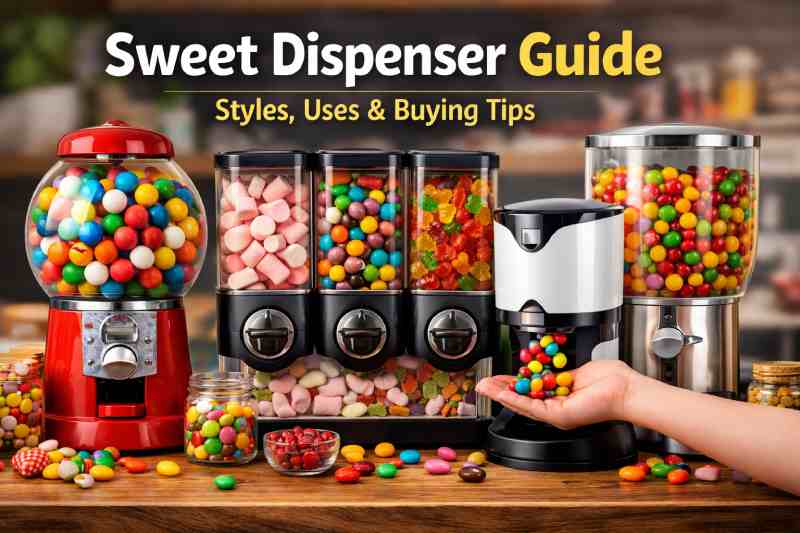
Another variation is the multi-compartment dispenser. These allow users to store different types of sweets in separate sections, making them ideal for variety lovers. With a simple selection mechanism, users can choose their preferred treat without mixing flavors or textures.
Types of Sweet Dispensers Available
Sweet dispensers come in a wide range of designs, each tailored to specific needs and environments. Understanding these types can help you choose the right one based on your usage.
Desktop dispensers are small, compact units designed for personal use. They’re perfect for placing on a work desk or kitchen counter, offering easy access to sweets without taking up much space. These are often simple in design but highly practical.
Kids’ dispensers are more playful and colorful. They often resemble mini vending machines and are designed to make snack time more engaging for children. While they serve the same function as standard dispensers, their appeal lies in their interactive design.
Commercial dispensers are larger and built for high-volume use. You’ll commonly see these in candy stores or buffet setups, where customers can select and dispense their own sweets. These units are typically durable, easy to refill, and designed for hygiene.
Wall-mounted dispensers are another interesting category. These are fixed to a surface and are often used in kitchens or retail spaces where counter space is limited. Their vertical design allows for efficient use of space while still providing easy access.
Automatic multi-slot dispensers represent the premium end of the spectrum. These can store multiple types of sweets and dispense them with precision. They are ideal for modern offices or smart homes where convenience and aesthetics matter.
Benefits of Using a Sweet Dispenser
One of the biggest advantages of a sweet dispenser is hygiene. Traditional methods of storing sweets often involve open containers or shared jars, which can quickly become unhygienic. A dispenser minimizes direct contact, ensuring that the contents remain clean and safe to consume.
Portion control is another key benefit. It’s easy to overindulge when sweets are readily accessible, but a dispenser encourages moderation by releasing a fixed amount at a time. This can be particularly helpful for those trying to manage their sugar intake.
Organization is also improved. Instead of having multiple packets or jars scattered around, a dispenser keeps everything in one place. This not only reduces clutter but also makes it easier to manage your snack supply.
From an aesthetic perspective, sweet dispensers can enhance the look of a space. Modern designs often feature sleek materials and finishes that complement contemporary interiors. Even more traditional models can add a nostalgic charm, especially those styled like vintage vending machines.
Finally, there’s the element of fun. Using a sweet dispenser turns a simple act into an enjoyable experience. This is especially true for children, who often find the process of dispensing sweets more exciting than simply eating them.
Materials and Build Quality
The durability and performance of a sweet dispenser largely depend on the materials used in its construction. Common materials include plastic, glass, and stainless steel, each offering its own set of advantages.
Plastic dispensers are lightweight and affordable. They’re ideal for casual use and are often designed with vibrant colors and shapes. However, they may not be as durable as other materials and can wear out over time.
Glass dispensers offer a more premium feel. They allow users to see the contents clearly, which adds to their visual appeal. Glass is also easy to clean and doesn’t retain odors, making it a good choice for those who frequently switch between different types of sweets.
Stainless steel dispensers are the most durable option. They’re resistant to corrosion and can withstand heavy use, making them suitable for commercial environments. Their sleek appearance also makes them a popular choice for modern kitchens and offices.
In addition to the main body, the internal mechanism is equally important. A well-designed mechanism ensures smooth operation and prevents jams, which can be a common issue with poorly constructed dispensers.
Where Sweet Dispensers Are Commonly Used
Sweet dispensers are versatile and can be used in a variety of settings. In homes, they’re often placed in kitchens, living rooms, or children’s play areas. They provide a convenient way to store and access snacks while keeping things tidy.
In offices, sweet dispensers are a popular addition to break rooms or workstations. They offer employees a quick energy boost during the day and can contribute to a more enjoyable work environment. Automatic dispensers are particularly favored in these settings due to their hygienic design.
Retail environments make extensive use of sweet dispensers. Candy stores, supermarkets, and buffet-style restaurants often rely on large dispensers to allow customers to serve themselves. These units are designed for high traffic and frequent use.
Events and parties are another common setting. A sweet dispenser can serve as both a functional tool and a decorative element. Whether it’s a birthday party, wedding, or corporate event, it adds a unique touch to the setup.
Maintenance and Cleaning Tips
Keeping a sweet dispenser clean is essential for both hygiene and performance. Regular cleaning prevents the buildup of residue and ensures that the mechanism continues to function smoothly.
Start by emptying the dispenser completely. Remove any remaining sweets and disassemble the parts if possible. Most dispensers are designed for easy disassembly, allowing you to clean each component thoroughly.
Use warm water and mild soap to clean the interior and exterior surfaces. Avoid using harsh chemicals, as they can damage the material or leave behind unwanted residues. For glass and stainless steel models, a soft cloth can help maintain their shine.
Dry all components completely before reassembling the dispenser. Moisture can cause sweets to stick together or lead to mold growth, especially in humid environments.
Regular maintenance also involves checking the mechanism for any signs of wear or blockage. Addressing these issues early can extend the lifespan of the dispenser and ensure consistent performance.
Choosing the Right Sweet Dispenser
Selecting the right sweet dispenser depends on your specific needs and preferences. Start by considering the intended use. If it’s for personal use, a compact desktop model may be sufficient. For larger households or shared spaces, a bigger unit might be more مناسب.
Capacity is another important factor. Think about how often you’ll need to refill the dispenser and choose a size that aligns with your usage patterns. A larger capacity reduces the need for frequent refills but may take up more space.
Ease of use is equally crucial. Look for a dispenser with a simple and intuitive mechanism. Complicated designs can be frustrating to operate and may not be suitable for children or elderly users.
Design and aesthetics should not be overlooked. Since the dispenser will likely be visible, choose one that complements your space. Whether you prefer a modern, minimalist look or something more playful, there’s a design to match every taste.
Finally, consider the quality and durability. Investing in a well-built dispenser may cost more upfront, but it will provide better performance and last longer in the long run.
FAQs
What is the main purpose of a sweet dispenser?
A sweet dispenser is designed to store and release candies or small snacks in a controlled and hygienic way. It helps avoid direct hand contact, keeps sweets organized, and ensures portion control, making it useful for both personal and shared spaces.
Can a sweet dispenser be used for snacks other than sweets?
Yes, many sweet dispensers can also be used for dry snacks like nuts, cereal, or small biscuits. However, it’s important to avoid sticky or oversized items, as they may block the dispensing mechanism.
Are sweet dispensers safe for children to use?
Most sweet dispensers, especially those designed for kids, are completely safe and easy to operate. They often have simple mechanisms and durable materials, making them suitable for everyday use under minimal supervision.
How do I clean and maintain a sweet dispenser properly?
To maintain hygiene, you should empty the dispenser, disassemble it if possible, and wash it with mild soap and warm water. Make sure all parts are fully dry before refilling to prevent sweets from sticking or spoiling.
Is an automatic sweet dispenser better than a manual one?
It depends on your needs. Automatic dispensers offer better hygiene and convenience, especially in shared environments, while manual dispensers are more affordable and easier to maintain for home use.
Conclusion
A sweet dispenser is more than just a container—it’s a thoughtful solution that combines convenience, hygiene, and enjoyment. From simple manual models to advanced automatic systems, these devices cater to a wide range of needs and preferences. They help keep sweets organized, promote portion control, and add a touch of fun to everyday life.
Whether you’re looking to enhance your home setup, improve office amenities, or streamline a retail operation, a sweet dispenser can be a valuable addition. By choosing the right type and maintaining it properly, you can enjoy its benefits for years to come.