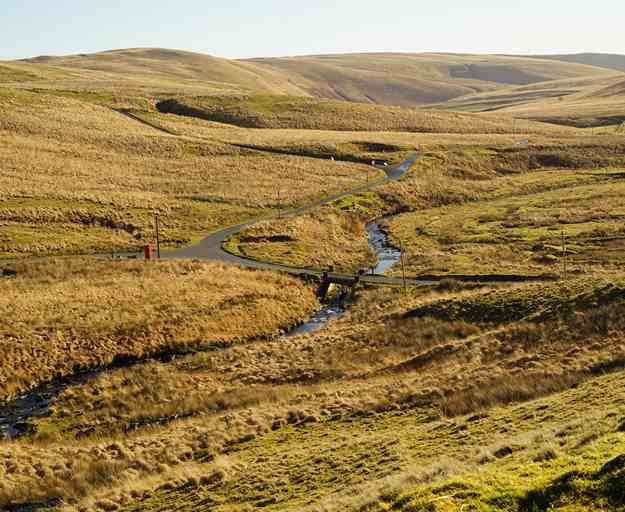
Hidden deep within the heart of Mid Wales, Abergwesyn Pass is a place where silence stretches across rolling moorland and the road coils through the hills like a ribbon laid by hand. This is not a route you stumble upon by accident. It is sought out by drivers, cyclists, photographers and walkers who crave raw landscape and a sense of genuine remoteness.
Where Is Abergwesyn Pass?
Abergwesyn Pass lies in the historic county of Powys, crossing a remote stretch of the Cambrian Mountains in Mid Wales. The road runs roughly between the small spa town of Llanwrtyd Wells and the market town of Tregaron.
Unlike major mountain routes in Snowdonia or the Brecon Beacons, this pass sits in a quieter region. The Cambrian Mountains are sometimes referred to as the “Green Desert of Wales” due to their sparse population and vast open landscapes. That sense of space defines the character of this road.
The route cuts across Abergwesyn Common, a sweeping expanse of upland moor and forestry plantations. There are few buildings, very little traffic, and long stretches where you may see no one at all. That isolation is precisely what makes Abergwesyn Pass so compelling.
The Landscape: Wild, Expansive and Unspoilt
Driving here feels like stepping back in time. The land is largely untouched by heavy development. Instead of cafés, petrol stations and visitor centres, you will find heather-covered hills, sheep grazing freely, and streams tumbling down rocky slopes.
Moorland and Open Sky
The moorland surrounding the pass stretches in every direction. In summer, the heather adds subtle purples and browns to the landscape. In autumn, mist can settle in the valleys, giving the hills an almost mystical appearance. Even on a clear day, the sense of scale is striking.
Forest Sections
Parts of the route pass through dense forestry, where tall conifers close in around the road. The shift from open moorland to shaded woodland adds variety to the drive and creates dramatic contrasts of light and shadow.
Rivers and Waterfalls
The River Irfon flows nearby, and smaller streams cross under or alongside the road. After rainfall, these waters can swell dramatically, adding both beauty and a note of caution to the journey.
It is this combination of open moor, forest and flowing water that gives Abergwesyn Pass its distinctive character.
The Road Itself: Narrow, Twisting and Exhilarating
The road through Abergwesyn Pass is single-track for much of its length. Passing places appear at intervals, and drivers must be prepared to reverse courteously if another vehicle approaches.
This is not a route for rushing. It demands patience, concentration and a willingness to adapt.
The Devil’s Staircase
Perhaps the most famous section is known as the Devil’s Staircase. This steep series of tight hairpin bends climbs sharply, testing both engine power and driver confidence.
From the top, however, the view makes every careful turn worthwhile. On a clear day, you can see across vast swathes of the Cambrian Mountains. It is one of the most photographed spots along Abergwesyn Pass and a highlight for many visitors.
Driving Conditions
The road surface can vary. After winter, potholes may appear. In colder months, ice is a serious hazard, and snow can make the route impassable. There are no regular gritting services in such remote stretches, so checking conditions before setting out is essential.
Sheep frequently wander onto the road, and visibility around bends can be limited. Sensible speeds and full attention are vital throughout.
Abergwesyn Pass in Different Seasons
Each season transforms the pass in subtle yet powerful ways.
Spring
In spring, fresh greenery returns to the hills. Lambs dot the fields, and the air feels crisp and clean. Streams run high from winter rainfall, adding movement and sound to the scenery.
Summer
Summer brings longer daylight hours and more stable weather. This is the most popular time to drive Abergwesyn Pass. Cyclists are common during these months, tackling the steep gradients as part of challenging rides through Mid Wales.
Autumn
Autumn can be particularly atmospheric. Low sunlight casts golden tones across the moorland, and mist often drifts through valleys in the early morning. Photographers find this season especially rewarding.
Winter
Winter reveals the harsh side of the mountains. Snow can blanket the hills, turning the landscape into a dramatic white expanse. While undeniably beautiful, conditions can become treacherous. Only well-prepared drivers should attempt the route at this time of year.
Activities Around the Pass
Although the road itself is the main attraction, the surrounding area offers more than just a scenic drive.
Cycling
The gradients and isolation make this route a favourite among experienced cyclists. The climb at the Devil’s Staircase is particularly demanding. Those who complete it often describe a deep sense of achievement.
Walking and Hiking
Abergwesyn Common provides opportunities for walking across open moorland. Trails are less defined than in national parks, so good navigation skills are important. The reward is solitude and panoramic views rarely matched elsewhere in Wales.
Wildlife Watching
The remoteness of Abergwesyn Pass makes it an excellent place to spot wildlife. Red kites soar overhead, while smaller birds dart through hedgerows. On quiet evenings, you may even glimpse foxes or hear the distant call of owls.
Abergwesyn Pass and Welsh Heritage
The region surrounding the pass is steeped in rural Welsh heritage. Small chapels, old farmsteads and ancient tracks speak of communities that once relied on sheep farming and forestry for survival.
One notable landmark nearby is Soar y Mynydd Chapel, often described as one of the most remote chapels in Wales. Its simple stone structure reflects the resilience and faith of those who lived and worked in these hills.
The cultural identity of the area remains strongly Welsh-speaking, and road signs appear in both Welsh and English. Travelling through Abergwesyn Pass is therefore not just a scenic experience but also a cultural one.
Practical Advice Before Visiting
Because of its isolation, planning ahead is essential.
Fuel and Supplies
There are no petrol stations along the route. Ensure your tank is sufficiently filled before leaving Llanwrtyd Wells or Tregaron. Bring water, snacks and any necessary supplies.
Mobile Signal
Phone reception can be patchy or non-existent in parts of the pass. Download maps in advance or carry a physical map if you intend to explore on foot.
Weather Awareness
Conditions can change rapidly in the mountains. Even in summer, fog can reduce visibility. Always check the forecast before setting out and allow extra time for the journey.
By preparing properly, you can fully appreciate the unique beauty of Abergwesyn Pass without unnecessary stress.
Why Abergwesyn Pass Stands Out in the UK
The United Kingdom has many celebrated scenic drives, from the North Coast 500 in Scotland to the passes of Snowdonia. Yet Abergwesyn Pass stands apart because of its raw authenticity.
There are no souvenir shops or large car parks. There is no sense of commercialisation. Instead, there is space, silence and an elemental connection to landscape. The experience feels personal and unfiltered.
For those who value genuine wilderness within the UK, this mountain route delivers something rare.
Photography and Scenic Appeal
Photographers are drawn to the changing light and expansive views. Early mornings often bring mist swirling around hilltops, while late afternoons create long shadows that sculpt the terrain.
The hairpin bends of the Devil’s Staircase provide dramatic compositions, especially when viewed from slightly elevated positions. Wide-angle lenses capture the sense of scale, while telephoto lenses can isolate distant ridgelines.
Abergwesyn Pass offers a canvas that shifts with weather and season, ensuring that no two visits look exactly alike.
The Emotional Experience of the Journey
Beyond geography and engineering, there is something deeply emotional about travelling this route. The quiet encourages reflection. The absence of crowds allows space to think.
Many visitors describe feeling both small and uplifted when crossing Abergwesyn Pass. The landscape reminds you of nature’s scale, yet the act of navigating it brings a sense of accomplishment.
It is this combination of humility and exhilaration that keeps people returning.
FAQs
Is Abergwesyn Pass suitable for large vehicles?
The route is narrow and includes tight bends. Larger vehicles such as motorhomes may find certain sections challenging, particularly at the Devil’s Staircase.
How long does it take to drive the full route?
Without stops, the journey typically takes around 45 minutes to an hour. However, most visitors allow extra time for photographs and short breaks.
Is Abergwesyn Pass open all year round?
The road is generally open, but severe winter weather can make it temporarily impassable. Always check local conditions during colder months.
Are there facilities along the pass?
There are no shops, cafés or fuel stations along the route. Facilities are available in Llanwrtyd Wells and Tregaron.
Is the drive safe for inexperienced drivers?
While manageable with care, the narrow sections and steep bends require confidence and attention. Cautious driving is essential at all times.
Conclusion
Abergwesyn Pass is more than a mountain road. It is an experience shaped by landscape, weather and solitude. Winding through the Cambrian Mountains of Mid Wales, it offers drivers and explorers a rare chance to encounter a part of the United Kingdom that feels truly untamed.
From the challenging hairpins of the Devil’s Staircase to the sweeping moorland of Abergwesyn Common, every mile reveals a different facet of Welsh wilderness. With preparation, patience and respect for the environment, a journey along Abergwesyn Pass becomes not just a drive, but a memory etched into the mind long after the road has ended.