Allan Leighton: The British Business Titan Who Turned Struggling Giants into Success Stories

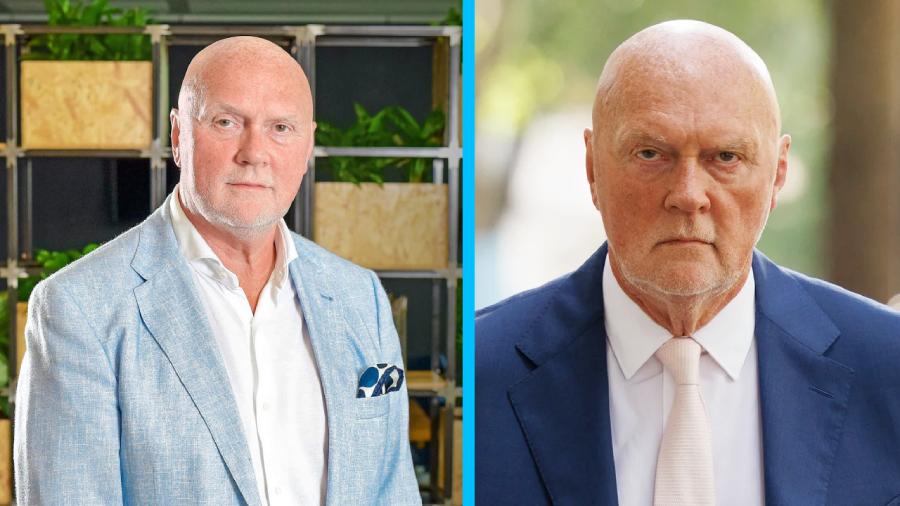
Allan Leighton is one of those names that keeps surfacing whenever people talk about transformative leadership in British business. Whether it is the dramatic turnaround of Asda in the 1990s, the modernisation of Royal Mail, or the stabilisation of The Co-operative Group after one of its most turbulent periods in recent memory, his fingerprints are all over some of the most consequential corporate transformations the United Kingdom has witnessed in the last three decades. He is not the kind of businessman who sits in a glass tower making decisions from a distance. He rolls up his sleeves, gets into the detail, and leads with an energy that is genuinely difficult to manufacture.
Early Life and Background: Where It All Began
Born on 12 April 1953 in Hereford, England, Allan Leighton grew up in modest, grounded circumstances. His father managed a Co-op shop — which, in a rather poetic twist, gave young Allan an early and organic understanding of retail long before he ever set foot in a boardroom. The family later settled in Oxford, where he attended Magdalen College School in Brackley before going on to study at Oxford Polytechnic.
As a teenager, Leighton had genuine aspirations of becoming a professional footballer. He was talented enough to take that dream seriously, but fate intervened in the most painful way possible — he broke his leg in six places at the age of 15. That injury ended any realistic hope of a sporting career, but it also redirected his energy and ambition toward something that would ultimately prove far more impactful. It is hard not to see a certain grit in that story — the kind of resilience that would go on to define his entire professional life.
Starting from the Bottom: Lloyds Bank to Mars
There is something genuinely refreshing about the fact that Allan Leighton did not walk straight into the executive suite. He began his professional life in 1972 as a cashier at Lloyds Bank — about as entry-level as it gets. But he did not stay there long. In 1974, he joined Mars UK in Slough as a salesman, and that single decision turned out to be a defining one.
Leighton spent eighteen years at Mars, and it was there that he developed the management instincts and commercial intelligence that would later make him a household name in business circles. Mars operated with strong values, a culture of high performance, and a deep respect for its people — all things that clearly left a lasting impression on him. By 1987, he had risen to General Sales Manager for the UK Grocery Division, becoming the youngest director in the entire company worldwide at that time. He later served as Managing Director for Mars in both Ireland and Portugal. His colleagues during those years included names like Justin King, David Cheesewright, and Richard Baker — all of whom went on to become prominent business leaders in their own right.
The Asda Years: A Career-Defining Chapter
If Allan Leighton is remembered for one achievement above all others, it is almost certainly what he and Archie Norman built at Asda during the 1990s. He joined the supermarket chain in March 1992 as Marketing Director, and what followed was nothing short of remarkable. At the time, Asda was a business in serious distress — a £500 million company that was, in his own words, “on its knees.” The culture had fractured, the strategy lacked direction, and confidence across the organisation was at rock bottom.
Together with Norman, Leighton set about rebuilding Asda from the ground up. He spent considerable time in Bentonville, Arkansas, studying the Walmart model closely, and began applying many of the same principles that had made the American retail giant so dominant. The focus was on delivering real value to customers, empowering frontline staff, stripping away unnecessary complexity, and forging a culture where everyone felt like an underdog with something to prove. That mindset — scrappy, focused, and intensely competitive — became the engine of Asda’s remarkable revival.
By September 1996, Leighton had stepped up to become Chief Executive, succeeding the demoted Norman. Under his leadership, Asda continued its upward trajectory. Then, in 1999, came one of the most significant transactions in British retail history. A proposed merger with Kingfisher collapsed, and Asda was sold instead to Walmart for £6.2 billion — a deal that made headlines across the industry and cemented Leighton’s standing as one of the most effective dealmakers of his generation. He departed Asda in November 2000, ready for a new challenge. More than two decades later, in November 2024, he returned as Executive Chairman — a homecoming that spoke volumes about the enduring trust the organisation placed in him.
Going Plural: The Portfolio Years
After leaving Asda, Leighton famously declared he was “going plural,” and he meant every word of it. Rather than settling into a single senior role, he took on a wide and varied portfolio of positions, each bringing its own distinct challenges and rewards.
From 2000 to 2008, he served as Chairman of Business in the Community — a role that reflected his broader commitment to responsible, values-driven business practice. He chaired Lastminute.com from 2000 to 2004, bringing commercial rigour to an early internet-era company still finding its footing. He also served as Deputy Chairman of Leeds United Football Club from 1999 to 2003, blending his passion for sport with his business expertise in a way that felt entirely natural for him.
In 2008, he was appointed President and Deputy Chairman of Loblaw Companies, Canada’s largest food retailer, working closely alongside the Weston family. He also joined the boards of Dyson, BSkyB, Scottish Power, and Selfridges, among others. Each appointment brought a different sector, a different culture, and a different set of stakeholders — yet Leighton navigated all of them with the same pragmatic, people-first approach that had served him so well at Asda.
Royal Mail: Leading Through Pressure
One of the most significant chapters in Allan Leighton’s career outside retail was his decade-long involvement with Royal Mail. He served as Chair of Royal Mail Holdings and Post Office Ltd from 2002 to 2009, becoming the organisation’s longest-serving chairman during that era. When he arrived, Royal Mail was financially stressed, operationally inefficient, and mired in difficult industrial relations. It needed serious structural reform — and fast.
Under his stewardship, the organisation underwent a meaningful period of modernisation. He helped steer it back toward profitability and played a pivotal role in managing what had historically been a fractious relationship with postal workers’ unions, ultimately helping to prevent national strikes. It was painstaking, unglamorous work — but exactly the kind of quiet, sustained effort that keeps large public institutions functioning.
That said, his time at Royal Mail later became entangled with one of the most troubling institutional failures in recent British history. The Horizon IT scandal — in which hundreds of sub-postmasters were wrongly accused of theft and fraud due to defective software — emerged as one of the most damning miscarriages of justice the country had seen in decades. Leighton was called to give evidence at the Post Office Inquiry in July 2024. While he bore no personal responsibility for the IT failures, the association served as a sobering reminder of the weight of accountability that comes with leading a national institution.
The Co-operative Group: Rebuilding Trust at Scale
In February 2015, Allan Leighton took on what was arguably his most politically and institutionally complex assignment yet — becoming the first independent non-executive Chairman of The Co-operative Group. The organisation was in genuine trouble: reeling from serious governance failures, a banking crisis within its financial arm, and a significant breakdown of public trust that had taken years to develop.
His appointment was itself a meaningful statement. Installing an independent chair for the first time in the Group’s long history was a structural reform in its own right — a clear signal that things were changing. Over the course of his nine-year tenure, Leighton worked steadily to stabilise the organisation, strengthen its governance framework, improve operational transparency, and gradually restore confidence among members and the wider public. It was not a spectacular or rapid transformation. It was slow, deliberate, and grounded in fundamentals. He stepped down in February 2024, succeeded by former Sodexo chief Debbie White, leaving behind an organisation considerably stronger than the one he had inherited.
Leadership Philosophy: Simple, Human, and Effective
One of the things that makes Allan Leighton genuinely compelling to study is his leadership philosophy — which is refreshingly free of corporate jargon. He does not talk about synergies or paradigm shifts. He talks about people, clarity, and accountability. His core belief is disarmingly direct: find the right people, give them clear goals, and get out of their way. He has said many times that the most important decisions any leader makes are about who they place in key roles. Everything else, in his view, flows from that.
He is equally committed to maintaining personal discipline in daily life. He wakes at 6am every morning, starts work by 6:30, and runs several times a week. That routine is not incidental — it is part of how he sustains the focus and energy required to operate across multiple demanding roles simultaneously. His communication style is direct and genuinely accessible, whether the person in front of him is a postman, a City banker, or a Cabinet minister. That ability to connect across very different environments is perhaps his most underrated quality.
He has also put his thinking into print. His book On Leadership, written with journalist Teena Lyons, distils his philosophy into practical, readable insights drawn from real-world experience. All earnings from the book, along with proceeds from television appearances and speaking engagements, go to Breast Cancer Care — a cause he has supported with consistent passion and a personal ambition to raise £1 million for the charity.
Academic Recognition and Public Honour
Allan Leighton’s contributions to British business have not gone unnoticed in academic circles. In 2004, Cranfield University awarded him an honorary degree in recognition of his professional achievements. Six years later, in 2010, the University of Central Lancashire followed with an honorary fellowship, acknowledging the breadth and sustained quality of his career. These are not ceremonial gestures — they reflect a deep institutional respect for the practical wisdom and transformative impact he has delivered across multiple sectors.
Beyond academia, he is a sought-after speaker at business conferences and corporate events, bringing a level of authenticity and hard-won credibility that sets him apart from more theoretical voices. People attend his sessions not because he is polished or packaged, but because what he says is rooted in genuine, sometimes difficult, lived experience.
Personal Life: Grounded Despite the Glamour
For someone who has operated at the highest levels of British business for the better part of four decades, Allan Leighton has kept his personal life remarkably private. He was previously married to Anne Leighton, and together they raised three children — two sons and one daughter. Though the marriage eventually ended in divorce, both have maintained a respectful, amicable relationship, staying actively involved in their children’s lives.
He divides his time between Stanmore in the UK and Toronto, Canada — the latter connection rooted in his long professional relationship with Loblaw and the Canadian retail world. Away from business, he is a committed sports fan, following Leeds United, the Saracens rugby team, Northamptonshire County Cricket Club, and the Toronto Maple Leafs. He is also the co-owner of Brackley Town Football Club, a community club in Northamptonshire that reflects his loyalty to local sport and his unpretentious roots.
His lifestyle is disciplined without being austere. He runs regularly, reads novels before bed, and largely sidesteps the London social circuit that many executives of his stature feel compelled to attend. There is something deeply consistent about all of it — a man who believes in doing the basics brilliantly and not allowing noise to drown out what actually matters.
The 2024 Return to Asda: Full Circle
In November 2024, Allan Leighton made one of the most widely discussed moves in British retail in recent years — returning to Asda as Executive Chairman more than two decades after he had last led the business. The supermarket had been navigating a difficult period, and the decision to bring him back was broadly interpreted as a serious commitment to change. For those who had tracked his career closely, it felt like a natural full-circle moment — the man who helped construct Asda coming back to help rescue it.
The chapter is still unfolding, but the appointment speaks to a consistent truth about his standing in British business: when an organisation is in difficulty and needs someone with authentic experience, real credibility, and the stomach for hard decisions, Allan Leighton’s name tends to come up — and for good reason.
FAQs
Who is Allan Leighton?
Allan Leighton is a British businessman born on 12 April 1953, best known for his transformative leadership at Asda and his chairmanship of major organisations including Royal Mail and The Co-operative Group.
What did Allan Leighton achieve at Asda?
He joined Asda as Marketing Director in 1992 and, working alongside Archie Norman, turned the struggling supermarket into one of the UK’s most competitive retailers — ultimately overseeing its £6.2 billion sale to Walmart in 1999.
Why was Allan Leighton involved in the Post Office Inquiry?
As former Chairman of Royal Mail Holdings from 2002 to 2009, he was called to give evidence at the Post Office Horizon Scandal Inquiry in July 2024, though he bore no personal responsibility for the IT failures that caused the scandal.
What is Allan Leighton doing now?
In November 2024, he was appointed Executive Chairman of Asda, returning to the supermarket he helped build more than two decades after his previous departure.
Has Allan Leighton written any books?
Yes — he authored On Leadership, a practical guide to business leadership based on real-world experience, with all proceeds directed to Breast Cancer Care as part of his personal campaign to raise £1 million for the charity.
Conclusion
Allan Leighton is not a figure who slots neatly into any single category. He is not purely a retail man, not just a turnaround specialist, not simply a career chairman. He is all of those things and more — shaped by decades of experience across wildly different organisations, sectors, and challenges. What ties it all together is a consistent and deeply practical approach: lead with clarity, back your people, and resist the temptation to overcomplicate what does not need to be complicated.
His career stands as a masterclass in sustained relevance — in staying sharp, staying hungry, and remaining grounded even when the stakes are extraordinarily high. From a cashier’s desk at Lloyds Bank in 1972 to the Executive Chairman’s office at Asda in 2024, the journey of Allan Leighton is one of the most compelling stories British business has produced. And by all indications, it is far from finished.