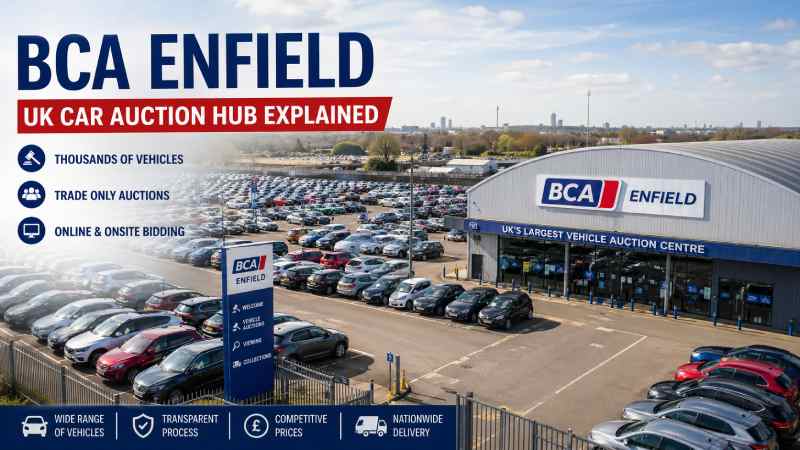
When people talk about buying cars in the UK, most imagine dealerships, classified ads, or online marketplaces. But behind the scenes, a massive portion of the used car market operates through auctions—and one of the most important locations in this ecosystem is BCA Enfield. If you’re in the automotive trade or even just curious about how large-scale vehicle sales actually work, understanding this site gives you a clear view of the industry’s backbone.
What Is BCA Enfield and Why It Matters
BCA Enfield is one of the flagship auction sites operated by British Car Auctions, widely known as BCA. The company itself is a major force in Europe’s vehicle remarketing industry, handling millions of vehicle transactions every year. The Enfield site, located in North London, stands out due to its size, capacity, and strategic importance.
The primary purpose of BCA Enfield is to facilitate the buying and selling of used vehicles at scale. Instead of individual consumers negotiating prices one by one, this system allows businesses to trade vehicles in bulk. Sellers include leasing companies, corporate fleets, rental agencies, and finance institutions, all looking to offload vehicles efficiently. Buyers, on the other hand, are typically car dealers who need inventory for resale.
What makes BCA Enfield particularly important is its role in price discovery. Because vehicles are sold in an auction format, the final price reflects real-time market demand. This creates a transparent and dynamic pricing environment that influences used car values across the UK. In many ways, what happens at sites like Enfield directly impacts the prices you see at local dealerships.
How the Auction Process Works at BCA Enfield
At first glance, an auction might seem straightforward—cars are listed, bids are placed, and the highest bidder wins. However, the reality at BCA Enfield is far more structured and data-driven. Every vehicle that enters the system goes through a detailed intake process, including inspection, imaging, and cataloging.
Once a vehicle is registered, it is assigned to a sale event. These events can be physical, online, or hybrid. Traditionally, auctions were conducted in large halls with auctioneers calling out bids, but today, a significant portion happens digitally. Buyers can view vehicles, access condition reports, and place bids remotely, making the process far more accessible and efficient.
Bidding itself is fast-paced and competitive. Vehicles can sell in a matter of seconds, especially if they are in high demand. Buyers rely heavily on their experience, market knowledge, and the data provided by BCA to make quick decisions. The system is designed to handle high volumes without compromising accuracy, ensuring that both buyers and sellers get fair outcomes.
The Types of Vehicles You’ll Find at BCA Enfield
One of the most fascinating aspects of BCA Enfield is the sheer variety of vehicles available. Unlike a dealership that focuses on specific brands or price ranges, this site offers a broad spectrum of options. You might find nearly new executive cars, older budget vehicles, vans, electric vehicles, and even specialist models—all in the same auction cycle.
A large portion of the inventory comes from lease and fleet returns. These vehicles are typically well-maintained, have documented service histories, and are only a few years old. This makes them particularly attractive to dealers looking for reliable stock. On the other end of the spectrum, you’ll also find older or higher-mileage vehicles, often sold at lower price points.
Additionally, BCA Enfield handles vehicles from finance companies and repossessions. These cars can vary widely in condition, but they often present opportunities for buyers willing to invest in repairs or refurbishment. The diversity of stock ensures that there is something for every type of buyer, from premium dealers to budget-focused resellers.
Who Uses BCA Enfield and Why
BCA Enfield primarily serves the automotive trade, meaning most of its users are professionals rather than individual consumers. Car dealerships form the largest group of buyers, using auctions to source inventory quickly and cost-effectively. Instead of negotiating with individual sellers, they can acquire multiple vehicles in a single session.
Leasing companies and corporate fleets are among the main sellers. For them, auctions provide a fast and efficient way to dispose of large numbers of vehicles at the end of their lifecycle. Rather than managing individual sales, they can rely on BCA’s infrastructure to handle everything from valuation to final sale.
There are also logistics companies, vehicle inspectors, and financial institutions involved in the process. BCA Enfield acts as a central hub where all these players interact. This interconnected ecosystem is what makes the site so efficient—it’s not just a marketplace but a fully integrated service platform for the automotive industry.
The Role of Technology in Modern Auctions
Technology has transformed how BCA Enfield operates. While physical auctions still exist, the majority of activity now happens online. Buyers can browse inventory, review detailed reports, and participate in auctions from anywhere in the world. This has significantly expanded the reach of the platform.
Each vehicle listing includes high-quality images, condition grades, and inspection notes. This level of detail reduces uncertainty and allows buyers to make informed decisions without needing to be physically present. Advanced data analytics also play a role, helping both buyers and sellers understand market trends and pricing dynamics.
Moreover, digital tools streamline the entire transaction process. From bidding to payment and even logistics, everything can be managed through integrated systems. This not only saves time but also reduces the risk of errors, making the process smoother for everyone involved.
Advantages of Buying from BCA Enfield
For trade buyers, BCA Enfield offers several key advantages. First and foremost is access to a large and diverse inventory. Instead of relying on limited local sources, dealers can choose from thousands of vehicles in a single location. This makes it easier to find the right stock for different customer segments.
Another major benefit is competitive pricing. Because vehicles are sold through auctions, prices are driven by demand rather than fixed markups. This often results in better deals for buyers, especially those who understand market trends and bidding strategies.
Speed and efficiency are also important factors. Transactions at BCA Enfield are designed to be quick, allowing dealers to replenish their inventory without delays. With integrated logistics services, vehicles can be transported directly to the buyer’s location, further simplifying the process.
Potential Challenges and Risks
While BCA Enfield offers many advantages, it’s not without its challenges. One of the biggest risks is the speed of the auction process. Bidding happens quickly, and inexperienced buyers may end up overpaying or making decisions without fully understanding a vehicle’s condition.
Another issue is the variability in vehicle quality. Although BCA provides detailed reports, buyers are still expected to perform their own due diligence. Some vehicles may require repairs or have hidden issues that aren’t immediately obvious.
Additionally, access is generally limited to trade buyers. This means that individual consumers may find it difficult to participate directly. While there are ways around this, such as using brokers, it adds another layer of complexity to the process.
BCA Enfield’s Impact on the UK Car Market
The influence of BCA Enfield extends far beyond its physical location. As one of the largest auction sites in the country, it plays a significant role in shaping the used car market. Prices established here often set benchmarks that ripple through dealerships and online platforms.
The site also contributes to market efficiency by ensuring that vehicles are redistributed quickly. Instead of sitting idle, cars move from one owner to another, keeping the market dynamic and responsive. This is particularly important in an industry where demand can change rapidly.
Furthermore, BCA Enfield supports sustainability by facilitating the reuse of vehicles. By extending the lifecycle of cars through resale, it helps reduce waste and promotes more efficient use of resources. In this sense, its impact goes beyond economics and into environmental considerations.
FAQs
Can individuals buy cars directly from BCA Enfield?
In most cases, BCA Enfield is designed for trade buyers such as dealerships and automotive businesses. However, individuals can sometimes access auctions through third-party brokers or partner services.
How do I register to bid at BCA Enfield?
To bid directly, you typically need to register as a trade buyer with valid business credentials. Once approved, you can participate in both online and physical auctions.
Are cars from BCA Enfield cheaper than dealerships?
Vehicles can often be cheaper because they are sold through auctions without fixed retail pricing. However, final prices depend on demand, and additional costs like fees and repairs should be considered.
Conclusion
BCA Enfield is more than just a car auction site—it’s a critical component of the UK’s automotive infrastructure. From enabling large-scale vehicle transactions to shaping market prices, its role is both complex and essential. For trade professionals, it offers a powerful platform to buy and sell vehicles efficiently, backed by advanced technology and extensive industry integration.
Understanding how BCA Enfield operates provides valuable insight into the broader used car market. Whether you’re a dealer looking to optimize your inventory or simply someone curious about how cars change hands at scale, this auction hub offers a fascinating glimpse into the mechanics of the industry.