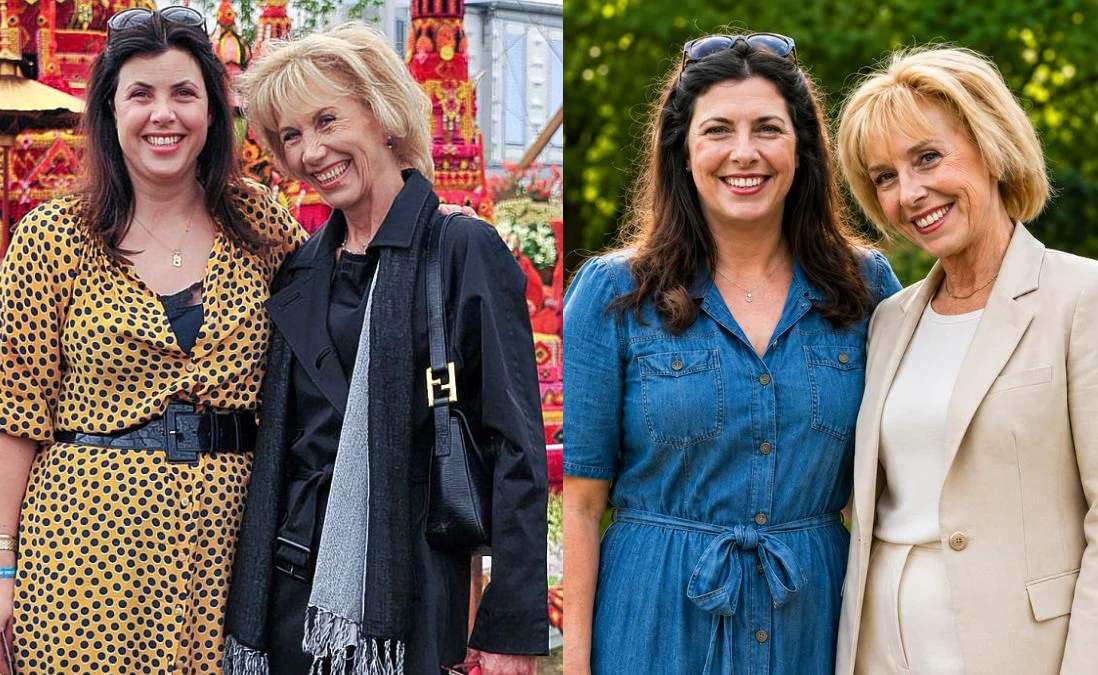
Lady Fiona Hindlip is one of those quietly fascinating figures in modern British high society who never really chased the spotlight but ended up being recognised anyway, mostly through the careers of her well-known children. Born Fiona Victoria Jean Atherley McGowan in 1947, she lived a life that sat right at the intersection of industrial wealth, aristocratic tradition, and creative flair. By the time of her death in January 2014, she had become an emblem of the kind of understated grace that defines a certain old-school British elegance, the sort that prefers a beautifully arranged drawing room over a magazine cover.
Early Life and Family Roots
Fiona was born into a household that mixed two very different but equally distinguished British lineages. Her father was the Honourable William Johnston McGowan, a man whose social position came directly through his own father’s elevation to the peerage. Her mother, Helen Myrtle Dorothy Atherley, brought with her the heritage of the Atherley family, which traced back through generations of English country gentry, including ancestors like Arthur Atherley and Francis Henry Atherley. This blending of industrial-era nobility on one side and traditional landed heritage on the other gave Fiona a foundation that was both modern and historic. Helen herself passed away in March 1976, when Fiona was still relatively young, which understandably shaped much of how Fiona later approached her own role as a mother.
A Notable Industrial and Aristocratic Heritage
The McGowan name carried significant weight in twentieth-century Britain, largely because of Fiona’s grandfather, Harry McGowan, 1st Baron McGowan. He was one of the architects of British industry, a key figure in the formation of Imperial Chemical Industries (ICI), and one of the most powerful businessmen of his era. He was elevated to the peerage in recognition of that influence, which is how the McGowan family acquired its aristocratic standing. Henry McGowan’s rise meant that Fiona grew up in a family that wasn’t merely born to privilege but had also earned its place at the table. On her maternal side, the Atherley line connected her to old county families, and through her grandmother Agnes Wilson, she had further ties to respectable Scottish and English gentry. Her great-grandparents on various branches included figures like William Young and Jean Boyle Young, names that filled out a family tree thick with provincial wealth and quiet influence. It was the kind of background that produced people who knew exactly who they were without ever needing to broadcast it.
Marriage to the 6th Baron Hindlip
In April 1968, when she was twenty years old, Fiona married Charles Henry Allsopp, who would later become the 6th Baron Hindlip in 1993 after inheriting the title. Charles had a long and distinguished career at Christie’s, eventually rising to become chairman of the famous auction house. The marriage united the McGowan industrial-aristocratic line with the Allsopp brewing fortune, since the Hindlip barony originated from the Allsopp family’s success in the brewing industry during the nineteenth century. Through marriage, Fiona’s mother-in-law Isabella Julia Elizabeth Howard added another layer of aristocratic connection to the household. Charles and Fiona’s marriage lasted nearly forty-six years, ending only with her death in 2014. By all accounts, theirs was a partnership built on shared aesthetic sensibilities, country pursuits, and a deep dedication to family life rather than the glitzy social scene that often surrounds titled couples in London.
Life as an Interior Designer
Although she’s most often remembered as a mother and a baroness, Fiona had her own creative career that deserves more attention than it usually gets. She worked as an interior designer, often in partnership with the American expatriate Nancy Prentice. The two collaborated on numerous projects, and Fiona’s style was widely admired for combining traditional English country-house warmth with a lighter, more livable sensibility. She had a real eye for fabrics, antiques, and the way rooms should feel rather than just look. This wasn’t dabbling either; her work was respected within professional circles, and she was often mentioned in the same breath as designers like Jane Churchill, whose great-aunt Nancy Lancaster had famously shaped the English country-house look at Colefax and Fowler. Fiona’s design instincts clearly influenced her eldest daughter, who later built an entire television career around homes, property, and the way people live in them.
Her Four Children and Their Legacies
Fiona and Charles had four children, each of whom went on to make their own distinct mark. The eldest is Kirstie Allsopp, born in 1971, who became one of Britain’s most recognisable television presenters thanks to long-running property shows including Location, Location, Location and Love It or List It UK. Kirstie has often spoken publicly about how much her mother shaped her values, her domestic sensibilities, and her love of crafting and home-making. Then came Henry Allsopp, who is now the 7th Baron Hindlip after inheriting the title following his father’s death in 2024; Henry has carved out a respected career in the art world as a dealer. Sofie Allsopp followed, also becoming a television presenter in her own right and famously undergoing a preventative double mastectomy in 2010 because of the family’s history with breast cancer. The youngest, Natasha Fiona Allsopp, named in part for her mother, has lived a more private life. Fiona has also become a grandmother through her children, including grandsons such as Bay Atlas Andersen and Oscar Hercules Andersen, who carry the next chapter of the family forward.
Her Long Battle with Breast Cancer
Fiona’s life was deeply marked by a twenty-six-year fight with breast cancer that began with her initial diagnosis in 1987. She underwent a double mastectomy along with rounds of chemotherapy and radiotherapy, and the disease then went into remission for around seven years. Sadly, the cancer returned and continued to come back over the years, eventually progressing into secondary cancer. Despite the long ordeal, she remained, by all accounts, characteristically dignified and private about her illness. Her daughter Sofie has spoken openly about watching her mother’s struggle and how that experience directly shaped her own decision to take preventative measures. Fiona’s resilience over more than two and a half decades became, in many ways, one of the defining stories of her later life and a quiet source of strength for those around her.
Death and Lasting Influence
Lady Hindlip passed away peacefully at home on 6 January 2014, surrounded by her family. Her funeral was a private affair, in keeping with the way she had always preferred to live. Tributes flowed in, particularly from those who had known her through her design work and her involvement with cancer charities, though many of those efforts had been done quietly. Her influence continues to ripple through her family. Kirstie’s deep love of homes, traditions, and the rhythms of family life is, in many ways, a tribute to Fiona. Henry now sits in his father’s seat as the 7th Baron Hindlip, carrying the title forward. The Allsopp grandchildren are growing up steeped in stories about a grandmother who shaped a family ethos around warmth, taste, and quiet endurance.
FAQs
Q1: Who was Lady Fiona Hindlip?
Lady Fiona Hindlip, born Fiona Victoria Jean Atherley McGowan in 1947, was a British aristocrat, interior designer, and the wife of Charles Allsopp, 6th Baron Hindlip. She is widely remembered as the mother of TV presenter Kirstie Allsopp.
Q2: Who were Lady Fiona Hindlip’s parents?
Her father was the Honourable William Johnston McGowan, and her mother was Helen Myrtle Dorothy Atherley. Through her father, she was also the granddaughter of Harry McGowan, 1st Baron McGowan, a powerful figure in British industry.
Q3: How did Lady Fiona Hindlip die?
She passed away on 6 January 2014 at the age of 66, after a long twenty-six-year battle with breast cancer. She had first been diagnosed in 1987 and faced the illness with remarkable dignity throughout.
Q4: How many children did Lady Fiona Hindlip have?
She had four children with her husband Charles: Kirstie Allsopp, Henry Allsopp (now the 7th Baron Hindlip), Sofie Allsopp, and Natasha Fiona Allsopp. Each has built a distinct life of their own in media, art, and beyond.
Q5: What was Lady Fiona Hindlip’s profession?
She worked as an interior designer, often collaborating with American expatriate Nancy Prentice. Her style mixed classic English country-house warmth with a more relaxed, livable elegance that quietly influenced her daughter Kirstie’s later career.
Conclusion
What makes Lady Fiona Hindlip such a compelling figure isn’t really the titles or the famous family connections, though those obviously matter for context. It’s that she represented a vanishing type of British woman: someone who blended creative talent, deep family devotion, and an aristocratic background into a life lived largely on her own terms. She didn’t pursue fame, but she also didn’t shy away from her work or her responsibilities. She used her position to do meaningful things, raised four accomplished children, and faced a brutal illness with remarkable composure. In an age that often rewards loudness, her example stands out for the opposite reason. She showed that influence doesn’t have to come with a microphone, and that legacy, in the truest sense, is often built in the small, daily acts of love and care that nobody outside the family ever sees.