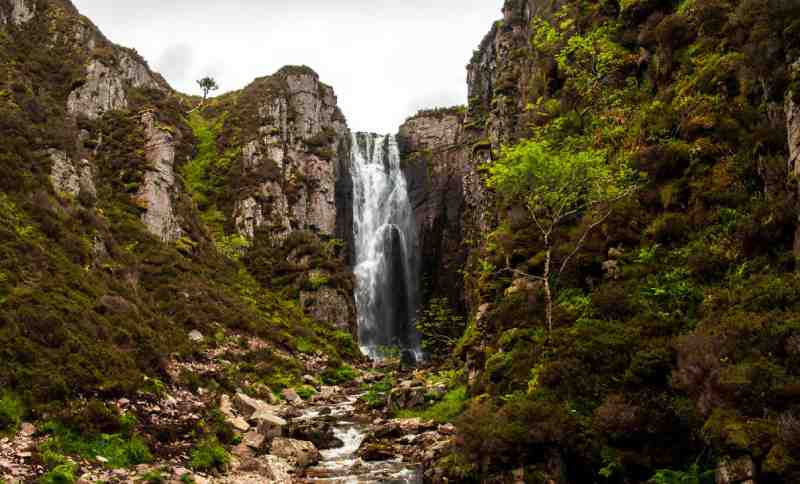
Tucked away in the wild landscape of the Scottish Highlands, Loch Na Gainmhich is one of those places that feels quietly powerful rather than loudly famous. It does not rely on grand visitor centres or crowded viewpoints. Instead, its appeal lies in raw scenery, deep geological history, and an atmosphere that invites slow observation. For travellers who want to experience the Highlands beyond the obvious stops, this loch offers a rare sense of stillness and authenticity.
Where Loch Na Gainmhich Sits in the Highland Landscape
Loch na gainmhich lies in the far north-west of Scotland, within a region known for its dramatic contrasts. The surrounding area is shaped by ancient rock formations, open moorland, and sudden drops where water escapes towards the sea. The loch itself sits close to a key Highland road, yet feels surprisingly secluded once you step away from the tarmac.
Despite its roadside position, the loch remains largely untouched. There are no formal paths circling the water, no cafés, and no built viewpoints. This lack of development is part of its charm. Visitors encounter the loch much as people would have centuries ago, with the water lying calmly among rough land and open sky.
The Meaning Behind the Name Loch Na Gainmhich
The name loch na gainmhich comes from Scottish Gaelic. The word “gainmhich” is associated with sand, giving the name a meaning that can be interpreted as “the loch of the sand” or “sandy loch”. This likely reflects the nature of the ground around parts of the shoreline, where lighter soils and sandy textures contrast with the darker peatlands nearby.
Gaelic place names often describe practical features rather than poetic ideas. In this case, the name hints at the loch’s physical character, offering insight into how local people once understood and navigated the land.
Geological Origins and the Shape of the Loch
The Highlands are among the oldest landscapes in Europe, and loch na gainmhich is a product of immense geological time. The rock beneath the loch dates back hundreds of millions of years, shaped by tectonic movement, erosion, and glaciation.
During the last Ice Age, glaciers carved through the land, deepening natural hollows and leaving behind elongated basins. As the ice retreated, meltwater filled these depressions, forming lochs across the region. Loch na gainmhich follows this pattern, with its long, natural outline and uneven depth.
The surrounding terrain shows clear signs of glacial influence. Smoothed rock faces, scattered boulders, and shallow slopes all point to the slow but relentless movement of ice. This geological story gives the loch a sense of permanence, as though it has always belonged exactly where it is.
Water Flow and the Dramatic Exit of the Loch
While the surface of loch na gainmhich often appears calm, the water does not remain still. The loch feeds into a powerful outflow that quickly gathers force as it leaves the basin. This transition from still water to rushing movement is one of the most striking features of the area.
As the water escapes, it plunges into a narrow gorge, creating a dramatic waterfall that contrasts sharply with the loch’s quiet presence. This sudden change in energy highlights the dynamic nature of Highland landscapes, where tranquillity and force exist side by side.
The sound of moving water can often be heard from a distance, especially after rainfall. It adds an auditory layer to the experience, reminding visitors that the loch is part of a much larger hydrological system.
Wildlife and Natural Life Around the Loch
Loch na gainmhich supports a range of wildlife adapted to Highland conditions. The water itself is home to freshwater fish, particularly trout, which have long attracted anglers. These fish thrive in clean, oxygen-rich water, a sign of the loch’s healthy ecosystem.
Birdlife is another highlight. Visitors may spot birds of prey circling overhead, using the open land and rising air currents to their advantage. Smaller birds nest among heather and low shrubs, while waterfowl occasionally rest along the loch’s edge.
Mammals are present too, though often harder to see. Red deer move through the wider landscape, and smaller animals leave subtle signs in the soft ground near the water. The lack of heavy human activity allows these species to behave naturally, making the area especially valuable for wildlife observation.
Seasonal Changes at Loch Na Gainmhich
Each season transforms loch na gainmhich in distinct ways, altering both its appearance and atmosphere.
In spring, the surrounding land slowly reawakens. New growth softens the edges of the loch, and bird activity increases. The water reflects brighter skies, and the area feels full of quiet energy.
Summer brings longer days and clearer visibility. On calm days, the loch can act like a mirror, reflecting clouds and distant hills. This is a popular time for photography, as the light reveals subtle colours in the rock and vegetation.
Autumn adds depth and richness to the scene. Heather and grasses shift towards warmer tones, and the air becomes crisper. The loch often feels more introspective during this season, with shorter days encouraging slower exploration.
Winter is perhaps the most dramatic. Snow may dust the surrounding hills, and ice sometimes forms along the loch’s edges. The landscape becomes stark and powerful, offering a raw view of the Highlands that feels both challenging and deeply rewarding.
Walking and Exploring the Area
There is no formal walking circuit around loch na gainmhich, but this does not limit exploration. The surrounding land is open and varied, allowing experienced walkers to choose their own routes. Care is essential, as the ground can be uneven, boggy, or steep in places.
Short walks near the loch provide excellent viewpoints, especially where the land rises gently above the water. These spots offer wide views that capture both the loch and the surrounding hills, making them ideal for quiet reflection or photography.
Those who venture further should be prepared for rapidly changing weather. The Highlands are known for sudden shifts in conditions, and loch na gainmhich is no exception. Proper clothing and awareness of the terrain are key to a safe and enjoyable visit.
Cultural and Storytelling Traditions
Like many Highland locations, loch na gainmhich is surrounded by local stories and oral traditions. These tales often focus on the dramatic landscape, particularly the waterfall fed by the loch. Stories passed down through generations add a layer of mystery, blending history with imagination.
While not all such tales can be verified, they reflect how deeply people have connected with this place over time. The loch is not just a physical feature; it is part of a cultural landscape shaped by memory, language, and experience.
This sense of story contributes to the emotional impact of visiting the loch. Even without knowing every detail, visitors often feel that the land holds meaning beyond what is immediately visible.
Why Loch Na Gainmhich Feels Different
What sets loch na gainmhich apart is not size or fame, but balance. It sits at a point where accessibility meets wildness. You can reach it easily, yet it still feels remote. You can see it quickly, but understanding it takes time.
There is no pressure to rush here. The loch encourages stillness, whether you are watching the water, listening to the wind, or observing subtle changes in light. In a world where many natural places are heavily curated, loch na gainmhich remains refreshingly honest.
Responsible Visiting and Preservation
Preserving the character of loch na gainmhich depends on responsible behaviour. The absence of infrastructure means visitors must take extra care. Leaving no trace, respecting wildlife, and avoiding damage to fragile ground are essential practices.
The loch’s beauty lies in its simplicity. By treating it gently, visitors help ensure that future generations can experience the same sense of quiet wonder.
FAQs
Where exactly is loch na gainmhich located?
Loch na gainmhich is located in the north-west Highlands of Scotland, close to a main Highland road yet surrounded by largely undeveloped land.
Is loch na gainmhich suitable for casual visitors?
Yes, it can be enjoyed by casual visitors who want a short stop or viewpoint, though exploring beyond the roadside requires care and suitable footwear.
Can you fish in loch na gainmhich?
The loch is known for freshwater fishing, particularly trout, though local regulations and permissions should always be checked.
What is the best time of year to visit loch na gainmhich?
Each season offers something different, but late spring to early autumn provides the most accessible conditions for most visitors.
Does loch na gainmhich have historical significance?
While not tied to major historical events, the loch holds cultural value through Gaelic naming and local storytelling traditions.
Conclusion
Loch na gainmhich is a reminder of what makes the Scottish Highlands so compelling. It is not shaped for spectacle, yet it leaves a lasting impression. Through its ancient origins, shifting seasons, wildlife, and quiet presence, the loch offers a deeply authentic Highland experience.
For those willing to slow down and observe, loch na gainmhich reveals itself as more than just a body of water. It becomes a place of connection, where landscape, history, and atmosphere come together in a way that feels timeless and true.