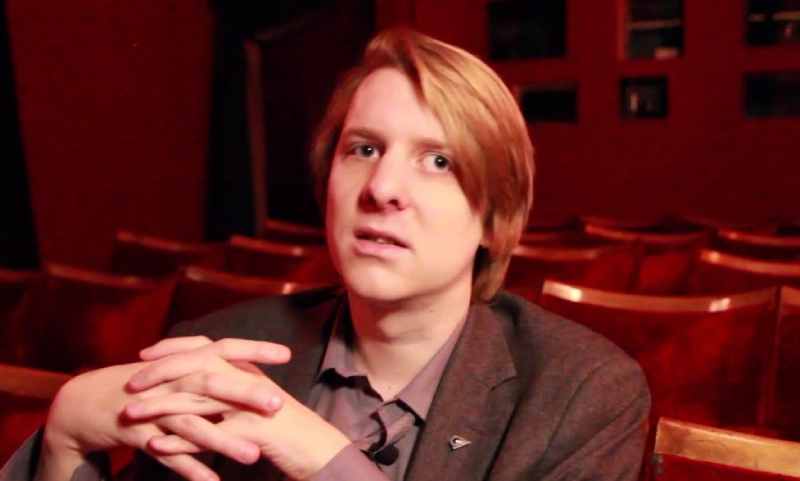
Owen Hatherley has established himself as one of Britain’s most compelling cultural critics, weaving together architecture, politics, and history in a way that feels both urgent and accessible. His writing is not simply about buildings; it is about the societies that produce them, the ideologies they represent, and the lives they shape. Through books, essays, and journalism, Owen Hatherley has carved out a distinctive place in contemporary intellectual life, challenging readers to rethink how cities are built and why.
Early Life and Intellectual Foundations
A Politically Influenced Upbringing
Born in Southampton in 1981, Owen Hatherley grew up in a household where political debate and activism were part of everyday life. His parents were involved in left-wing movements, and this early exposure played a significant role in shaping his worldview. Unlike many critics who arrive at political positions later in life, his ideological foundation was formed from a young age, giving his later work a sense of continuity and conviction.
Academic Journey and Research Interests
Hatherley pursued higher education in London, studying at Goldsmiths before completing a PhD at Birkbeck. His academic work focused on modernism and its political dimensions, particularly in the context of early twentieth-century Europe. This research would later inform much of his writing, providing a theoretical backbone to his critiques of contemporary architecture and urban planning.
The Emergence of a Distinctive Voice
Blogging to Book Publishing
Before becoming widely recognised, Owen Hatherley began his career as a blogger. Writing online allowed him to experiment with tone and subject matter, blending personal observation with rigorous analysis. His early work quickly attracted attention for its clarity and originality, leading to opportunities in mainstream publishing.
Militant Modernism and Early Recognition
His debut book, Militant Modernism, marked a turning point. In it, he argued that modernist architecture once carried radical, utopian ambitions that have since been diluted or abandoned. The book was praised for its boldness and intellectual depth, establishing him as a serious critic with a unique perspective.
Major Works and Their Impact
A Guide to the New Ruins of Great Britain
One of his most influential books, this work examines the transformation of British cities in the wake of deindustrialisation and neoliberal policies. Travelling across the country, Hatherley documents shopping centres, housing developments, and public spaces, revealing how economic priorities have reshaped the urban landscape.
The book resonated with readers because it combined travel writing with sharp political critique. It highlighted the disconnect between the promises of regeneration and the lived reality of many communities.
Landscapes of Communism
In this ambitious work, Owen Hatherley explores the architectural legacy of communist regimes across Eastern Europe. Rather than dismissing these environments as relics of a failed system, he approaches them with nuance, examining both their achievements and contradictions.
The book stands out for its ability to humanise spaces often reduced to stereotypes, offering a more complex understanding of their history and significance.
The Ministry of Nostalgia
Here, he turns his attention to Britain’s cultural memory, particularly the romanticisation of the Second World War. He argues that nostalgia has been used as a political tool, shaping public attitudes and influencing policy decisions.
This work broadened his audience, demonstrating that his insights extend beyond architecture into the wider cultural and political sphere.
Later Works and Continued Evolution
In subsequent books, Owen Hatherley has continued to refine his approach, exploring themes such as European identity, urban governance, and the cultural impact of migration. His writing remains consistent in its commitment to uncovering the deeper forces that shape the built environment.
Key Themes in His Writing
Architecture as Politics
A central idea in Hatherley’s work is that architecture cannot be separated from politics. Buildings are not neutral; they reflect decisions about power, resources, and priorities. By analysing architecture in this way, he reveals how urban spaces embody broader social and economic structures.
Critique of Neoliberal Urbanism
He is particularly critical of the market-driven approach to city planning that has dominated in recent decades. According to Hatherley, this model often prioritises profit over public good, leading to environments that are functional but lacking in character or social value.
Reassessment of Modernism
While modernist architecture has often been criticised for its perceived coldness or uniformity, Hatherley offers a more sympathetic interpretation. He emphasises its original ambition to create better living conditions and more equitable societies, arguing that these goals remain relevant today.
Cultural Memory and Identity
Another recurring theme is the role of memory in shaping contemporary culture. Whether examining post-industrial towns or post-war narratives, he explores how the past is remembered and used in the present.
Journalism and Public Engagement
Contributions to Major Publications
In addition to his books, Owen Hatherley has written extensively for newspapers and magazines. His journalism covers a wide range of topics, from housing policy to cultural trends, always maintaining a clear and engaging style.
Bridging Academia and the Public
One of his strengths lies in his ability to translate complex ideas into accessible language. While his work is grounded in academic research, it avoids unnecessary jargon, making it appealing to a broad audience.
Influence on Public Debate
Through his writing, he has contributed to discussions on urban planning, heritage, and social policy. His critiques have often challenged prevailing narratives, encouraging readers to question assumptions about progress and development.
Style and Approach
A Blend of Observation and Analysis
Hatherley’s writing is notable for its combination of detailed observation and theoretical insight. He often draws on personal experiences, using them as a starting point for broader analysis.
Clarity and Directness
Despite dealing with complex subjects, his prose remains clear and direct. This accessibility has been key to his success, allowing him to reach readers beyond academic circles.
Passionate but Measured
While his work is undeniably political, it is not polemical in a simplistic sense. He presents arguments with evidence and nuance, inviting readers to engage rather than simply agree.
Why His Work Matters Today
Understanding Modern Britain
At a time when cities are undergoing rapid change, the insights of Owen Hatherley are particularly valuable. His work helps to explain why certain developments feel alienating or disconnected from community needs.
Reimagining the Future of Cities
By revisiting the ambitions of modernism, he encourages a rethinking of what urban spaces could be. Rather than accepting current models as inevitable, he opens up possibilities for alternative approaches.
A Voice of Critical Reflection
In a media landscape often dominated by surface-level commentary, his work stands out for its depth and seriousness. It reminds readers that cultural criticism can be both rigorous and relevant.
Challenges and Criticism
Perceived Ideological Bias
Some critics argue that his strong political views influence his analysis too heavily. However, supporters contend that his transparency about his perspective is a strength rather than a weakness.
Reception of Modernist Advocacy
His defence of modernist architecture has also sparked debate. While some appreciate his re-evaluation, others remain sceptical of its legacy.
Navigating Complexity
Writing about architecture and politics simultaneously can be challenging, but Hatherley’s ability to balance these elements has been widely recognised as a key achievement.
FAQs
What is Owen Hatherley best known for?
Owen Hatherley is best known for his writing on architecture, urbanism, and politics, particularly his analysis of modern Britain’s built environment.
Does Owen Hatherley focus only on architecture?
No, his work also explores culture, history, and political ideology, often connecting these themes to the spaces people inhabit.
Why is his work considered influential?
His ability to link architecture with broader social issues has reshaped how many readers understand cities and urban development.
Has Owen Hatherley written about other countries?
Yes, he has examined architecture and politics across Europe, especially in former communist states.
Is his writing accessible to general readers?
Yes, despite its intellectual depth, his style is clear and engaging, making it suitable for a wide audience.
Conclusion
Owen Hatherley has emerged as a powerful and thought-provoking voice in contemporary cultural criticism. By examining the relationship between architecture and politics, he offers insights that go far beyond the physical structures of cities. His work challenges readers to consider how environments are shaped by ideology and how they, in turn, shape human experience.