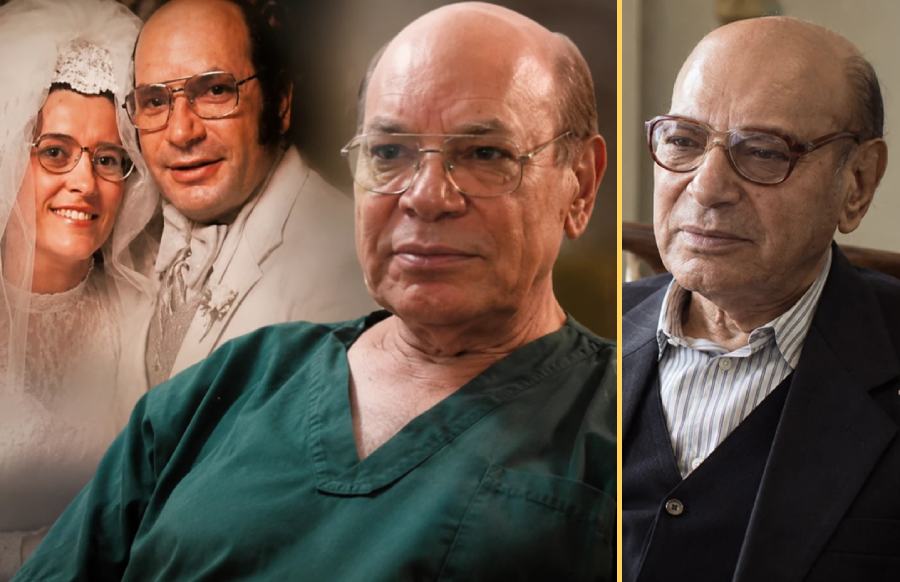
Some people are remembered for what they built. Others are remembered for a single chapter of their lives that overshadowed everything else they ever did. Sayyed Bozorg Mahmoody belongs firmly in the second group. On paper, he had the kind of résumé most people would envy: a mathematics professor, an engineer who once worked alongside NASA, and later a trained anesthesiologist. Yet very few people who know his name today could tell you anything about his academic work. Instead, he is remembered almost entirely through the lens of a personal story that gripped readers and moviegoers across the world. To understand who he really was, you have to look past the headlines and piece together the man behind the controversy.
Early Life and a Childhood Shaped by Loss
Mahmoody was born around 1939 in Shushtar, a historic town in southwestern Iran, into a respected and educated family. His parents were both doctors, which says a great deal about the social standing and intellectual environment he was born into. But that comfortable start did not last long. His father passed away when Mahmoody was still a toddler, leaving him with almost no memory of the man. Then, when he was only eight years old, his mother died as well. Suddenly orphaned, he was raised by his older sister, who stepped into a parental role during his most formative years. This early experience of loss and instability is something biographers often point to when trying to make sense of the complicated, controlling man he would later become. Whether or not childhood trauma fully explains his adult behavior is debatable, but it certainly framed the start of a life that would be anything but ordinary.
A Bright Academic Path Across Continents
By the time he reached adulthood, Mahmoody clearly had ambition and intellect to spare. At just eighteen, he left Iran to study English in London, a bold move for a young man from a provincial Iranian town in that era. From there, his trajectory only steepened. In 1961, he relocated to the United States, where he would spend the next several decades reinventing himself professionally more than once. He first established himself as a university mathematics professor and an engineer, eventually contributing to work connected to NASA during the 1960s. That alone would have been a remarkable career for most people. But Mahmoody was not finished. Later in life, he changed course entirely, enrolling in medical school and qualifying as an anesthesiologist. This willingness to keep learning and switching fields paints a picture of a genuinely capable and driven mind, even if his personal decisions would later cast a long shadow over those achievements.
Meeting Betty Mahmoody
The turning point in his story came in the mid-1970s. In 1974, he met an American woman named Betty Lover, and the connection between them developed steadily over the next few years. Betty Mahmoody, as she would later be known to millions of readers, came from Alma, Michigan, and was drawn to the charming, educated, and seemingly devoted man who went by the affectionate nickname “Moody.” The two of them dated for around three years before marrying in 1977. In those early years, by most accounts, the relationship looked stable and loving. He was a successful physician, she was building a family, and there was little outward sign of the rupture that lay ahead. Their daughter, Mahtob Mahmoody, was born in 1979, completing a family unit that, from the outside, appeared to be living an ordinary American life. It is worth pausing here, because the contrast between this calm beginning and what came later is exactly what made their story so jarring to the public.
The 1984 Trip to Iran That Changed Everything
In 1984, the family traveled to Iran. According to Betty’s account, the trip was framed as a short visit, a chance for the family to see Mahmoody’s relatives and his homeland. But what was sold as a temporary holiday turned into something far darker. Once they were in Iran, Mahmoody refused to let his wife and daughter return to the United States. The country itself was in a tense, turbulent period following the 1979 revolution and during the long war with Iraq, and that political climate gave him enormous leverage over two foreigners who suddenly had no easy way home. Betty described being held against her will, isolated, and subjected to ongoing abuse, while desperately trying to protect her young daughter and find a way out. For roughly eighteen months, she lived in a situation she experienced as captivity, navigating a foreign legal and social system that, at the time, offered her little protection as a woman and a wife.
Betty Mahmoody’s Daring Escape
What makes this story so enduring is how it ended, at least for Betty and Mahtob. Refusing to accept her circumstances, Betty Mahmoody eventually orchestrated a dangerous escape. In 1986, she fled with her daughter, making her way overland toward Turkey in a journey that was physically grueling and genuinely life-threatening. The route reportedly involved harsh terrain, smugglers, and bitter cold, all while keeping a child safe and quiet. The fact that a mother managed to pull this off, with no guarantee of success and enormous risk if caught, is precisely why her story resonated so widely. When she finally reached safety and returned to the United States, she carried not just her freedom but a story that the world would soon want to hear in full. Her escape transformed her from a private individual into an international symbol of resilience.
Not Without My Daughter and Global Fame
Betty turned her experience into the bestselling memoir Not Without My Daughter, which detailed the ordeal from her perspective and quickly became a sensation. The book struck a nerve, tapping into anxieties about cultural difference, women’s rights, and parental fear, and it was later adapted into a well-known film. For most of the world, the names Sayyed Bozorg Mahmoody, Betty Mahmoody, and Mahtob Mahmoody entered public consciousness through this single narrative. The story positioned Betty as the courageous protagonist and Mahmoody as the antagonist whose deception trapped his family. The cultural impact was significant, though not without consequences of its own, as critics in Iran and elsewhere argued that the book and film reinforced one-sided stereotypes about Iranians and Iranian society. Regardless of that debate, the work cemented the family’s place in popular memory and ensured that Mahmoody would be remembered primarily as a figure in someone else’s story.
Mahmoody’s Side of the Story
One detail that often gets lost in the retelling is that Mahmoody did not stay silent. During his lifetime, he disputed the version of events presented in Betty’s memoir, insisting that his perspective had been misrepresented. He maintained ties to his daughter’s memory and argued that he was being portrayed unfairly to a global audience that only ever heard one account. This does not erase the experiences Betty and Mahtob described, but it is a reminder that the public record is built almost entirely on their testimony. There were essentially two competing narratives, and the one that reached millions of readers was not his. Whether you find his objections sympathetic or hollow, the existence of a counter-narrative is part of what makes the case a genuine study in how stories are told, who gets to tell them, and how reputations are permanently shaped by the version that wins out.
Mahtob Mahmoody’s Perspective
Years later, the daughter at the center of it all added her own voice. Mahtob Mahmoody, who was just a small child during the events in Iran, grew up and eventually wrote her own memoir, My Name is Mahtob. Her book revisited the family’s story from the viewpoint of the child who lived through it and then had to grow up under the weight of it. Her account explored not only the events themselves but also the long aftermath, including how she processed her relationship with a father she both feared and, in complicated ways, remained connected to. Mahtob’s perspective added emotional depth and continuity to a story that the public had largely frozen in the 1980s, reminding everyone that the people involved were not characters but a real family living with real and lasting consequences.
Conclusion
Betty and Mahmoody divorced in 1989, formally closing a marriage that had effectively ended years earlier in the most traumatic way possible. Mahmoody spent his later years in Iran, far from the American life he had once built and far from the daughter whose name became linked forever to his own. He died on August 23, 2009, in Tehran, at around seventy years old, reportedly of natural causes. His legacy is a strange and uneasy one. Here was a man with genuine intellectual gifts and a multi-disciplinary career that spanned mathematics, engineering, space-related work, and medicine, yet none of that is what the world remembers. His name endures because of a single act and the powerful books and film that documented its fallout. It is a sobering example of how one decision can completely redefine a life in the public eye.
FAQs
Who was Sayyed Bozorg Mahmoody?
He was an Iranian-born professor, engineer, and anesthesiologist who became internationally known after refusing to let his American wife and daughter leave Iran in the mid-1980s.
Why is Sayyed Bozorg Mahmoody so famous?
His fame comes almost entirely from his wife Betty Mahmoody’s bestselling memoir Not Without My Daughter, which documented how she and their daughter were held in Iran before escaping to Turkey.
Was Sayyed Bozorg Mahmoody actually a successful professional?
Yes. Before the controversy, he worked as a university mathematics professor, an engineer connected to NASA in the 1960s, and later trained as an anesthesiologist after attending medical school.
What happened to Betty and Mahtob Mahmoody?
Betty Mahmoody escaped Iran with her daughter in 1986 and later wrote about it, while Mahtob Mahmoody grew up to publish her own memoir, My Name is Mahtob, sharing the story from her perspective.
When did Sayyed Bozorg Mahmoody die?
He died on August 23, 2009, in Tehran, Iran, at around seventy years old, reportedly from natural causes.
Conclusion
The story of Sayyed Bozorg Mahmoody is ultimately about contrast and consequence. He was a talented professional who reinvented himself across continents and disciplines, and he was also the man at the heart of one of the most widely known captivity stories of the late twentieth century. Through the writing of Betty Mahmoody and, later, Mahtob Mahmoody, the world came to know him not for his accomplishments but for the harm his family said he caused. That tension, between what a person achieves and how they are remembered, is what keeps this story relevant decades later. It raises lasting questions about cross-cultural marriage, women’s rights, parental power, and the way a single dominant narrative can shape a legacy forever. Whatever else can be said about him, Mahmoody’s life remains a powerful reminder that reputation is rarely built on accomplishments alone, and that the stories told about us can outlast everything we ever did ourselves.