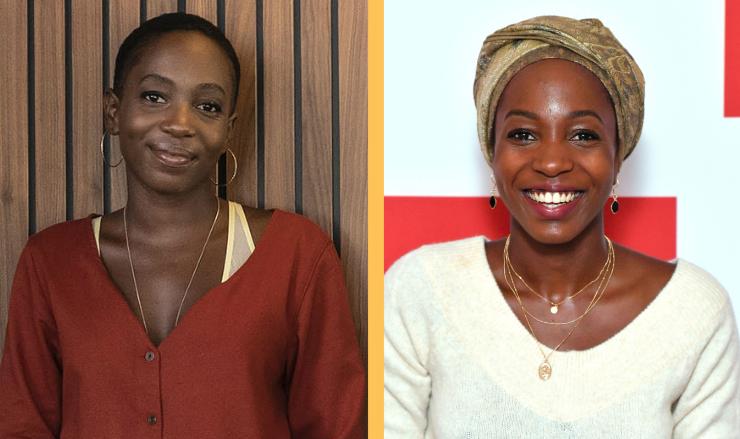
If you’ve watched any seriously good British drama over the last decade, chances are Tamara Lawrance has already crept under your skin without you fully clocking it. Born on 15 July 1994 in Wembley, London, she’s one of those performers who doesn’t announce herself with fireworks but instead pulls you in slowly, scene by scene, until you realise you can’t look away. She’s of Jamaican descent, raised in Northwest London in a hardworking, fairly modest household, and she carries a kind of grounded intensity that you simply can’t teach. What strikes me most about her, even after years of watching her work, is how she refuses to coast on charm alone. Every role feels like a deliberate choice, every character built from the ground up rather than borrowed from the last one. That’s rare, and it’s the main reason people in the industry have been quietly betting on her since before she was a household name.
Humble Roots and an Early Spark
Tamara’s story doesn’t begin in some glamorous showbiz family with connections lined up like dominoes. Her mother worked as a hospital clinical technician and had immigrated from Jamaica, while her father earned his living as a delivery driver. She grew up alongside several younger siblings, which probably explains a bit of that no-nonsense, get-on-with-it energy she brings to her performances. Acting wasn’t handed to her; she chased it. The spark caught when she was just six years old, performing in school plays, and it never really went out. What I find genuinely inspiring here is that she didn’t come from a performing arts background and didn’t have an obvious roadmap. She did her own research, leaned on the encouragement of a teacher, and basically willed herself toward a career that the odds didn’t favour. That kind of self-direction at a young age tells you everything about why she’s lasted.
Sharpening the Craft at RADA
Here’s where the raw talent met serious discipline. Tamara attended St Dominic’s Sixth Form College in Harrow before earning her place at the Royal Academy of Dramatic Art, one of the most prestigious and notoriously difficult drama schools to get into anywhere in the world. She has spoken candidly about not even realising how hard it was to get in until she was already there, surrounded by people who’d auditioned multiple times before finally cracking it. She graduated from RADA in 2015, and you can feel that training in everything she does — the control, the precision, the way she can sit in silence and still command the screen. Before all that, there was a lovely little detail that hints at her range: back in 2012, at the age of 17, she won the Poetry Society’s nationwide SLAMbassadors UK competition. The girl could clearly handle words long before she was delivering Shakespeare to international audiences.
The Breakout Years: 2017 Changed Everything
For most actors, one big moment a year is a dream. Tamara had two land almost at once. In 2017 she appeared in the BBC television film King Charles III, playing Prince Harry’s republican girlfriend in a sharp, Shakespearean-style imagining of the British royal family. Critics noticed her immediately, with one outlet praising how naturally she handled the tricky blank verse the piece was written in. That same year, she took on Viola in Twelfth Night at the National Theatre, a production that was broadcast internationally through NT Live, instantly widening her audience far beyond London. The recognition that followed was telling: WhatsOnStage named her one of the “10 theatre faces to look out for,” and The Guardian listed her among “20 talents set to take 2017 by storm.” Then, in 2018, she picked up second prize at the Ian Charleson Awards for that Viola performance. When the theatre world and the screen world both start nodding at you in the same breath, you know something real is happening.
The Long Song and Confronting Heavy History
In December 2018, Tamara took on what might be her most personally significant role to date. She starred as July, often referred to as Miss July, a young enslaved woman on a sugar plantation in 19th-century Jamaica, in the three-part BBC adaptation of Andrea Levy’s acclaimed novel The Long Song. The role demanded an enormous emotional commitment, charting July’s journey from being torn from her mother through her survival amid plantation brutality and the upheaval of the 1831 Christmas Rebellion. What made it hit even harder was the personal connection — Tamara is of Jamaican descent herself, though she’s mentioned her family rarely discussed the island’s painful history. She later admitted she hadn’t fully grasped the emotional toll of the part until a conversation with a drama therapist helped her process trauma she’d quietly been carrying. The performance was rightly celebrated and earned her a Royal Television Society Award, cementing her as a serious dramatic actress willing to go to genuinely difficult places.
Building a Versatile Filmography
What I respect about Tamara’s career choices is that she keeps zigzagging in the best possible way. She refuses to be boxed in. She led the 2020 sci-fi horror thriller Kindred as Charlotte, a pregnant woman tangled in grief and unsettling family dynamics after her partner’s sudden death. She turned up in Boxing Day in 2021, showing she could do warmth and comedy too. Then came one of the standout moments of her career so far: The Silent Twins in 2022, where she played one of the real-life Gibbons sisters, Jennifer, opposite Letitia Wright. The pair shared the inaugural Best Joint Lead Performance award at the British Independent Film Awards, which is a beautiful nod to how seamlessly they worked together. In 2023, she joined the second series of the BBC prison drama Time, playing Abi, an inmate serving a life sentence, in a role layered with guarded pain and slow-burning revelation.
Stepping Into Leading-Lady Territory
By the mid-2020s, Tamara had clearly graduated from “one to watch” to genuine leading talent. She took the title role in Get Millie Black, the HBO and Channel 4 crime series created by Booker Prize-winning author Marlon James, set largely in Jamaica. It’s a meaty, central role of exactly the kind her earlier work had been building toward, and it placed her firmly at the front of a major international production. Alongside the screen work, she’s stayed loyal to the stage that helped make her, appearing in productions like the UK premiere of Is God Is at the Royal Court Theatre. That refusal to abandon theatre even as film and television opportunities pile up is, I think, a sign of someone who genuinely loves the craft rather than just the spotlight. She moves between mediums the way a musician moves between instruments.
Why Tamara Lawrance Matters Right Now
There’s something quietly important about an actress like Tamara arriving at exactly this moment in the industry. She tells stories that centre Black British and Caribbean experiences without ever reducing those stories to a single note, and she does it with a craftsmanship that demands to be taken seriously. She’s not chasing fame for its own sake; she’s chasing roles that mean something and characters that resist easy answers. For young performers from non-traditional backgrounds, she’s living proof that you don’t need connections or money to break through — you need talent, relentless self-belief, and the willingness to do the unglamorous work. As streaming platforms keep hunting for distinctive voices and complex stories, Tamara is perfectly positioned to keep climbing for years to come.
Here’s the full SEO package for the Tamara Lawrance article:
Frequently Asked Questions
Who is Tamara Lawrance?
Tamara Lawrance is a British actress of Jamaican descent, born in Wembley, London, in 1994. She trained at RADA and is known for roles in King Charles III, The Long Song, The Silent Twins, and Get Millie Black.
What is Tamara Lawrance best known for?
She’s best known for her award-winning performance as July in the BBC’s The Long Song, her role as Jennifer Gibbons in The Silent Twins, and leading the HBO crime series Get Millie Black.
How old is Tamara Lawrance?
Tamara Lawrance was born on 15 July 1994, which makes her 31 years old as of 2026.
Where did Tamara Lawrance study acting?
She attended St Dominic’s Sixth Form College in Harrow before graduating from the prestigious Royal Academy of Dramatic Art (RADA) in 2015.
Has Tamara Lawrance won any awards?
Yes. She won a Royal Television Society Award for The Long Song and shared the inaugural Best Joint Lead Performance award at the British Independent Film Awards for The Silent Twins.
Conclusion
Tamara Lawrance is the kind of actress who makes the rest of the cast better just by being in the room. From a working-class childhood in Northwest London to RADA, from the National Theatre to HBO, her rise has been steady, earned, and entirely her own. She’s collected the awards and the critical praise, sure, but the more compelling story is the consistency — the way she keeps choosing difficult, meaningful roles and nailing them. If her trajectory so far is anything to go by, the most interesting chapters of her career are still ahead. Keep an eye on her, because Tamara Lawrance isn’t a flash in the pan; she’s a slow-building force, and forces like that tend to leave a lasting mark.