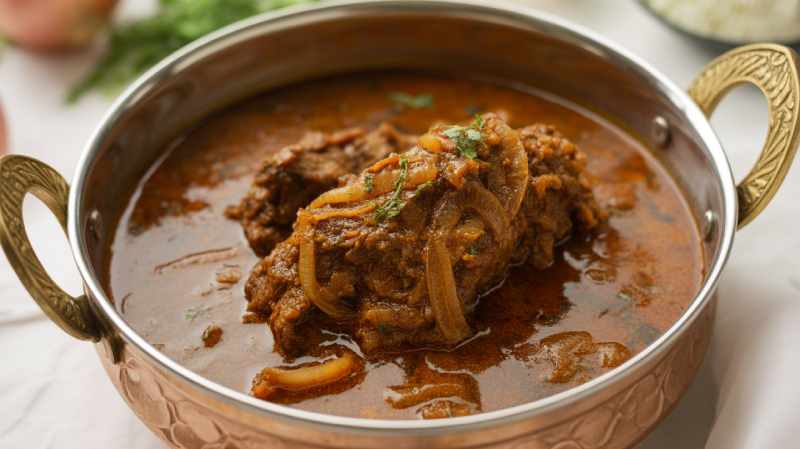
Lamb dopiaza is a dish that quietly commands respect. It does not rely on heavy cream, overpowering heat, or unnecessary embellishments. Instead, it builds flavour patiently, using time, onions, and balanced spices to create a curry that is both robust and refined. Across South Asia and beyond, lamb dopiaza has earned its place as a classic — not because it is flashy, but because it delivers consistency, depth, and comfort in every bite.
What Is Lamb Dopiaza?
Lamb dopiaza is a traditional meat curry made with lamb cooked in an onion-rich gravy. The defining feature of the dish lies in its name: do piaza, meaning “two onions”. This refers to the method of adding onions at two different stages of cooking, creating layers of sweetness, texture, and aroma.
Unlike many modern curries that rely heavily on tomatoes or cream, lamb dopiaza allows onions to take centre stage. The result is a thick, glossy sauce that coats tender lamb pieces without feeling heavy or greasy. The flavour profile is savoury with gentle sweetness, aromatic rather than fiery, and deeply satisfying.
The Historical Origins of Lamb Dopiaza
Persian and Mughal Influence
The technique behind dopiaza is believed to have originated in Persian cooking, where onions were often used generously to create rich gravies. This approach travelled to the Indian subcontinent through Mughal influence, where it was adapted using local spices and cooking methods.
Mughal cuisine valued balance and refinement. Spices were used carefully to enhance meat rather than overpower it, and onions played a crucial role in creating body and sweetness. Lamb dopiaza fits squarely within this culinary philosophy.
Evolution Across South Asia
Over time, lamb dopiaza evolved differently across regions. In some areas, tomatoes were introduced; in others, yoghurt became part of the base. Despite these variations, the core principle remained the same: onions added twice, lamb cooked slowly, and spices blended with restraint.
Today, lamb dopiaza is commonly found in Pakistani, North Indian, and Bangladeshi cooking, as well as on British curry house menus.
Why Onions Matter in Lamb Dopiaza
Two Stages, Two Purposes
The “two onions” concept is not just a name — it is a functional cooking technique.
- First stage onions
These onions are finely sliced or chopped and cooked slowly at the beginning. They soften, caramelise lightly, and dissolve into the gravy, forming the backbone of the sauce. - Second stage onions
Added later, these onions are usually chunked or thickly sliced. They retain some bite and sweetness, giving texture and contrast to the dish.
This dual use creates complexity without requiring additional ingredients. The gravy tastes rich and rounded, while the visible onion pieces add interest and freshness.
Natural Sweetness Without Sugar
One of the strengths of lamb dopiaza is that it achieves sweetness naturally. Slow-cooked onions release sugars gradually, balancing the savoury lamb and earthy spices without the need for added sugar or cream.
Choosing the Right Cut of Lamb
The quality of lamb has a major impact on the final dish.
Best Cuts for Lamb Dopiaza
- Shoulder: Rich in flavour, ideal for slow cooking
- Leg: Leaner but still tender when cooked properly
- Neck or shank: Excellent depth of flavour, though requiring longer cooking
Cuts with some fat and connective tissue work best, as they break down during cooking and enrich the gravy.
Preparation Matters
Lamb should be cut into medium-sized chunks, neither too small nor too large. This ensures even cooking and prevents the meat from drying out or becoming stringy.
The Spice Profile: Balanced and Aromatic
Lamb dopiaza is not meant to be aggressively spicy. Instead, it relies on warm, aromatic spices that complement the meat and onions.
Commonly Used Spices
- Cumin
- Coriander
- Ginger
- Garlic
- Black pepper
- Cloves
- Cardamom
- Cinnamon
- Mild chilli powder
These spices are typically used in moderate quantities. The goal is harmony rather than intensity.
Why Less Is More
Over-spicing masks the natural sweetness of onions and the richness of lamb. A good lamb dopiaza allows each ingredient to be tasted clearly, with spices acting as background support.
Cooking Technique: Slow and Steady Wins
Building the Base
The cooking process begins with gently frying onions in oil or ghee until they soften and turn golden. Ginger and garlic are added next, followed by spices. This step is crucial, as it determines the depth of flavour in the final dish.
Browning the Lamb
Lamb is added and stirred until lightly browned. This seals in juices and creates a savoury foundation through caramelisation.
Simmering for Tenderness
Liquid — often water, stock, or a small amount of tomato — is added, and the curry is left to simmer slowly. This allows the lamb to soften and absorb the flavours of the sauce.
Final Onion Addition
The second batch of onions is added near the end, cooked just enough to soften slightly while retaining shape and sweetness.
Regional Variations of Lamb Dopiaza
Pakistani-Style Lamb Dopiaza
Often richer and more robust, with deeper onion caramelisation and minimal tomato use. The gravy tends to be thicker and oil may separate slightly at the top, indicating proper cooking.
North Indian Lamb Dopiaza
May include tomatoes or yoghurt for mild tang. Slightly lighter in texture, with a smoother sauce.
British Curry House Adaptations
Often sweeter and more onion-forward, sometimes with added peppers or extra sauce to suit local preferences.
Each variation respects the core technique while adapting to local tastes.
Nutritional Perspective
Lamb dopiaza can be a balanced meal when prepared thoughtfully.
Nutritional Highlights
- High-quality protein from lamb
- Natural carbohydrates and fibre from onions
- Healthy fats when cooked with moderation
Making It Lighter
Using leaner cuts, reducing oil, and serving with plain rice or wholemeal roti can make lamb dopiaza suitable for regular meals without compromising flavour.
How Lamb Dopiaza Is Traditionally Served
Lamb dopiaza pairs well with simple sides that allow the curry to shine.
Popular Accompaniments
- Steamed basmati rice
- Plain naan or roti
- Light cucumber salad or yoghurt raita
Heavy sides are unnecessary, as the curry itself is rich and satisfying.
Why Lamb Dopiaza Remains Popular
The enduring appeal of lamb dopiaza lies in its balance. It feels indulgent without being excessive, traditional without being outdated, and flavourful without being overwhelming.
For home cooks, it offers reliability. For restaurants, it delivers consistency. For diners, it provides comfort with depth. Few dishes manage all three so effortlessly.
FAQs
Is lamb dopiaza very spicy?
No. Lamb dopiaza is generally mild to medium in heat, focusing more on onion sweetness and aromatic spices than chilli.
Can lamb dopiaza be made without tomatoes?
Yes. Many traditional versions rely almost entirely on onions and spices, using no tomatoes at all.
Why are onions added twice in lamb dopiaza?
Onions are added at two stages to create depth: one batch forms the base of the gravy, while the second adds texture and sweetness.
What makes lamb dopiaza different from other lamb curries?
The defining feature is the double use of onions and the restrained spice profile, which highlights lamb rather than masking it.
Can lamb dopiaza be cooked in advance?
Yes. In fact, it often tastes better the next day, as the flavours have more time to develop.
Conclusion
Lamb dopiaza stands as a testament to the power of simplicity done well. By relying on onions, careful spice selection, and patient cooking, it transforms humble ingredients into a dish of remarkable depth and elegance. It does not chase trends or shortcuts; instead, it honours tradition and technique.
Whether served at a family table or ordered at a restaurant, lamb dopiaza continues to earn its place as a timeless classic — rich, balanced, and deeply satisfying.