Karen Eubank is widely recognised for a life devoted to humanitarian service in some of the world’s most dangerous and overlooked conflict zones. Known for working alongside her husband, David “Dave” Eubank, with the humanitarian organisation Free Burma Rangers, Karen Eubank has spent decades bringing practical aid, comfort, and hope to civilians caught in war. Her work stands out not only for its courage, but also for its consistency, family-centred approach, and deep concern for children whose lives have been shattered by violence and displacement.
Early Life and Calling to Service
Karen Eubank’s journey into humanitarian work did not begin with fame or recognition, but with a strong sense of personal calling. Raised in the United States, she developed an early awareness of global inequality and human suffering. Her Christian faith played a central role in shaping her worldview, particularly the belief that service to others is not optional, but essential.
Rather than seeing faith as a private or abstract matter, Karen Eubank embraced it as a practical guide for how to live in the world. This conviction would later drive her willingness to leave comfort behind and move into environments that many would consider unthinkable for long-term family life. From the outset, her path was defined by action rather than rhetoric.
Partnership with Dave Eubank and the Birth of a Mission
Karen Eubank’s life became inseparably linked with humanitarian fieldwork through her marriage to Dave Eubank, a former US Army Special Forces soldier. Together, they founded and developed what would become the Free Burma Rangers, a multi-ethnic humanitarian organisation working in conflict areas.
From the beginning, Karen Eubank was not a background figure. She played an active and essential role in shaping the organisation’s humanitarian ethos. While Dave often focused on security, strategy, and frontline coordination, Karen concentrated on the human heart of the mission: families, children, and long-term emotional recovery.
This partnership allowed the organisation to function not just as a relief operation, but as a living community embedded within the populations it served.
Understanding the Work of Free Burma Rangers
The work Karen Eubank undertakes with Free Burma Rangers is intense, unpredictable, and often life-threatening. The organisation operates in regions affected by armed conflict, ethnic persecution, and state violence. These include areas of Myanmar, Iraq, Syria, Sudan, and the Kurdish regions.
Karen Eubank’s contribution is grounded in practical humanitarian response. This includes delivering food, medical supplies, and emergency aid to displaced communities. However, her work goes further than logistics. She focuses on restoring dignity, routine, and emotional stability, particularly for children traumatised by war.
Unlike many short-term humanitarian missions, the Free Burma Rangers emphasise long-term presence. Karen Eubank often spends extended periods living alongside the people she serves, building trust and understanding cultural realities rather than imposing external solutions.
The Good Life Club and Work with Children
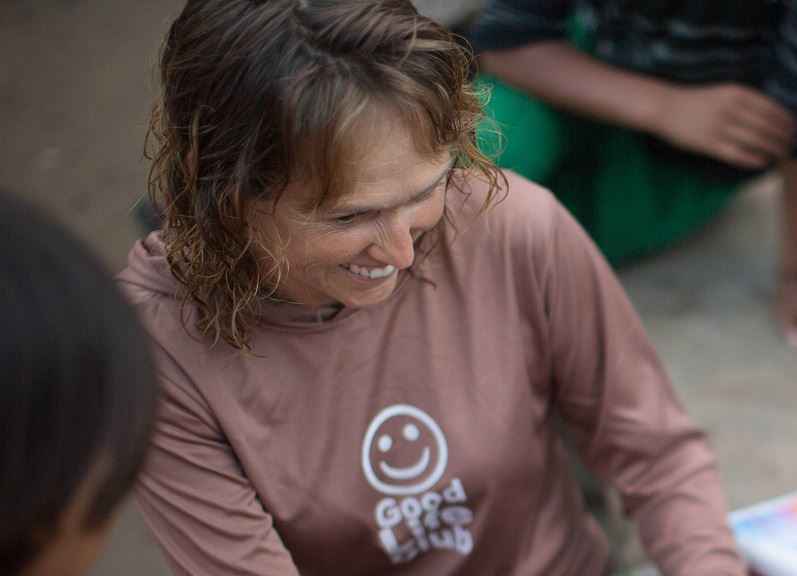
One of Karen Eubank’s most significant contributions is her involvement in the development and leadership of the Good Life Club, a programme designed specifically for children living in conflict zones.
Purpose of the Good Life Club
The Good Life Club aims to give children moments of normality amid chaos. Karen Eubank recognised that while food and medicine are critical, emotional healing is just as important. The programme teaches basic hygiene, health awareness, and practical life skills, but it also prioritises play, storytelling, and laughter.
Psychological and Emotional Impact
Children affected by war often experience fear, grief, and long-term psychological trauma. Karen Eubank’s work addresses these issues through structured yet gentle activities that help children process their experiences. Games, songs, and group interaction provide a sense of safety and belonging, even if only temporarily.
Empowering Families Through Children
By focusing on children, Karen Eubank indirectly supports parents as well. When parents see their children smile, learn, and regain confidence, it strengthens family resilience. This holistic approach reflects her understanding that humanitarian aid must address the emotional fabric of communities, not just physical survival.
Serving in Conflict Zones Across the World
Karen Eubank’s humanitarian journey has taken her to some of the most volatile regions on earth. Each location presents unique challenges, yet her approach remains rooted in consistency and empathy.
Myanmar and Ethnic Conflict
In Myanmar, Karen Eubank worked with ethnic minority communities facing decades of persecution and displacement. Jungle conditions, constant military threats, and lack of infrastructure made humanitarian work extremely difficult. Despite this, she remained committed to staying close to the people rather than operating from distant safe zones.
Middle East and ISIS Conflict
During the height of ISIS violence in Iraq and Syria, Karen Eubank accompanied relief teams into active war zones. She worked with displaced Yazidi, Christian, and Muslim families, offering aid without discrimination. Her presence in these regions underscored a belief that humanitarian service must transcend politics and religion.
Africa and Humanitarian Crisis
In parts of Africa, including Sudan, Karen Eubank faced different realities: widespread poverty, unstable governance, and limited access to healthcare. Her adaptability allowed her to respond to these challenges while maintaining the same core focus on children and families.
Faith as a Source of Strength
Karen Eubank has consistently spoken about the role of faith in sustaining her work. For her, faith is not a shield from danger, but a source of courage within it. It provides meaning to suffering and a framework for compassion, even when outcomes are uncertain.
Importantly, her humanitarian approach does not require recipients to share her beliefs. Aid is offered freely, based on need rather than ideology. This inclusive attitude has allowed her to work effectively across religious and cultural boundaries, earning respect in diverse communities.
Family Life in the Midst of War
Perhaps one of the most remarkable aspects of Karen Eubank’s story is her decision to raise a family while living and working in conflict zones. She and her husband chose to involve their children in their mission, homeschooling them and integrating family life into humanitarian service.
This choice has sparked debate, admiration, and curiosity. Karen Eubank views family not as a limitation, but as a strength. Her children have grown up with a global perspective, learning empathy and resilience firsthand. Their presence also humanises humanitarian teams, helping local communities see them not as outsiders, but as fellow families facing hardship together.
Public Attention and Media Representation
Over time, Karen Eubank’s work has attracted media attention through interviews, documentaries, and public speaking. These portrayals often highlight the intensity of life in war zones, but they also emphasise quieter moments of kindness, humour, and perseverance.
Documentary coverage has introduced wider audiences to the realities of humanitarian work beyond headlines. Karen Eubank’s calm, grounded presence offers a counter-narrative to sensationalised depictions of conflict, focusing instead on human connection and moral responsibility.
Criticism, Risk, and Ethical Questions
Humanitarian work in active conflict zones is never without controversy. Critics sometimes question the safety of bringing families into dangerous areas or the role of faith-based organisations in complex political environments.
Karen Eubank acknowledges these concerns but maintains that informed risk, undertaken with humility and preparation, can be justified when the alternative is indifference. She emphasises accountability, local partnerships, and respect for the communities served as essential safeguards against harm.
Influence and Legacy
The long-term influence of Karen Eubank’s work can be seen in the resilience of communities she has served and in the growing interest among younger generations in humanitarian service that is relational rather than transactional.
Her example challenges conventional ideas about success, security, and fulfilment. By choosing service over comfort, and presence over distance, Karen Eubank has redefined what it means to live a purposeful life in a global context.
FAQs
Who is Karen Eubank?
Karen Eubank is a humanitarian worker and missionary known for decades of frontline aid work with Free Burma Rangers in conflict zones across Asia, the Middle East, and Africa.
What is Karen Eubank best known for?
She is best known for her work with children and families in war zones, particularly through programmes like the Good Life Club that focus on emotional and psychological healing.
Does Karen Eubank work only with Christians?
No, her humanitarian work serves people of all faiths and backgrounds, based solely on need rather than belief.
Has Karen Eubank lived in war zones?
Yes, she has spent many years living and working in active conflict areas alongside local communities and humanitarian teams.
Why is Karen Eubank’s work considered unique?
Her work is distinctive because it combines long-term presence, family involvement, child-focused programmes, and frontline humanitarian aid in extremely dangerous environments.
Conclusion
Karen Eubank’s life is a powerful example of what sustained compassion looks like in practice. Through decades of humanitarian service, she has demonstrated that courage is not the absence of fear, but the choice to act despite it. Her commitment to children, families, and forgotten communities offers a compelling reminder that meaningful change often begins with simple acts of presence and care.
In a world where crises are frequently reduced to statistics and headlines, Karen Eubank’s story brings the focus back to individuals and relationships. Her legacy is not measured solely in aid delivered, but in lives touched, dignity restored, and hope preserved against overwhelming odds.