Emma Joy Kitchener: The Aristocratic Legacy Behind Britain’s Most Celebrated Screenwriter

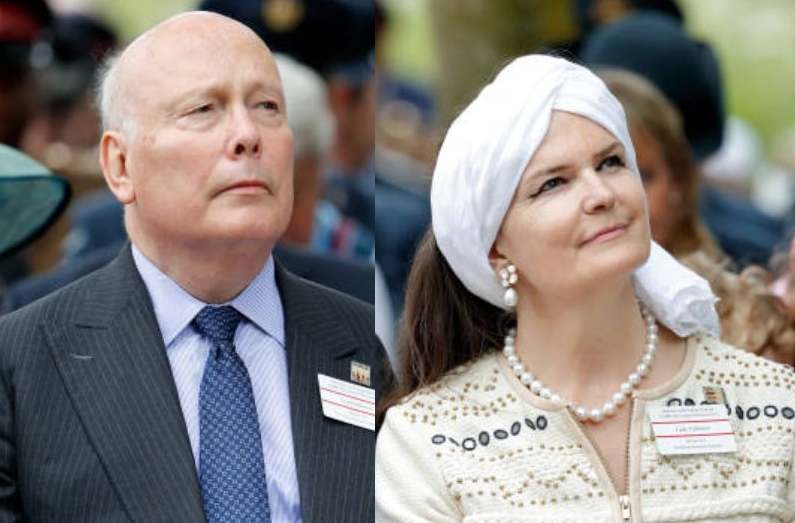
Emma Joy Kitchener occupies a curious position in modern British society. She belongs to one of the country’s most storied military families, yet she has built a quieter, more cultivated life centred on royal service, creative collaboration, and family. Married to Oscar-winning screenwriter Julian Fellowes since 1990, she is far more than a famous spouse. She is a former lady-in-waiting, a Lieutenant of the Royal Victorian Order, a screenwriter in her own right, and the great-grandniece of one of Britain’s most recognisable historical figures, Field Marshal Herbert Kitchener. To understand her is to understand a particular strand of British heritage that has gracefully bridged the Edwardian era and the twenty-first century.
Early Life and Family Background
Emma Joy Kitchener was born on 18 February 1963 in England to Charles Eaton Kitchener and Ursula Hope Luck. Her father, Charles Eaton Kitchener, who lived from 1920 to 1982, came from a long line of military men and public servants. Her mother, Ursula Hope Luck, brought her own respectable lineage into the family, with her father Cyril Montagu Luck contributing to a heritage rich in tradition and refinement.
Through her paternal grandfather Henry Franklin Kitchener, Emma is directly descended from the wider Kitchener clan whose name became synonymous with the British Empire. Her great-grandmother, Eleanor Fanny Lushington, married into the family during a period when British military influence was at its peak, and her grandmother Adela Mary Evelyn Monins, daughter of John Henry Monins, added further depth to the family tree. These names may sound unfamiliar to most modern readers, but they represent the layered tapestry of late Victorian and Edwardian society from which Emma Joy Kitchener emerged.
Growing up surrounded by stories of ancestors who had served queen, king, and country, Emma developed an early appreciation for duty, decorum, and discretion. Unlike many in her social circle, she chose to keep her childhood largely private, a habit that has continued throughout her adult life.
The Kitchener Legacy and Earldom
The Kitchener name carries enormous historical weight. Emma Joy Kitchener is the great-grandniece of Herbert Kitchener, 1st Earl Kitchener of Khartoum, the field marshal whose stern face and pointing finger became the most iconic recruitment poster in British history during the First World War. The 1st Earl died at sea in 1916 when HMS Hampshire struck a German mine off the Orkney Islands, and his title passed through the family line.
Her uncle was Henry Kitchener, 3rd Earl Kitchener, who held the title until his death in 2011. Because the earldom was created with a special remainder that allowed it to pass through male lines but not to female descendants in this branch, the title became extinct upon his passing. Emma’s husband Julian Fellowes publicly campaigned for reform of hereditary peerage succession laws, arguing that his wife should have been able to inherit the title in her own right. This sentiment reflects Julian’s deep admiration for the family he married into and Emma’s own quiet pride in her ancestry.
Her connection to the 2nd Earl Kitchener and the wider line, including the Viscount Broome courtesy title traditionally used by the heir apparent, ties her directly to an unbroken thread of British aristocratic history. The Kitchener family seat, Broome Park in Kent, was once the cherished home of the 1st Earl, who lavished attention on its gardens and interiors despite spending much of his life on military campaigns abroad.
A Royal Warrant of Precedence
In 2012, Emma Joy Kitchener received a Royal Warrant of Precedence, granting her the rank and style of a daughter of an earl. This rare honour, bestowed by Queen Elizabeth II, recognised her heritage and effectively gave her the title of Lady Emma Kitchener. The warrant was a meaningful gesture, acknowledging both the historical significance of her family and the personal qualities that had earned her recognition at court.
Such warrants are not granted lightly. They reflect royal acknowledgement of merit, lineage, and service, and they place the recipient within a specific ceremonial order that governs precedence at state functions and royal occasions.
Service as a Lady-in-Waiting
Long before she received her royal warrant, Emma Joy Kitchener had established herself within royal circles through her service as a lady-in-waiting to Princess Michael of Kent. This role, which combines companionship, organisation, and diplomatic skill, requires the utmost discretion and loyalty. Emma served the princess for many years, accompanying her on official engagements and managing the practical details of royal life with quiet efficiency.
In 2000, her dedication was formally recognised when she was appointed a Lieutenant of the Royal Victorian Order, an honour personally bestowed by the sovereign for services rendered to the monarch or members of the royal family. The postnominal letters LVO are a mark of deep trust and long service, and Emma wore them with characteristic modesty.
Her career in royal service shaped much of her public persona. Those who have observed her at official events often remark on her elegance, her perfectly judged manners, and her unwillingness to court attention. She represents an older model of British womanhood in which dignity outweighs visibility.
Meeting Julian Fellowes
The story of how Emma Joy Kitchener met her future husband has become something of a romantic legend in British social circles. The two were introduced at a dinner in 1989. Julian Fellowes, then a working actor and aspiring writer, was instantly captivated. By his own admission, he proposed marriage just twenty minutes after meeting her, having spent the preceding nineteen minutes summoning the courage to do so.
Her response was famously cool. She rejected him outright and refused to give him her telephone number. But Julian was undeterred. Through persistence, charm, and a refusal to take no for an answer, he eventually won her over. The couple married on 28 April 1990, just a year after their first encounter.
The marriage proved transformative for Julian. He has often credited Emma with the dramatic shift in his fortunes. Before meeting her, he was a jobbing actor of modest fame. After their marriage, his writing career blossomed, culminating in his Academy Award for Gosford Park in 2002 and the global phenomenon of Downton Abbey. Emma has described their early courtship with characteristic dry humour, once joking that she had expected to marry a tall ex-army officer with thousands of acres in Wiltshire, only to find herself wed to a short, balding Catholic screenwriter. The remark, delivered with affectionate teasing, has become one of the most repeated quotations about their union.
Family Life and Their Son Peregrine
The couple have one son, Peregrine Charles Morant Kitchener-Fellowes, born in 1991. Peregrine has largely been kept out of the public eye, a deliberate choice by his parents who have always prioritised his privacy. He represents the next generation of the Kitchener-Fellowes line and carries forward the combined heritage of his father’s literary distinction and his mother’s aristocratic ancestry.
In 1998, the family formally changed their surname from Fellowes to Kitchener-Fellowes, a decision that honoured Emma’s lineage and preserved the Kitchener name for future generations. The change was particularly meaningful given that the earldom would later become extinct, making the family’s choice an important act of preservation.
Family life for Emma and Julian is largely centred on their West Stafford home in Dorset, where Julian became Baron Fellowes of West Stafford in 2011. Their daily life is reportedly grounded in shared passions for history, literature, and the arts. Emma is known to be deeply involved in Julian’s creative process, offering editorial input on his scripts and novels.
Creative Partnership and Influence
Although Julian Fellowes receives the public credit for works such as Gosford Park, Downton Abbey, The Gilded Age, and his novels Past Imperfect and Belgravia, Emma Joy Kitchener has played a quiet but significant role behind the scenes. She has described herself as her husband’s first reader, proofreader, and editor, applying what she calls a trained typist’s eye to spelling, spacing, and presentation. When she particularly admires a phrase or character, she marks it with ticks of approval.
Julian has frequently acknowledged her influence in interviews, suggesting that her insight into aristocratic life, manners, and language lends authenticity to his portrayal of British high society. Many of the period details and social nuances that have made Downton Abbey such a beloved drama draw directly from the world Emma was born into and continues to inhabit.
She has also worked as a screenwriter in her own right, though she has chosen not to pursue the limelight in the way her husband has. Her preference has always been for collaboration over solo recognition.
Public Presence and Style
Emma Joy Kitchener is a familiar figure at royal weddings, charity galas, and theatre premieres. She attended the wedding of Lady Gabriella Windsor in 2019, the world premieres of the Downton Abbey films, and countless red-carpet events with her husband. Her style is consistently elegant, restrained, and timeless. She favours classic tailoring, understated jewellery, and the kind of poise that comes from years of training in royal service.
Her bearing has earned admiration from style observers who appreciate her refusal to chase trends. In an era of celebrity excess, Emma Joy Kitchener represents a different sensibility, one rooted in tradition, modesty, and quiet confidence.
FAQs
Who is Emma Joy Kitchener married to and how did they meet?
Emma Joy Kitchener is married to Lord Julian Fellowes, the Oscar-winning screenwriter behind Gosford Park and Downton Abbey. They met at a dinner party in 1989, where Julian famously proposed just twenty minutes after their introduction. She refused him at first, but his persistence paid off, and the couple married on 28 April 1990.
Is Emma Joy Kitchener related to the famous Lord Kitchener from the First World War?
Yes, Emma is the great-grandniece of Field Marshal Herbert Kitchener, 1st Earl Kitchener of Khartoum, whose image appeared on the iconic British recruitment poster of the First World War. Her uncle was Henry Kitchener, the 3rd Earl Kitchener, and the family title became extinct upon his death in 2011 because the peerage could not pass through her line.
What honours and titles does Emma Joy Kitchener hold?
She holds the postnominal LVO as a Lieutenant of the Royal Victorian Order, awarded in 2000 for her service as a lady-in-waiting to Princess Michael of Kent. In 2012, Queen Elizabeth II granted her a Royal Warrant of Precedence giving her the rank and style of a daughter of an earl, by which she is properly addressed as Lady Emma Kitchener-Fellowes.
Conclusion
Emma Joy Kitchener embodies a fascinating blend of heritage, service, and quiet influence. From her birth into the historic Kitchener family, through her years of royal service, to her remarkable marriage with one of Britain’s most celebrated storytellers, her life has been shaped by tradition without being confined by it. She is the link between a vanished imperial era and the contemporary cultural world that her husband’s writing so vividly evokes.
Her story reminds us that the most enduring contributions to public life are not always made in the spotlight. By preserving the Kitchener name, supporting her husband’s career, and serving the Crown with dignity, she has carved out a legacy that is uniquely her own. In a world that often prizes visibility above all else, Emma Joy Kitchener stands as a thoughtful reminder that grace, loyalty, and intelligence still matter, and that some of Britain’s most interesting figures are those who choose to do their work quietly.