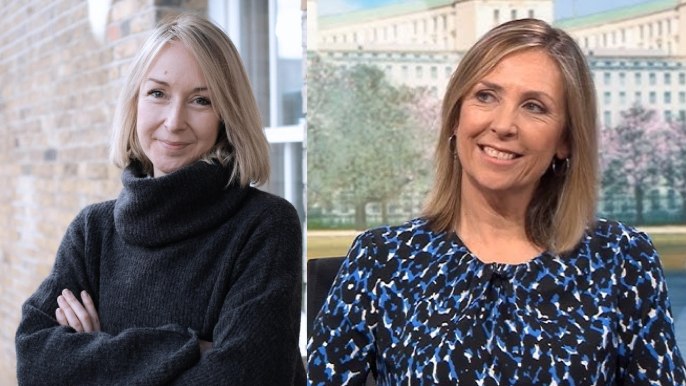
If you’ve watched any major British political moment unfold on the BBC over the last two decades — an election night, a Brexit cliffhanger, a Downing Street resignation — there’s a good chance Vicki Young was somewhere in the frame, explaining what it all actually meant. She’s one of those journalists who has become part of the furniture at Westminster, not because she shouts the loudest, but because she’s almost always the steadiest person in the room. In a media culture that often rewards drama and hot takes, Young has built a long and respected career on something quieter and harder to fake: clarity, fairness, and an obvious deep understanding of how British politics really works.
Who Is Vicki Young?
Vicki Young is a British journalist and broadcaster who has spent the bulk of her career covering politics for the BBC. Born in 1971, she has been the Deputy Political Editor of BBC News since October 2020, and as of June 2025 she also presents the long-running political programme Politics Live. Before those roles she served as the BBC’s Chief Political Correspondent, and across her career she has contributed to the corporation’s coverage of seven general elections — a stat that tells you almost everything about her staying power in a notoriously brutal beat. She’s also stepped in as a relief presenter on the BBC News channel over the years, which is the kind of job they only hand to people they trust to stay composed when the autocue inevitably goes sideways.
From Cornwall to Cambridge: The Early Years
Young grew up in Cornwall and attended Truro High School for Girls, finishing in 1988. By her senior years she’d been made head girl, which is usually a fairly reliable early sign that someone is organised, articulate, and comfortable being out front. From there she went on to New Hall, Cambridge (now known as Murray Edwards College), which is where a lot of her intellectual groundwork was laid. She’s always been famously private about her upbringing — there’s very little public detail about her parents or any siblings, and she’s clearly chosen to keep that part of her life out of the spotlight. That instinct for privacy is something that’s followed her through her whole career, and it’s arguably one of the reasons she’s lasted so long without becoming the story herself.
Cutting Her Teeth at the BBC
Like a lot of the best broadcasters, Young didn’t parachute straight into the big Westminster job. She started out as a reporter at BBC Wales, learning the craft on regional stories before making the move to the national stage. She joined the BBC News at One (the One O’Clock News) as a political correspondent, and between 2008 and 2011 she was a correspondent for BBC Breakfast — a role that meant getting up at hours most of us would consider deeply unreasonable to make sense of the day’s politics for people eating their cornflakes. That early-morning slot is harder than it looks. You’re expected to be sharp, accurate, and conversational all at once, often live, often before the politicians themselves have figured out their lines. It’s a brilliant training ground, and it clearly served her well.
Climbing to Chief Political Correspondent
In 2015, Young was promoted to Chief Political Correspondent of BBC News. The opening came about when Norman Smith moved up to become assistant political editor, and Young was the natural choice to step into the senior correspondent role. This is the period where a lot of people really got to know her face and voice, because the stories she was covering were enormous. She reported through the 2016 EU referendum and the long, chaotic Brexit saga that followed, the 2017 and 2019 general elections, and then the COVID-19 pandemic — arguably one of the most relentless news cycles in living memory. Covering Brexit alone would be a career-defining stretch for most journalists; doing it while also navigating a global health crisis and multiple changes of prime minister is the kind of thing that genuinely tests whether someone can keep their judgement under sustained pressure. She did.
Becoming Deputy Political Editor
October 2020 brought another step up: Young was named Deputy Political Editor of BBC News, a role she still holds. This is a senior position that puts her right at the centre of the corporation’s political output, helping to shape how the biggest stories are told and frequently fronting them herself. Around this time her name was also floated as a serious contender to take over as the BBC’s Political Editor when Laura Kuenssberg moved on — a reflection of just how highly regarded she’d become inside and outside the building. The deputy editor job isn’t just about reporting; it’s about editorial judgement, about deciding what matters and how to frame it fairly when every political party is convinced you’re biased against them. That’s a tightrope, and Young has walked it with a reputation for even-handedness largely intact.
Taking the Helm of Politics Live
In April 2025 the BBC announced that Young would become the new presenter of Politics Live, taking over from Jo Coburn, and she began presenting the programme in June 2025. This was a notable shift in her career — moving from primarily reporting and analysis into the host’s chair, where the job is to steer debate, manage a panel of guests who often have very different agendas, and keep the whole thing fair and watchable in real time. Hosting a daily political show is a different muscle than reporting. You have to listen as hard as you talk, you have to interrupt without being rude, and you have to keep the conversation honest when someone’s trying to dodge a question. Given her years of experience reading politicians and understanding the machinery behind the soundbites, it’s a role that suits her almost perfectly, and it represents a real recognition of her authority in the field.
A Reporter Who’s Lived the Story
One of the things that makes Young relatable is that she hasn’t been immune to the absurd, human side of live reporting. During the 2017 general election, while filing a report in the village of Mevagissey in Cornwall, she was famously “divebombed” by a seagull — the kind of moment that goes viral and reminds everyone that journalists are out in the real world, weather and wildlife included. On the more serious end, in August 2019 she interviewed Prime Minister Boris Johnson in Biarritz, France, during the G7 summit. That range — from being ambushed by a seabird on a Cornish harbour to pressing a sitting prime minister on the world stage — captures the breadth of what the job actually involves. She’s clearly comfortable in both registers, and she doesn’t take herself so seriously that she can’t laugh at the seagull.
Life With Rae Stewart
Away from the cameras, Young’s personal life has been touched by both partnership and profound loss. She was married to the journalist Rae Stewart, whom she met in Westminster, with the couple tying the knot in Cornwall in 2005. Stewart was a well-regarded figure in his own right — a proud son of Tain in the Scottish Highlands, a former STV reporter and communications chief, and later a director of corporate affairs at Water UK who founded the consultancy Ashburn Fleming in 2020. He even worked with the government during the pandemic and spent time advising during the coalition years. Beyond journalism and comms, Rae Stewart was an author, publishing two novels: The Vibe in 2017, set in Goa, and Smoke on the Water in 2023, set in the Scottish Highlands he loved.
Stewart had first been diagnosed with testicular cancer back in 1993, something he later spoke about publicly, and the couple’s path to starting a family was shaped by that experience. They went on to have two children, James and Ellen. Sadly, Rae Stewart died from cancer in June 2023, aged 56. His friend, the broadcaster Stephen Jardine, paid tribute to him as a brilliant journalist, author, husband, father and friend. Throughout it all, Young has kept this side of her life largely private, drawing a clear line between her public work and her family — a choice that feels entirely consistent with who she’s always been.
What Makes Her So Good at the Job
So what is it, exactly, that has kept Vicki Young at the top of one of the most demanding beats in British media for so long? Part of it is the sheer depth of her knowledge — she understands the institutions, the personalities, and the unwritten rules of Westminster in a way that only comes from decades of being there. But the bigger part is temperament. She’s calm when stories are breaking, she’s fair when everyone around her is picking sides, and she explains complicated things without dumbing them down or showing off. That combination — expertise plus restraint — is rarer than it should be, and it’s exactly what makes audiences trust her. In an era where a lot of political coverage feels like it’s shouting, Young’s quieter authority cuts through precisely because it doesn’t need to.
FAQs
Who is Vicki Young?
Vicki Young is a British journalist who has been the BBC’s Deputy Political Editor since October 2020 and the presenter of Politics Live since June 2025, after previously serving as Chief Political Correspondent.
Was Vicki Young married to Rae Stewart?
Yes. Vicki Young married fellow journalist Rae Stewart in Cornwall in 2005, after the pair met in Westminster. He was a former STV reporter, communications chief, and author who died from cancer in June 2023, aged 56.
How many general elections has Vicki Young covered?
She has contributed to the BBC’s coverage of seven general elections, alongside major stories including Brexit, multiple changes of prime minister, and the COVID-19 pandemic.
What is Vicki Young’s current role at the BBC?
She is the BBC’s Deputy Political Editor and, since June 2025, the presenter of the daily political programme Politics Live, where she took over from Jo Coburn.
Where did Vicki Young study?
She attended Truro High School for Girls in Cornwall, where she was head girl, before going on to study at New Hall, Cambridge (now Murray Edwards College).
Conclusion
Vicki Young’s career is a reminder that the most durable journalists aren’t always the flashiest ones. From a Cornish schoolgirl who became head girl, to a Cambridge graduate, to a regional reporter at BBC Wales, and finally to one of the most senior and trusted political voices in the country, her path has been built on consistency and credibility rather than spectacle. She’s reported on Brexit, multiple prime ministers, a pandemic, and seven general elections, and now she’s steering the conversation directly as the host of Politics Live. Alongside all of that, her life with Rae Stewart — and the loss she’s carried since 2023 — adds a deeply human dimension to a figure many of us only know from the screen. Taken together, it’s the story of someone who has earned her standing the hard way, and who keeps showing up, calm and prepared, no matter how chaotic the politics around her get.