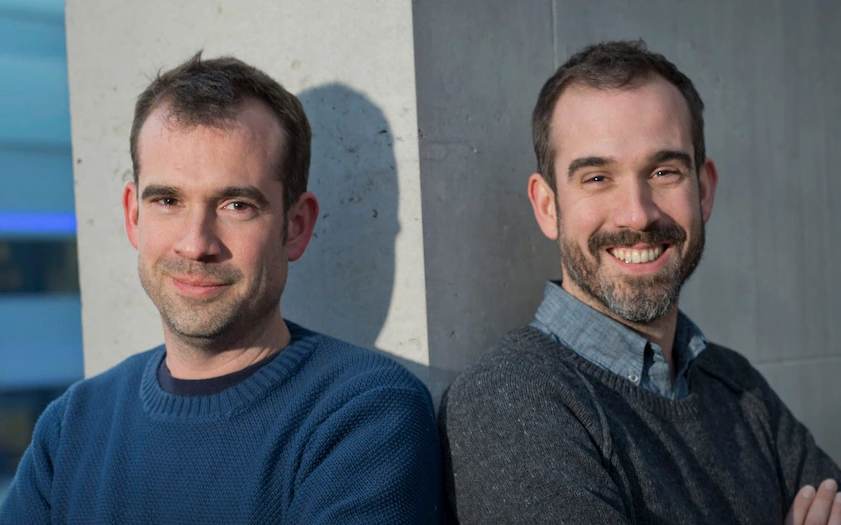
If you’ve ever watched a children’s science show and found yourself, a grown adult, genuinely fascinated by what a sneeze looks like in slow motion or why scabs form the way they do, there’s a decent chance Alexander van Tulleken had something to do with it. Known to almost everyone as “Xand,” he has spent the better part of two decades turning intimidating medical topics into things that feel approachable, funny, and weirdly delightful. He is a qualified doctor, a broadcaster, a public health specialist, and one half of one of Britain’s most recognizable medical double acts. But there’s a lot more underneath the cheerful television persona, and the story of how he got there is genuinely worth telling.
Who Is Alexander van Tulleken?
Alexander Gerald van Hoogenhouck-Tulleken was born on 18 August 1978 in London, England, and over the years he has worn an impressive number of hats: physician, television presenter, broadcaster, lecturer, and what people increasingly describe as a public intellectual with a focus on public and global health. Most viewers first encountered him through the wildly popular CBBC series that he hosts with his twin brother, but his actual day job and academic interests stretch far beyond the studio. He is the kind of person who can explain a tropical disease to a room full of postgraduate students in the morning and, by the afternoon, be cheerfully demonstrating something gross and educational for an audience of seven-year-olds. That range is rare, and it’s a big part of why his name keeps coming up whenever British media needs a doctor who can actually communicate.
A Family Rooted in Two Continents
To understand Xand, you really have to start with his parents, because the household he grew up in was anything but ordinary. His father, Anthony van Tulleken, is an industrial designer and artist who was born in Toronto, Canada, in 1938. Anthony trained in industrial design at the Ontario College of Art during the 1950s, worked on exhibition design at Canada’s Expo ’67 World’s Fair, and was later awarded a scholarship for postgraduate study in product design at the prestigious Royal College of Art in London, graduating around 1970 and then settling in the UK for good. Anthony van Tulleken comes across as a creative, somewhat free-spirited figure, and his sons have spoken warmly about a father who brought a fun-loving, slightly anarchic energy into the home. It’s not hard to imagine that a designer’s instinct for curiosity and experimentation rubbed off on the twins long before either of them picked up a stethoscope.
Kit Hart and the Other Half of the Equation
If Anthony brought the creative chaos, the boys’ mother brought intellectual rigor and a formidable career of her own. Their mother, Kit van Tulleken, was born Catherine Margaret Hart, and the Hart side of the family traces back to Pointe-Claire in Quebec, Canada, which is where Kit and Anthony met and married before they relocated to Britain. Kit Hart built a serious reputation in publishing and media. In 1995 she founded a corporate finance boutique focused specifically on the publishing, information, and data sectors, and she has also worked as a freelance broadcaster for the BBC, specializing in science and education programming. Knowing that, the twins’ eventual move into science broadcasting starts to look less like a coincidence and more like a family trait. With a designer father and a media-and-publishing mother who understood how to explain complicated ideas to a wide audience, the van Tulleken boys grew up surrounded by two complementary ways of looking at the world: one visual and playful, the other analytical and articulate.
The Dutch Heritage Behind the Name
That mouthful of a surname isn’t an accident either, and the family is rather proud of it. The van Tullekens descend from a line of minor Dutch nobility, and their full name reflects roots that stretch back centuries in the Netherlands. The most colorful ancestor is Jan van Hoogenhouck Tulleken, a Dutch rear-admiral who lived from 1762 to 1851. He originally went by the name Jan Tulleken, joined the navy as a teenager, changed his name in 1822, and was raised to the nobility in 1842 with the rank of Jonkheer, the lowest tier of the Dutch aristocratic system. Interestingly, the name is officially spelled without a hyphen, and in the Netherlands the “van Tulleken” construction is actually considered incorrect, since the “van” prefix properly belongs with “Hoogenhouck.” The family home in London apparently kept old paintings and documents commemorating these forebears, so the boys grew up with a tangible sense of where they came from. It’s a nice reminder that behind the cheeky telly doctor is a genuinely old and rather distinguished European lineage.
Growing Up Alongside Chris and Jonathan van Tulleken
Xand is, of course, never far from his identical twin, and you can’t really tell his story without telling Chris’s too. Chris van Tulleken was born just seven minutes before Xand on that same August day in 1978, making him the elder twin by the narrowest of margins. The two grew up in London, were almost inseparable, and have built parallel careers in medicine and broadcasting that constantly intertwine. Chris went on to become an infectious diseases doctor and a professor of infection and immunity at University College London, with research that examines how corporations influence human health, particularly around child nutrition, and he is the bestselling author of Ultra-Processed People. There’s also a third van Tulleken brother who often gets overlooked in the conversation: Jonathan van Tulleken, the youngest of the three, who carved out his own creative path as a film director and documentary filmmaker rather than following the family into medicine. So the household produced two doctors and a filmmaker, which feels like a fairly elegant blend of their parents’ worlds. The twins have been candid over the years about the intensity of their bond, including the fact that they argue fiercely but reconcile just as quickly, treating their squabbles as a sign of closeness rather than conflict.
Education: From Oxford to Harvard
Xand’s academic record is, frankly, ridiculous in the best possible way. He attended Hill House International Junior School and then King’s College School in Wimbledon, before heading off to Oxford, where he studied medicine at Somerville College. From there, his curiosity took him on a winding international route. He went on to train at the Liverpool School of Tropical Medicine, studied at Fordham University in the United States, and earned a Master’s degree in Public Health from Harvard University as a Fulbright Scholar. That combination of tropical medicine and public health is telling: it shows someone who was never content to simply treat patients one at a time but wanted to understand the bigger structural forces that make whole populations sick or well. He is a registered doctor with the UK’s General Medical Council and has also served as a contributing editor for the Oxford Handbook of Humanitarian Medicine, which speaks to how seriously the academic world takes his expertise beyond the camera.
The Making of a Doctor With a Global Outlook
What separates Xand from a lot of “TV doctors” is that the medicine is real and the global health work came first. After qualifying, he leaned hard into public health, humanitarian aid, and even anthropology, and he became a lecturer at the London School of Hygiene and Tropical Medicine. His specialism in tropical medicine eventually steered him toward research and training rather than full-time clinical practice, which is roughly where his path diverged from Chris’s more hands-on hospital career. This academic and humanitarian grounding matters because it gives his broadcasting an authority that’s hard to fake. When he talks about disease outbreaks, nutrition, or the way poverty shapes health outcomes, he’s drawing on field experience and serious study, not just a script. It’s the difference between a presenter who has read about something and a clinician who has actually stood in the middle of it.
Television Career and the Phenomenon of “Operation Ouch!”
The show that turned the van Tulleken twins into household names is the CBBC children’s series they’ve co-hosted since October 2012, in which they use self-experimentation, lab demonstrations, and a healthy dose of grossness to explain the human body and the world of hospitals to kids. It has become a genuine global success and has collected multiple Children’s BAFTA awards along the way. The genius of the format is that it never talks down to its audience; instead it leans into exactly the things children find fascinating and a little revolting, and trusts them to keep up. The twins began their broadcasting journey much earlier, though, with the 2008 series Medicine Men Go Wild, and they’ve since fronted a long list of programs together, including Trust Me, I’m a Doctor, Twinstitute, and assorted documentaries. Their identical-twin dynamic became a built-in feature of the shows, letting them run controlled experiments on each other, which is both scientifically tidy and very entertaining to watch.
Working Without His Twin
While the twin act is the headline, Xand has also built a solid solo profile, and that’s worth highlighting because it shows he isn’t simply one half of a package. He fronted the Channel 4 series How to Lose Weight Well, which is tied to a book of the same name, and he has appeared as himself or as a medical consultant across a huge range of programs, from The One Show to documentaries exploring twins, volcanoes, and the science of the body. His medical credibility has also opened doors internationally; he has worked as a consultant and analyst for major broadcasters including CNN, MSNBC, the BBC, Channel 4, Al Jazeera, and Fox 5 in New York. In 2014, for instance, he served as a health reporter for CNN’s coverage of the Ebola outbreaks, translating a frightening and fast-moving crisis into clear, responsible reporting. That ability to step in front of a global news camera during an emergency and stay calm and lucid is its own distinct skill, separate from the playful energy of his children’s programming.
Humanitarian Work and Public Health Advocacy
Beneath the broadcasting career runs a steady current of real-world humanitarian work, and this is arguably the part of his life he cares about most. Xand has worked with organizations including Doctors of the World, Merlin, and the World Health Organization, putting his tropical medicine and public health training to use in places where help is genuinely scarce. He has also done work in South America, adding to a portfolio of hands-on experience in challenging environments. This side of his career rarely makes the entertainment headlines, but it informs everything else he does. When you’ve worked on the frontline of health crises, you tend to communicate about illness with a particular kind of seriousness and empathy, and that texture comes through even in his lighter media work. It’s the reason his health messaging tends to land as trustworthy rather than preachy, because it’s clearly built on lived experience rather than theory alone.
The COVID-19 Years
The pandemic brought Xand into British living rooms in a new and more personal way. Throughout 2020 he hosted the live daytime BBC One programs Morning Live and Healthcheck UK Live, helping the public make sense of a genuinely confusing and frightening situation in real time. More movingly, he and Chris made the BBC One documentary Surviving the Virus: My Brother & Me, which explored the very personal dimensions of COVID-19. The film let viewers see the twins not just as polished presenters but as worried sons and brothers navigating lockdown, social distancing, and the fear of not being able to see their parents, Anthony and Kit. That willingness to be vulnerable on camera, to admit how isolating and demoralizing the situation felt, deepened the public’s connection to him. It was a reminder that the doctor who teaches children about the body is also a human being who was scared and lonely like everyone else during that strange period.
Personal Life and His Son Julian
Away from the cameras, Xand’s personal life has had its share of twists, and he’s been refreshingly open about a lot of it. He became a father to a son named Julian van Tulleken, and fatherhood is something he has talked about candidly, including the real difficulties of balancing parenting with an unpredictable, travel-heavy career. In 2023 he married Dolly Theis, and his family has continued to grow since then, with reporting indicating he has three children in total. He stands at around six feet tall and, for those keeping score on the great twin-identification challenge, he’s typically the one sporting the beard, which is just about the only reliable way casual viewers can tell him apart from Chris on screen. What comes across consistently is that family is central to who he is, whether that’s the twin bond with Chris, the creative example set by his father Anthony van Tulleken, the intellectual influence of his mother Kit Hart, or his own role as a dad to Julian and his other children.
What Sets Him Apart
Plenty of doctors appear on television, and plenty of broadcasters can sound authoritative about health, but very few people genuinely embody both worlds the way Xand does. He combines a heavyweight academic background, with degrees and training from Oxford, Liverpool, Fordham, and Harvard, with the rare instinct for showmanship that makes a Children’s BAFTA-winning series tick. He has done serious humanitarian work in difficult places, reported live on global health emergencies, lectured postgraduate students, and still managed to make a generation of kids excited about how their own bodies work. That blend of credibility and warmth is unusual, and it’s why he has become a trusted voice rather than just a familiar face. He’s living proof that you can take science extremely seriously while refusing to make it boring, and that you can hold real expertise without ever becoming pompous about it.
FAQs
Who is Alexander van Tulleken?
Alexander “Xand” van Tulleken is a British doctor, broadcaster, and public health specialist, best known for co-hosting the CBBC children’s series Operation Ouch! with his identical twin brother Chris. He trained at Oxford, Liverpool, Fordham, and Harvard, and has worked in global health and humanitarian medicine around the world.
Are Xand and Chris van Tulleken really twins?
Yes, they are identical twins born on 18 August 1978. Chris is the elder by just seven minutes. Both qualified as doctors and built parallel careers in medicine and broadcasting, often appearing together, with Xand usually identifiable as the one with the beard.
Who are Alexander van Tulleken’s parents?
His father, Anthony van Tulleken, is a Canadian-born industrial designer and artist, while his mother, Kit van Tulleken (née Catherine Margaret Hart), built a career in publishing and media. The couple met and married in Canada before settling in London, where they raised their three sons.
Does Alexander van Tulleken have children?
Yes. Xand is a father to a son named Julian, and his family has continued to grow since he married Dolly Theis in 2023. He has spoken openly about the challenges of balancing fatherhood with a demanding, travel-heavy career.
What is Alexander van Tulleken’s medical background?
He holds a medical degree from Oxford and trained at the Liverpool School of Tropical Medicine, with a Master’s in Public Health from Harvard as a Fulbright Scholar. He has worked with Doctors of the World, Merlin, and the WHO, and lectures at the London School of Hygiene and Tropical Medicine.
Conclusion
Alexander “Xand” van Tulleken is a far more layered figure than the cheerful twin from a children’s show might suggest. His story begins with a creative Canadian-born industrial designer father in Anthony van Tulleken and an accomplished publishing and media mind in his mother Kit Hart, runs through a centuries-old line of Dutch nobility, and unfolds alongside his brilliant twin brother Chris van Tulleken and their filmmaker sibling Jonathan van Tulleken. From there it builds into a genuinely remarkable career spanning elite medical training, frontline humanitarian work, global health journalism, and some of the most beloved science broadcasting in Britain. And through all of it, the personal thread, his marriage, his role as a father to his son Julian van Tulleken, and his unbreakable bond with his twin, keeps him grounded and relatable. He has spent his career proving that medicine doesn’t have to be intimidating and that science communicated with honesty and humor can reach absolutely anyone, from a postgraduate lecture hall to a seven-year-old glued to the television. That, more than any single show or qualification, is the legacy he is steadily building.