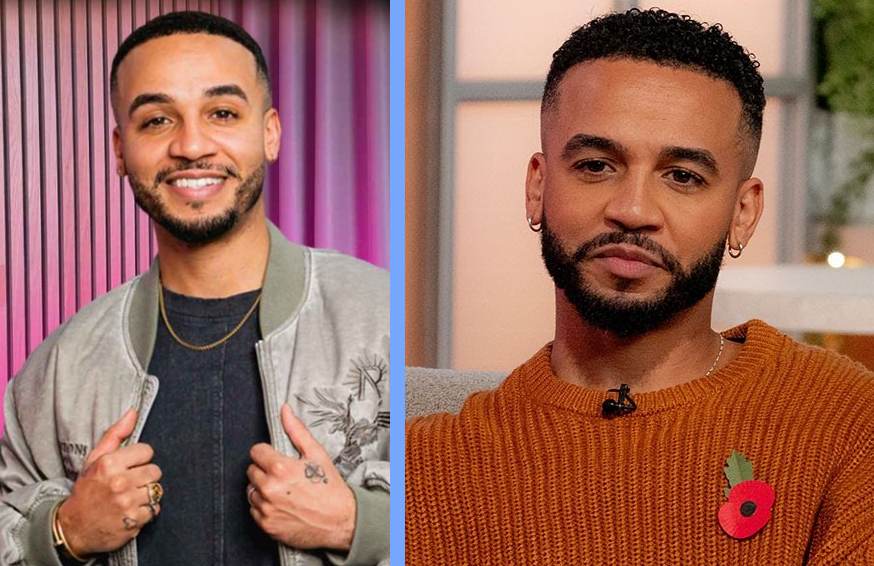
If you grew up anywhere near a British radio in the late 2000s, you already know Aston Merrygold’s voice even if you don’t think you do. He’s the compact bundle of energy with the falsetto and the footwork who helped turn a four-piece called JLS into one of the biggest pop stories of the decade. But here’s the thing about Aston: reducing him to “that guy from the boy band” misses most of what makes him interesting. He’s a dancer first, a singer second, a born performer through and through, and a family man whose story starts long before any TV cameras showed up. Let’s get into it properly.
Who Is Aston Merrygold, Really
Aston Iain Merrygold was born on 13 February 1988 in Peterborough, Cambridgeshire, and over the years he’s worn just about every hat the entertainment industry has to offer: singer, songwriter, dancer, actor, and television presenter. Most people know him as one quarter of JLS, the boy band that finished as runners-up to Alexandra Burke on the fifth series of The X Factor back in 2008. What’s easy to forget is that Aston was performing for nearly two decades before that audition, and that his real calling card has always been movement. He’s the kind of artist who seems physically incapable of standing still, and that restless, kinetic quality is exactly what made him pop on screen the moment he stepped into the spotlight. Even now, well into his thirties, he carries himself like someone who treats the stage as home turf rather than a workplace.
Growing Up in Peterborough
Aston’s childhood is a genuinely lovely, grounded story, and it’s where you start to understand the person behind the performer. He was raised in Peterborough by his mum, Siobhan Merrygold, and his stepfather, Orjan Merrygold, in a big, busy household that he’s always described with warmth. His biological father was Jamaican and his mother is of Northern Irish heritage, and his parents separated when he was very young, which is when Siobhan went on to build a new family life with Orjan. That multicultural background gave Aston a sense of identity he’s never shied away from, and the household he grew up in was full of the kind of noise and chaos that comes with a lot of kids under one roof. By all accounts it was a humble, hard-working upbringing rather than a glamorous one, and you can hear that in the way he talks about home even today. The Merrygold family wasn’t famous; they were just close.
Siobhan Merrygold and the Family That Raised Him
It’s worth pausing on Siobhan Merrygold specifically, because mums in pop-star origin stories often get a single line and then vanish, and that would be a disservice here. Siobhan was the anchor of Aston’s early world. After his biological parents split, she remarried Orjan and the two of them raised Aston together in Peterborough, juggling a large brood with the practical patience that big families demand. Aston has consistently credited his family with keeping him level-headed through fame, and that grounding clearly traces back to the values Siobhan and Orjan instilled early on. When you watch Aston interact with his own children now, you’re essentially watching the parenting he received being passed down a generation. The stability of that home, where dreams were encouraged but egos weren’t, is arguably the reason he handled sudden stardom better than a lot of his peers.
His Siblings: Courtney and Conor Merrygold
Aston is one of seven children, with five brothers and one sister spread across his biological and step-family, which means the Merrygold dinner table was never a quiet place. Among his siblings, his sister Courtney Merrygold and his brother Conor Merrygold are the names that come up most often, and growing up surrounded by that many people clearly shaped his easy, gregarious personality. There’s a particular kind of confidence that comes from being raised in a crowded house, where you learn to hold attention, share space, and crack a joke at the right moment, and Aston has all of it in spades. He’s spoken fondly about that sprawling family unit over the years, and it’s not hard to draw a line from a childhood spent performing for siblings in the living room to a man who’d later perform for stadiums full of screaming fans. Family, for Aston, was the first audience and the first support system rolled into one.
From Football Dreams to the Spotlight
Here’s a fun detail that surprises a lot of people: Aston nearly didn’t become a singer at all. As a kid his big ambition was football, and he was good enough to represent England in the European Youth Games while still at Jack Hunt School in Peterborough. For a while, a professional football career looked like the realistic path. Then a nerve problem developed in his left foot, and that injury quietly redirected the entire course of his life. With the pitch closing as an option, Aston leaned into the other thing he’d always loved, which was performing. In 2002 he appeared on the talent show Stars in Their Eyes as Michael Jackson, performing “Rockin’ Robin,” and finished in second place, a placement that would prove weirdly prophetic given how many runner-up moments would follow. That early Jackson tribute also tells you everything about his influences, since the slick, rhythm-driven showmanship of MJ is stamped all over Aston’s own style.
The Rise of JLS
Then came JLS, and everything changed. Originally formed under the name UFO, the group consisted of Aston alongside Oritsé Williams, Marvin Humes, and JB Gill, and the four of them auditioned for the fifth series of The X Factor in 2008. They didn’t win; Alexandra Burke took the crown. But losing the show turned out to be the best thing that could have happened, because they signed with Epic Records and immediately outpaced expectations. Their debut single “Beat Again” shot to number one, “Everybody In Love” followed it to the top, and the hits just kept coming. Across their run, JLS landed five UK number-one singles and a chart-topping debut album, and by the end of 2013 they had sold over ten million records. They became one of the most commercially successful acts ever to emerge from The X Factor, sitting in rare company alongside the likes of One Direction and Little Mix. For Aston, JLS wasn’t just a job; it was the realisation of everything that football injury had forced him to reach for.
A Band That Gave Back: Helping Haiti and Beyond
What set JLS apart from a lot of manufactured pop acts was a genuine streak of generosity, and the Helping Haiti project is the clearest example of it. In early 2010, after a catastrophic earthquake devastated Haiti, British Prime Minister Gordon Brown asked Simon Cowell to organise a charity single, and Cowell pulled together a who’s who of British music to record a cover of R.E.M.’s “Everybody Hurts” under the Helping Haiti banner. JLS were right there in the mix, lending their voices alongside artists like Kylie Minogue, Leona Lewis, Robbie Williams, Mariah Carey, and Susan Boyle. The single went straight to number one and became the fastest-selling charity record Britain had seen in years, with proceeds going to disaster relief. For Aston and his bandmates, still relatively new to fame, being included in something of that scale was both an honour and a sign of how quickly they’d been embraced by the industry. It’s a reminder that the JLS story wasn’t only about chart positions; it was about showing up when it counted.
Going Solo
When JLS announced their split in late 2013, the inevitable question hung over each member: could they make it alone? Aston wasted little time finding out. He signed with Warner Bros Records in 2014 and began building a solo identity rooted in the R&B, pop, and dance sounds he’d always gravitated toward. His debut single “Get Stupid” arrived in July 2015 and did genuinely well, reaching the top ten on the Australian charts and picking up a Platinum certification. He had a full album, provisionally titled Showstopper, lined up for a mid-2016 release. That album, frustratingly for fans, never officially came out, which is one of the great “what if” footnotes of his career. He didn’t let that derail him, though, releasing a string of singles including “Show Me,” “I Ain’t Missing You,” “One Night in Paris,” and “Trudy,” and eventually putting out a six-track EP called Precious in 2017. The solo years showed an artist willing to keep creating even when the industry machinery wasn’t cooperating, which says a lot about his work ethic. There’s also something quietly admirable about how he handled the Showstopper situation in public. Plenty of artists in that position would have spiralled or burned bridges, but Aston mostly shrugged, kept gigging, and let the music speak for itself. That refusal to be defined by a stalled project is a recurring theme in his career, and it’s exactly the sort of resilience you’d expect from someone raised to value graft over glamour.
Television, Theatre, and Dancing Shoes
If music is Aston’s first love, the screen is a very close second, and his television CV is impressively varied. As a child he featured in the ITV children’s programme Fun Song Factory, and in 2012 he stepped behind the judges’ desk on the dance competition Got to Dance, which suited him perfectly given how central dance is to his whole identity. In 2017 he took part in the fifteenth series of Strictly Come Dancing, partnered with professional dancer Janette Manrara, and his early elimination in week seven became one of the most talked-about results of the series, with plenty of viewers convinced he’d been knocked out far too soon. He later popped up on The Masked Singer UK as the Robin, finishing third, a costume he chose as a sweet nod to his son. He’s also acted, appearing in the CBBC series Almost Never, drawing on his real boy-band experience for the role. More recently he stepped into musical theatre, starring as the Tin Man in The Wizard of Oz, even reprising the part in London’s West End. The man simply refuses to be boxed into a single lane.
Family Man and Entrepreneur
These days, a lot of Aston’s energy goes into the family he’s built himself. He married his long-term partner Sarah Richards in 2022, and the couple have children together, including sons Grayson and Macaulay. The Robin costume choice on The Masked Singer, picked because his son Grayson shares a name with the DC character Dick Grayson, is the kind of detail that tells you how much fatherhood means to him. Beyond family, he’s developed a sharp head for business, co-founding BASE Studios in 2018 with dancer Dax O’Callaghan, a training institution for aspiring performers that later expanded into a full performing arts college. He’d also set up his own entertainment company years earlier to handle his solo output. It’s a smart, full-circle move: the kid who once needed a place to channel his performing energy is now building those very spaces for the next generation. And of course, JLS reunited in 2020, picking up the thread for the fans who never quite let go, proving the bond between the four of them survived the years apart.
FAQs
Is Aston Merrygold still part of JLS?
Yes. Although JLS disbanded in 2013, the original four-piece reunited in 2020 and Aston continues to perform with the group alongside his solo and television work.
Who are Aston Merrygold’s parents?
He was raised in Peterborough by his mother, Siobhan Merrygold, and his stepfather, Orjan Merrygold, after his biological parents separated when he was very young.
Did Aston Merrygold release a solo album?
He recorded a debut album called Showstopper for a 2016 release, but it was shelved. Instead, he put out several singles and a six-track EP titled Precious in 2017.
Why did Aston Merrygold choose football before music?
Football was his first ambition, and he even represented England at the European Youth Games. A nerve problem in his left foot ended that path and pushed him toward performing.
What was Aston Merrygold’s role in Helping Haiti?
As part of JLS, he featured on the 2010 charity single “Everybody Hurts,” released under the Helping Haiti banner to raise relief funds after the Haiti earthquake.
Conclusion
What I find genuinely refreshing about Aston Merrygold is how consistent the story is from start to finish. The energetic kid performing in a crowded Peterborough house, raised by Siobhan Merrygold and Orjan Merrygold alongside siblings like Courtney Merrygold and Conor Merrygold, grew into the same energetic adult lighting up arenas with JLS, lending his voice to causes like Helping Haiti, and now passing the craft on through his own studios. The footballer’s swerve into music, the runner-up finishes that somehow became springboards, the unreleased album that didn’t stop him, the reunion that honoured the fans, it all hangs together as the journey of someone who treats setbacks as detours rather than dead ends. Aston has never been the loudest or the most controversial pop figure of his era, and maybe that’s precisely why he’s lasted. He’s grounded, he’s gifted, and he’s still moving. If history’s any guide, he’s not slowing down anytime soon.