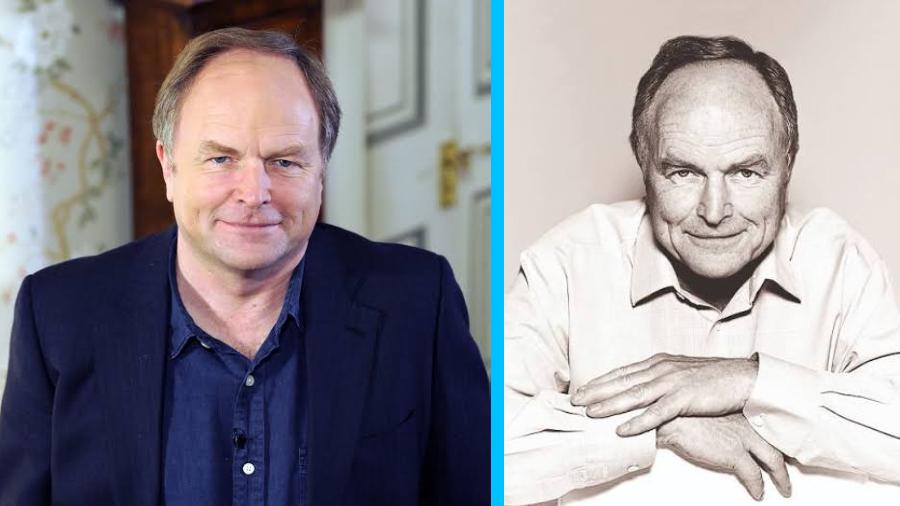
Clive Anderson has spent the best part of four decades proving that you can swap a barrister’s wig for a microphone and still come out on top. Born on 10 December 1952 in Stanmore, Middlesex, he built one of British broadcasting’s most distinctive careers on a foundation most people would consider unrelated to showbiz entirely: criminal law. For roughly fifteen years he argued cases in front of judges, and then he turned that same quick brain and even quicker tongue toward chat shows, panel games, and improvised comedy.
Who Is Clive Anderson?
Clive Stuart Anderson is an English comedian, presenter, writer, and former barrister who became a household name in Britain during the late 1980s and the 1990s. He is best known for hosting the improvised comedy show Whose Line Is It Anyway? and his own chat show, Clive Anderson Talks Back, where his reputation for needling famous guests turned ordinary interviews into must-watch television. What sets him apart from most entertainers is that he came to the screen relatively late and from an unusual direction. Rather than rising through stand-up clubs or drama school alone, he kept one foot in the legal world for years, which gave his comedy a peculiar precision — the timing of someone used to cross-examination, and the confidence of a man who has spent his working life thinking on his feet.
Early Life and Education
Anderson’s upbringing was solidly suburban and quietly international in flavour. His father was Scottish and worked as the manager of the Midland Bank’s branch in Wembley, while his mother was English, and the two of them met while serving in the Royal Air Force. Young Clive attended Stanburn Primary School and then Harrow County School for Boys, a grammar school where his circle of friends famously included the future Conservative politician Michael Portillo. From there he went up to Selwyn College, Cambridge, where his appetite for performance really took hold. He became President of the Cambridge Footlights, the legendary student comedy troupe that has launched a remarkable number of British comedy careers, and it was here that the seeds of his eventual broadcasting life were planted, even as he was simultaneously preparing for a far more buttoned-up profession.
From the Courtroom to the Comedy Store
After Cambridge, Anderson did what bright, ambitious graduates of his era often did: he qualified for the law. He was called to the bar at the Middle Temple in 1976 and practised as a barrister specialising in criminal cases. Yet even as he was building a legal career, he could not shake the comedy bug. He was part of the early “alternative comedy” wave that broke in London at the turn of the 1980s, and he holds the rather lovely distinction of being among the very first acts to perform at The Comedy Store when it opened its doors in 1979. For years he led a curious double life — barrister by day, comedy writer and performer in his spare hours — penning material for established names such as Frankie Howerd and Griff Rhys Jones, and contributing to shows like Not the Nine O’Clock News. Eventually the scales tipped, and entertainment won.
Whose Line Is It Anyway? and the Big Break
The show that changed everything began, fittingly, on the radio. In early 1988, Anderson hosted the original radio version of Whose Line Is It Anyway? on BBC Radio 4, where it ran for a short initial run before the format proved too good to keep off the screen. Later that same year it transferred to Channel 4 television, and Anderson came with it as host. The premise was deceptively simple — a panel of performers improvising sketches, songs, and scenes on the spot — but it lived or died on the quality of the person steering it. Anderson turned out to be the ideal ringmaster. He played the deadpan straight man at the centre of the chaos, awarding meaningless points, delivering sardonic asides, and somehow keeping the whole thing moving without ever stealing the comedians’ thunder. The show became a genuine institution and influenced a generation of improv comedy on both sides of the Atlantic.
Clive Anderson Talks Back and the Infamous Bee Gees Walkout
Riding the wave of his success, Anderson launched his own chat show, Clive Anderson Talks Back, which ran for ten series on Channel 4 from 1989 to 1996 before moving to the BBC under the new title Clive Anderson All Talk. What made the show distinctive was that Anderson refused to play the soft, flattering host. He teased, prodded, and gently roasted his guests, which produced television far livelier than the standard promotional sit-down. The most legendary moment came in 1997, when he interviewed the Bee Gees and kept needling them about their lives and careers until the group, thoroughly fed up, simply got up and walked off the set. It remains one of the most replayed clips in British chat-show history. He courted similar drama elsewhere too: Richard Branson once tipped a glass of water over his head, prompting Anderson’s instant deadpan reply that he was used to it, having flown with Virgin.
Awards and Recognition
For all the playful conflict on screen, the industry recognised Anderson as a serious talent. The peak of his formal recognition came in 1991, when he scooped two prizes at the British Comedy Awards: “Top Entertainment Presenter” and “Top Radio Comedy Personality.” Whose Line Is It Anyway? had itself already picked up a BAFTA in 1990, cementing the idea that Anderson was attached to genuinely excellent programming rather than just hosting it competently. Decades later, in 2023, his old university honoured him when Selwyn College, Cambridge made him an Honorary Fellow — a warm bookend to a career that, in a sense, started among the Footlights performers there all those years ago. Taken together, these honours reflect a rare versatility: few broadcasters are equally at home presenting comedy, hosting chat, and chairing thoughtful discussion programmes.
Radio Career: Loose Ends and Beyond
While television made Anderson famous, radio has arguably been his most enduring home, and it suits his conversational instincts beautifully. He has long presented Loose Ends on BBC Radio 4, the long-running magazine-style show blending interviews, music, and comedy, where his curiosity and lightness of touch shine. He took over as permanent host in 2008, having previously filled in for the much-loved Ned Sherrin before Sherrin’s death in 2007. Anderson has also returned repeatedly to his legal roots on radio through Unreliable Evidence, a programme in which he discusses thorny legal questions and real-life controversies with prominent figures from the legal world. Add to that his stints presenting Clive Anderson’s Chat Room on BBC Radio 2 and his more recent venture into podcasting with My Seven Wonders, and you have a broadcaster who has never stopped finding new ways to keep a good conversation going.
Meet Jane Anderson, Clive’s Wife
Behind the public figure is a famously private family life, and at the centre of it is Jane Anderson, Clive’s wife. The couple married in 1981, long before Clive became a familiar face on television, which means their relationship was built during his barrister years rather than at the height of his fame. Jane Anderson is a consultant physician who has dedicated her professional life to the management of HIV and AIDS, a field in which she has worked for many years. In other words, while Clive spent his career making people laugh and occasionally squirm, Jane Anderson was quietly doing some of the most important and humane medical work imaginable. The pairing says a lot about Clive himself: for all the showbiz sparkle, his closest partnership is with someone whose work is grounded, serious, and genuinely consequential. The two have remained together for more than four decades, building a home and raising their family largely out of the public glare.
The Anderson Children: Isabella, Flora, and Edmund
Clive and Jane Anderson have three children together — Isabella, Flora, and Edmund. True to the couple’s preference for privacy, the three have not been paraded through the tabloids, and Clive has rarely turned his children into material for the stage or studio. Of the trio, Flora has been linked with following her father into comedy, suggesting that the family’s quick wit may well have passed down a generation, while Isabella and Edmund have generally kept lower public profiles. The family has long been based in Highbury, north London, a neighbourhood that fits neatly with Clive’s well-documented support for Arsenal Football Club. What comes across, reading between the lines of his interviews over the years, is a man who has worked hard to keep his family life ordinary and protected, treating it as the steady anchor beneath a very public career.
Life Away From the Spotlight
Anderson’s interests stretch well beyond comedy and the courtroom. He is a committed supporter of the natural world and serves as President of the Woodland Trust, the charity devoted to protecting and restoring native woodland across the United Kingdom — a role he clearly takes seriously rather than treating as a ceremonial title. His sporting loyalties are a small saga in themselves: he is an Arsenal man through and through, but also follows Scottish football as a nod to his father’s heritage. He has dabbled in one-man stage shows, including Me, Macbeth & I, in which he revisited some of his most memorable broadcasting moments, the Bee Gees episode among them. He has also written and presented documentaries and contributed journalism to several British newspapers over the years. The picture that emerges is of a genuinely curious person, equally at ease debating Shakespeare, admiring architecture, or wandering off to look at problems “in out-of-the-way places” for a travel programme.
Clive Anderson Today
Now in his seventies, Anderson has eased away from the relentless prime-time television schedule that defined his middle years, but he remains a busy and respected presence in British broadcasting. He continues to present Loose Ends and his legal discussion work on radio, and he has embraced newer formats such as podcasting with evident enthusiasm rather than treating them as a chore. He still pops up as a guest on panel shows, tours with live appearances, and shows no real interest in fully retiring. If anything, he describes himself as a touch more mellow than the sharp-elbowed interviewer of the 1990s, more inclined now to enjoy a long, intelligent conversation than to send a guest storming off the set. It is a graceful late-career mode for a man who has, by any measure, earned the right to do exactly as he pleases.
FAQs
Who is Clive Anderson married to?
Clive Anderson is married to Jane Anderson, a consultant physician who has spent her career working in the management of HIV and AIDS. The couple married in 1981, before Clive rose to television fame, and have remained together ever since. Jane Anderson has kept a low public profile despite her husband’s celebrity, focusing on her demanding and highly respected medical work.
How many children do Clive and Jane Anderson have?
Clive and Jane Anderson have three children together: Isabella, Flora, and Edmund. The family has long been based in Highbury, north London. The couple have deliberately kept their children out of the spotlight, though Flora has been associated with comedy, hinting that the family’s sense of humour may run in the bloodline.
What is Clive Anderson best known for?
Clive Anderson is best known for hosting the improvised comedy show Whose Line Is It Anyway? and his own chat programme, Clive Anderson Talks Back. He is also widely remembered for the 1997 interview in which the Bee Gees walked off his show after he repeatedly teased them. On radio, he is closely associated with Loose Ends on BBC Radio 4.
Was Clive Anderson really a barrister?
Yes, Clive Anderson genuinely practised law before entering entertainment full-time. He was called to the bar at the Middle Temple in 1976 and worked as a criminal barrister for roughly fifteen years. He developed his comedy career alongside his legal one for years before eventually committing to broadcasting as his main profession.
Is Clive Anderson still working today?
Yes, Clive Anderson remains active in British broadcasting in his seventies. He continues to present radio programmes such as Loose Ends and Unreliable Evidence, has launched a podcast called My Seven Wonders, and still appears on panel shows and at live events. He has scaled back from constant prime-time television but shows no sign of fully retiring.
Conclusion
Clive Anderson’s career is a small masterclass in reinvention. He proved that a barrister’s training — the discipline, the sharpness, the ability to think clearly under pressure — could translate into some of the most entertaining television and radio Britain has produced. From the controlled chaos of Whose Line Is It Anyway? to the gleeful friction of Clive Anderson Talks Back, he carved out a style entirely his own and stuck with it across decades of changing tastes. Just as importantly, he managed all of that while protecting a private, grounded family life with his wife, Jane Anderson, and their three children, Isabella, Flora, and Edmund. The lasting impression is of a clever, restless, genuinely likeable man who never took the obvious path and was all the more interesting for it — and who, even now, would rather keep the conversation going than call it a day.