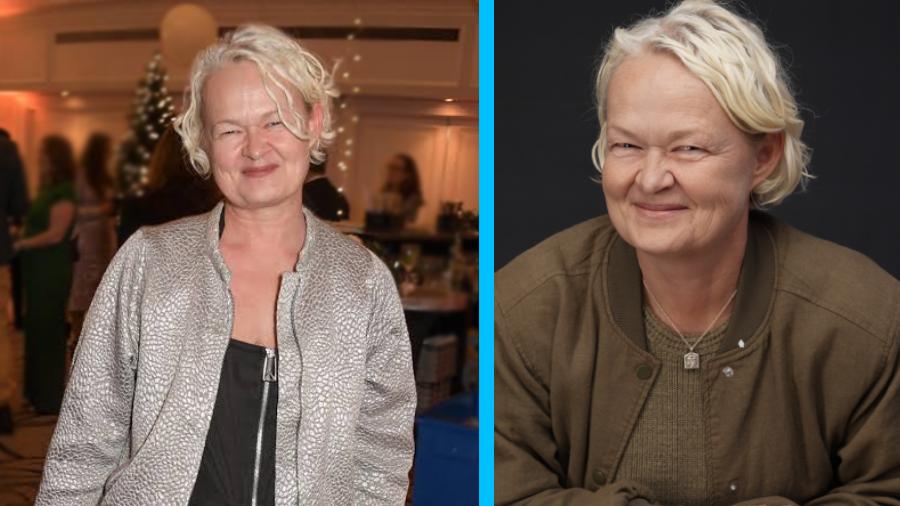
Fiona Campbell has spent the better part of three decades doing something most television executives only talk about: actually meeting young audiences where they are, rather than where the industry wishes they would be. As Controller of BBC Three, she has become one of the most influential figures in British broadcasting’s ongoing scramble to stay relevant in a streaming-first world. Yet she is not the type to chase the spotlight. She is far more comfortable on a location shoot, in a newsroom, or knee-deep in a commissioning meeting than she is being profiled.
Who Is Fiona Campbell?
Fiona Campbell is a senior British television executive best known as the Controller of BBC Three, the BBC’s content brand aimed squarely at viewers under 35 and hosted primarily on BBC iPlayer. In that role she holds overall responsibility for content commissioning across platforms, and she sets the creative and strategic direction for the channel. What makes her interesting is the breadth of her background. She did not climb a single, narrow ladder. Instead she moved fluidly between hard news, current affairs, documentaries, and digital strategy before landing the job that made her name. That mix of disciplines shows up in everything she commissions, which tends to blend journalistic seriousness with genuine youth-culture instinct. She is, by most accounts, a rare executive who can talk fluently about both editorial ethics and what a 22-year-old actually wants to watch on their phone at midnight.
From Northern Ireland to the Wider World: Early Life and Education
Campbell hails from Northern Ireland, and she has spoken about how being taught by nuns at her primary and secondary schools shaped her, only half-joking that you learn to rebel against authority from an early age in that environment. That streak of friendly defiance has followed her through her whole career. Her route into the media was, by her own description, fairly random. While studying for a master’s in international and regional development in Italy, she found herself drawn toward the sector, and the rest unfolded from there. It is worth pausing on that detail, because it tells you something about how she operates. She did not arrive in television with a rigid plan and a contacts book. She arrived curious, internationally minded, and willing to figure things out as she went, which is arguably the perfect temperament for someone who would later be asked to reinvent a channel from scratch.
Cutting Her Teeth: The Early Production Years
Her professional story in television proper begins in 1994, when she started out as a researcher on the Money Programme in London. From there she worked her way through some of British broadcasting’s most demanding factual strands, including Watchdog and Panorama, rising from assistant producer to producer-director. These were not soft postings. Panorama in particular is the kind of show where you learn to chase a story relentlessly, verify everything twice, and stand behind your reporting under pressure. Campbell has described spending a large chunk of her career out on location rather than behind a desk, and she clearly preferred it that way. She has spoken about travelling the world for work, reporting from Kosovo, interviewing the Taliban, and covering the Iraq War, experiences that she credits with bringing an entirely different dimension to her life. That grounding in serious, on-the-ground journalism is something she carried into every job that followed.
The Channel 4 News and Dispatches Era
Between 2005 and 2009, Campbell spent five formative years as a Commissioning Editor at Channel 4 News, where she also executive produced output for Dispatches, the channel’s flagship investigative current affairs strand. This is the period most people point to when they see “Dispatches” attached to her name in industry databases. It is a current affairs commissioning credit rather than an acting role, which is an important distinction that often gets muddled online. Dispatches is famous for tackling difficult, sometimes uncomfortable subjects, and producing it requires a steady editorial hand and a willingness to back journalism that ruffles feathers. Her time there cemented her reputation as someone who could handle weighty, public-interest storytelling without losing her nerve, and it deepened the journalistic foundation that would later make her commissioning decisions at BBC Three feel unusually thoughtful.
Going Digital: Reinventing BBC News for a Younger Audience
One of the most underrated chapters of Campbell’s career is her time as Director of Digital for BBC News. In that role she was tasked with building the corporation’s relationship with younger audiences both on and off BBC platforms. She helped develop the BBC News presence across third-party platforms such as Apple News, Facebook, and Instagram, as well as the BBC News app and website, and she had responsibility for how news lived on iPlayer and the audio platform BBC Sounds. She also created the BBC Stories content strand, which curated the best of pan-BBC content aimed at women, younger viewers, and people on lower incomes, with a deliberate emphasis on community-building and on actually listening to audiences rather than lecturing them. This is the period where her now-trademark obsession crystallised: figuring out how a public-service broadcaster stays meaningful to a generation that grew up on social feeds and on-demand everything. It was, in many ways, the perfect audition for the job she would take next.
Taking the Helm at BBC Three
In late 2018 the BBC announced that Campbell would become the new Controller of BBC Three, with her tenure beginning in January 2019. She took over from Damian Kavanagh and arrived having recently led the documentary unit at BBC Studios, the corporation’s production arm, with an earlier stint as BBC Three’s head of documentaries and features already under her belt. Notably, she became the first permanent female controller of the channel, following Sam Bickley’s spell as acting controller in 2014. The BBC’s director of content at the time described her as the standout candidate, praising the ideas she brought to the table for keeping the channel a home for young British talent. It was a significant appointment for a channel at a genuine crossroads, and the corporation was effectively betting that her blend of journalistic discipline and digital-native instinct was exactly what BBC Three needed.
Relaunching a Channel Everyone Said Was Dead
Perhaps the boldest moment of Campbell’s tenure came in February 2022, when BBC Three returned as a linear broadcast channel after years of existing purely as an online service. Plenty of people in the industry thought this was a strange move. Appointment-to-view television had, after all, become almost meaningless to the under-35 crowd the channel was built to serve. But Campbell argued, persuasively, that channels still carry real cultural power, pointing to the millions who continued to tune in for big BBC One and BBC Two moments. Her bet was that a linear channel and a thriving iPlayer presence were not rivals but partners, each feeding the other. The relaunch was not without controversy, including a decision to trim the News at Ten to make room, which irritated some journalists. But it signalled a confidence in BBC Three’s brand that few expected, and it positioned the channel as a deliberate counterweight to the gravitational pull of Netflix and YouTube.
The Content Philosophy: Drama, Reality, and Real Life
If there is a single thread running through Campbell’s commissioning, it is specificity. She has talked about always thinking conceptually about what it is actually like to be 22 and living somewhere very particular, whether that is Doncaster, Derry, or Aberdeen, and she wants dramas that replicate those real, rooted experiences rather than generic, placeless stories. Her strategy as controller pivoted the channel away from a heavy reliance on comedy and toward higher-budget drama and ambitious entertainment formats. She has also been candid about wanting content that genuinely speaks to people of middle and lower incomes, of both sexes, and she has been particularly vocal about the often overlooked reality of young women in relationships outside London who are doing it tough financially. That instinct for who is being left out of the conversation is precisely what you would expect from someone who built her reputation in public-interest journalism, and it gives her commissioning a social conscience that does not feel performative.
Hits on Her Watch: From Drag Race to Boarders
The roster of shows associated with Campbell’s BBC Three is genuinely eye-catching. The channel has been home to cultural juggernauts like RuPaul’s Drag Race UK, alongside Glow Up, The Rap Game UK, This Country, and earlier breakouts such as Fleabag and the Emmy-nominated Normal People. She has pushed reality and entertainment formats including Eating With My Ex, Love In The Flesh hosted by Zara McDermott, and the irreverent Northern Irish tractor competition The Fast and the Farmer(ish), which fits neatly into her appetite for shows rooted in a specific place and culture. More recently, she was among those who commissioned Boarders, the Bristol-made comedy drama following five Black scholarship students navigating an elite boarding school, which became one of the channel’s standout titles. Across these shows you can see her fingerprints: a willingness to take creative risks, a commitment to representation, and an ear for formats that feel fresh rather than recycled.
Awards, Recognition, and Industry Leadership
Campbell’s leadership has not gone unrecognised. Under her watch BBC Three picked up Online Channel of the Year at the Edinburgh TV Awards and Channel of the Year at the Broadcast Digital Awards, the kind of honours that signal genuine peer respect rather than mere visibility. Beyond running a channel, she has taken on broader industry responsibilities, including chairing the 2016 Edinburgh International Television Festival, one of the most important gatherings in British television. She was also appointed Chair of the Royal Television Society’s Northern Ireland Centre, where she leads a committee drawn from industry heavyweights and helps champion talent and events across the nation. Given that she keeps her home base in Belfast and has been one of the most significant commissioners of content based outside London, that regional leadership role feels both fitting and important, especially for a broadcaster keen to prove it is not solely a metropolitan operation.
The On-Screen Credits Confusion
Because Campbell’s name appears in industry databases alongside titles like Dispatches, the Sony “Skyfall” Bond Phone television commercial, Boarders, and In Conversation, some people understandably assume she is a performer. She is not. These are production, executive, and commissioning credits accumulated across a long career in factual and scripted television, including more recent entries such as a commissioning editor credit on the BBC mini-series Shifty. It is also worth flagging that “Fiona Campbell” is a fairly common name, and some streaming-platform listings appear to merge credits that may not all belong to the same individual. The consistent throughline, though, points clearly to the broadcasting executive: a career built on making and commissioning programmes rather than appearing in them. If you ever see her listed as an actor, treat it as a quirk of how these databases categorise the people who work behind the camera.
What Makes Her Approach Different
Talk to people who have worked with Campbell and a consistent picture emerges. She is described as a dynamic, innovative thinker and, perhaps more tellingly, as a genuine “real person” with ideas and personality rather than corporate polish. She has a self-confessed low boredom threshold, which translates into a bias for action; colleagues recount her impatience to simply get on and make things rather than endlessly deliberate. One former colleague even mimicked her decisiveness by pretending to kick in a door, which is the sort of affectionate industry legend you only earn by actually getting things done. She juggles a demanding job with being a mother and decompresses through loud spin classes, a detail that humanises an executive who otherwise prefers to stay out of the limelight. That combination of seriousness, warmth, and restlessness is rare at her level, and it goes a long way toward explaining why she has thrived in roles that demand both editorial integrity and creative daring.
FAQs
What is Fiona Campbell best known for?
She is best known for serving as Controller of BBC Three, where she has steered the channel’s strategy and commissioning for viewers under 35. Before that she built a strong reputation in journalism and current affairs, including executive producing Dispatches at Channel 4 and leading digital strategy for BBC News. So while she is widely associated with hit BBC Three titles, her foundation is genuinely in serious factual broadcasting.
Is Fiona Campbell an actress?
No, she is not an actress, despite occasionally being listed alongside film and television titles in industry databases. Those entries reflect her work as a producer, executive producer, and commissioning editor rather than any on-screen performances. The confusion usually stems from how databases catalogue behind-the-camera roles and from the fact that hers is a common name.
What shows has Fiona Campbell commissioned or overseen?
During her time at BBC Three the channel has been home to RuPaul’s Drag Race UK, Glow Up, The Rap Game UK, This Country, Eating With My Ex, Love In The Flesh, The Fast and the Farmer(ish), and the comedy drama Boarders, among others. She also presided over a strategic shift toward higher-budget drama and bold entertainment formats. The common thread is content that feels specific, representative, and rooted in real life.
Where is Fiona Campbell from?
She is from Northern Ireland and has kept her home base in Belfast even while running a major BBC channel. She has spoken about her Catholic schooling and a somewhat unplanned route into media that began while she was studying abroad in Italy. Her regional roots also inform her advocacy for content and talent based outside London.
What did Fiona Campbell do before BBC Three?
Before becoming controller she held a string of senior roles, including Director of Digital for BBC News and head of the documentary unit at BBC Studios, with an earlier stint as BBC Three’s head of documentaries and features. Earlier still, she worked across Watchdog, Panorama, and the Money Programme, and spent five years commissioning at Channel 4 News. That long and varied apprenticeship gave her an unusually broad command of both news and entertainment.
Conclusion
Fiona Campbell’s career is a reminder that the most interesting people in television are rarely the loudest. She came up through serious journalism, learned the craft on location and in newsrooms, and then translated that discipline into a genuine understanding of what younger audiences actually want. As Controller of BBC Three she made the contrarian bet that a channel could thrive in the streaming era, championed stories rooted in specific places and overlooked lives, and built a slate that ranges from cultural phenomena to quietly important drama. She has done all of it while preferring to stay out of the spotlight, letting the work speak for itself. In an industry that often confuses noise with influence, Campbell stands out as proof that thoughtful, decisive, genuinely curious leadership still moves the needle, and her fingerprints on British television will likely be visible for years to come.