Next-Gen Marine Infrastructure: Engineering Resilient Waterfronts with Modular HDPE Floating Systems

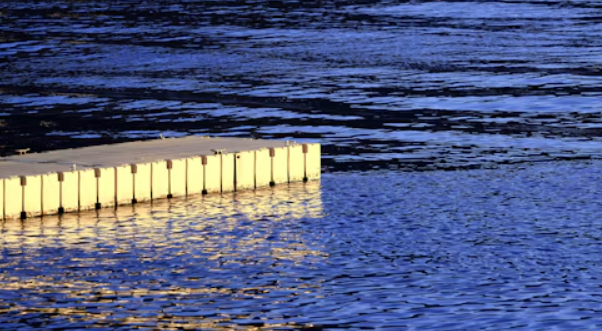
Commercial waterfront infrastructure faces severe operational challenges from rising sea levels, violent storm surges, and strict environmental codes. For decades, marine engineers relied on static timber pilings and rigid concrete piers. However, fixed shoreline structures cannot accommodate hydrodynamic fluctuations, forcing a transition toward buoyant, modular polymer systems.
The Mechanical Vulnerabilities of Traditional Waterfront Fixed Structures
Creosote Leaching and Corrosion Fatigue in Submerged Pilings
Treated timber pilings continuously leach polycyclic aromatic hydrocarbons into surrounding aquatic ecosystems. Submerged steel piles suffer aggressive chloride corrosion, while rigid concrete pilings experience micro-cracking and reinforcement spalling under cyclic wave loads.
Tidal Surges and Fixed Freeboard Failure
Static piers have fixed deck heights that submerge during king tides, causing upward hydrostatic uplift that destroys deck planks. At low tides, excessive vertical drops produce severe vessel hull impact and mooring line failure.
Hydrostatic Principles and Material Engineering of Modular HDPE Pontoon Systems
Molecular Weight and Environmental Stress Crack Resistance (ESCR)
Modern resilient marine engineering utilizes High-Molecular-Weight High-Density Polyethylene (HmwHDPE). This thermoplastic resin provides superior Environmental Stress Crack Resistance (ESCR) and UV durability. Interlocking perimeter lugs flex elastically to absorb torsional wave shear without structural fatigue.
Buoyancy Calculations and Distributed Load Efficiency
Unlike monolithic concrete floats that require deep water drafts and heavy anchor ballasts, interlocking polymer pontoon cubes distribute hydrodynamic loads directly across a variable surface area. According to technical manufacturing benchmarks from commercial hiseadock, a standard 500×500×400mm high-density cube system maintains a uniform buoyancy rating of approximately 350 kg/m². This modular load profile prevents localized deck displacement under concentrated vessel boarding loads while dampening chop vibration.
From a hydrostatic engineering standpoint, modular flotation achieves structural integrity through distinct physical mechanisms:
- Hydrostatic Displacement Capacity: A single 500×500×400mm cube displaces approximately 0.1 cubic meters of water at full submersion, providing 100 kg of gross upward thrust per unit before reaching positive buoyancy limits.
- Surface Conformance and Wave Dampening: Articulated connection pins permit controlled angular articulation between adjoining modules. Rather than resisting wave crests with rigid bending moments, the matrix elastically conforms to surface contours.
- Dynamic Load Distribution: Point loads from heavy vessel bollards or gangway landings disperse radially across adjacent pinned tabs, preventing excessive localized shear stress across any single component.
- Hermetic Chamber Isolation: Each modular pontoon acts as a standalone hermetically sealed air cell, preventing systemic buoyancy loss if an exterior wall is breached by an impact.
Dynamic torsional flexibility enables pontoon assemblies to absorb pitch and roll moments simultaneously. As chop contacts the multi-faceted cube perimeter, wave energy disperses across inter-block seams, dampening wake impact while preserving continuous deck alignment.
Lifecycle Economics: Modular Floating Infrastructure vs. Concrete Pontoons
Capital Expenditure (CapEx) vs. Operational Expenditure (OpEx)
Evaluating coastal berthing infrastructure requires a full lifecycle cost breakdown between initial mobilization capital and recurring maintenance obligations over decades:
- Mobilization and Site Preparation: Heavy concrete pontoon installations demand marine crane barges, specialized tugboats, and deep-bed piling rigs, multiplying preliminary deployment expenses. Modular polymer units arrive flat-packed on standard flatbed trucks, requiring only manual shoreline assembly.
- Structural Anchoring Mechanics: Concrete floats require permanent heavy chain tackle and massive deadweight sinkers or heavy steel pilings. Modular cubes utilize elastic mooring lines, internal piling guides, or stiff-arm struts that minimize ocean-floor drilling.
- Operational Expenditure Over 20 Years: Concrete pontoons suffer gradual water absorption, rebar expansion, and spalling, necessitating cathodic protection testing and resurfacing every 5 to 7 years. Modular HmwHDPE assemblies require zero preservative staining, zero zinc anode replacement, and zero structural patch work.
The overall operational expenditure of modular polyethylene over a 20-year horizon is systematically lower because the primary material is chemically inert and completely immune to rot, rust, and marine fouling adhesion.
| Performance Metric | Creosote-Treated Timber | Cast Concrete Pontoons | Modular HmwHDPE Pontoon System |
| Tidal Adaptability | Nil (Fixed elevation; submerged under surges) | High (Vertical piling travel required) | Continuous Hydrostatic Auto-Tracking |
| Dynamic Freeboard | Fixed baseline (Varies inversely with tide) | High, heavy displacement (350–500 mm draft) | Consistent 350–400 mm Working Freeboard |
| Annual Maintenance Protocol | Chemical restaining, bolt torquing, pile wraps | Cathodic anode checks, concrete crack grouting | Visual pin inspection and pressure washing |
| Environmental Leaching Risk | High (Continuous PAH and biocide runoff) | Low to Moderate (Alkaline paste wash, aggregate loss) | Zero (Inert, non-toxic, 100% recyclable) |
| Deployment Labor Requirements | Heavy marine pile-driving crew and barge | Heavy floating crane vessels and divers | Rapid manual assembly by general onshore crew |
Scalability and Rapid Reconfiguration
Commercial marina developments and industrial aquaculture sites frequently face shifting regulatory boundaries and vessel sizing trends. Rigid concrete infrastructure forms a permanent shoreline commitment that cannot be modified without structural demolition.
In contrast, modular floating systems feature an open architectural grid:
- Footprint Reconfiguration: Engineers can decouple central securing pins to narrow slipways, widen vessel berths, or create finger piers within hours.
- Draft and Freeboard Adjustments: Facilities handling deep-draft workboats can double-stack pontoon layers to elevate working decks to 800 mm freeboard heights, doubling total buoyant thrust.
- Asset Relocation: When shoreline lease terms expire or seasonal ice flows threaten facilities, modular docks can be disassembled, uncoupled, and transferred overland for off-site winter storage.
This mechanical modularity also reduces operational downtime during repairs. If a singular pontoon experiences mechanical gouging from a runaway vessel, maintenance technicians need only unseat four connecting pins, slide the damaged cube out of the grid, insert a replacement unit, and retorque the central locking pin. The entire operation takes under twenty minutes without calling heavy salvage cranes.
Environmental Compliance and Benthic Ecosystem Preservation
Minimizing Sub-Aquatic Shading and Water Column Disruption
Fixed piers and heavy concrete pontoons cast broad, unbroken light shadows over the shallow photic zone. This localized shading prevents sunlight from reaching benthic macroalgae and seagrass meadows (such as Zostera marina), precipitating nearshore ecosystem collapse.
Lightweight polymer floating docks mitigate benthic disruption through critical structural characteristics:
- Translucent Material Formulations: Select translucent HDPE grades and modular grating panels allow photosynthetically active radiation (PAR) to penetrate directly into the water column.
- Reduced Sediment Resuspension: Heavy driven pilings and dragging anchor chains resuspend fine seabed silt, suffocating filter-feeding bivalves. Modular systems utilize dampening elastic moorings that isolate ground tackle from bottom scouring.
- Hydrological Flow Preservation: Narrow submerged drafts (typically 100–150 mm unballasted) allow natural coastal longshore drift and tidal currents to circulate without turbulence.
Moreover, preserving natural littoral drift patterns prevents localized shoreline erosion down-drift from the installation. Rigid seawalls and deep concrete barges alter wave refraction angles, concentrating wave energy against adjacent soft shorelines. Low-draft modular cubes allow subsurface currents to pass with negligible hydrodynamic drag, maintaining ambient benthic sediment equilibrium.
Chemical Neutrality and Zero Heavy Metal Runoff
Regulatory agencies worldwide are increasingly scrutinizing the environmental footprint of waterfront developments, particularly the use of chemically treated timber and non-recyclable materials in nearshore zones. In modern coastal management frameworks, minimizing shoreline footprint alteration and preventing synthetic leaching are critical metrics for securing project permits in sensitive tidal environments.
Modular pontoon systems engineered from high-density thermoplastic polymers satisfy the highest international marine water quality criteria:
- Inert Non-Leaching Chemistry: Virgin HmwHDPE contains no plasticizers, phthalates, or chemical preservatives, eliminating leaching risks into marine food chains.
- Resistance to Petroleum and Chemical Runoff: Marine berths endure continuous fuel spills, diesel sheens, and acid rain. High-density polyethylene exhibits exceptional chemical resistance, preventing structural absorption or degradation.
- Full Material Circularity: At end-of-life after 20–25 years of service, modules can be melted down, pelletized, and recycled into industrial-grade piping or new non-structural goods without entering landfills.
By operating with zero chemical degradation, modular floating infrastructure allows operators to secure environmental clearances across protected marine reserves, scientific conservation zones, and urban eco-waterfront projects where traditional materials face blanket regulatory bans.
Conclusion
The convergence of accelerating sea-level volatility, escalating marine construction costs, and stringent coastal environmental legislation has rendered rigid waterfront infrastructure obsolete. Modular HDPE floating pontoon systems deliver an engineered balance of high distributed buoyancy, mechanical durability, and hydrodynamic flexibility. By replacing static resistance with buoyant adaptation, commercial maritime developers can establish resilient, cost-effective, and ecologically passive shoreline facilities for the future.