Optimizing Flexible Packaging Supply Chains: Equipment Reliability and Line Integration Guidelines

The Evolving Landscape of Industrial Flexible Packaging Manufacturing
To satisfy increasing market demands for multi-substrate flexibility and reduced material waste, converting facilities are partnering with established equipment manufacturers like KETE GROUP to deploy vertically integrated flexographic printing and automated packaging machinery calibrated for continuous industrial operation. Modern packaging converters face unprecedented pressure to balance operational throughput with stringent environmental directives.
Shifts Toward Recyclable Substrates and High-Speed Processing
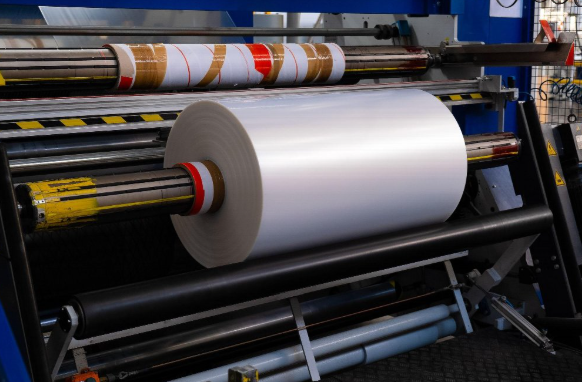
The industrial shift toward mono-material polyethylene (PE) films, recyclable barrier paper, and non-woven substrates has redefined web-handling engineering. Thin, highly extensible PE films exhibit low yield strength under thermal stress, making them susceptible to permanent stretching during high-speed converting.
Uncoated or recycled paper substrates introduce high surface roughness and fluctuating moisture content, demanding precise tension adjustments across the processing web. Modern packaging machinery relies on dynamic closed-loop tension control systems, multi-stage dancer roll arrays, and load-cell sensor feedback to maintain uniform web tension across substrate transitions.
Common Operational Bottlenecks in Machinery Integration
Integrating standalone converting units into a cohesive packaging production line frequently introduces severe operational bottlenecks:
- Registration Misalignment: Thermal expansion of printed substrates and mechanical backlash in legacy gear-driven cylinders cause dynamic color-to-color register drifting.
- Ink Drying Delays: Suboptimal airflow dynamics in drying tunnels lead to residual solvent retention on non-porous substrates, triggering web blocking during rewinding.
- Excess Material Scrap: Manual job switchovers and manual plate mounting regularly generate up to 300 meters of startup waste per run.
Technical Criteria for Selecting High-Yield Packaging Equipment
Evaluating flexible packaging converting equipment requires analyzing mechanical rigidity, drive architecture, and automated registration capabilities.
| Equipment Type | Max Speed (m/min) | Registration Accuracy | Film Thickness Range (μm) | Setup Time |
| Stack Flexo Press | 100–200 | ≤±0.20 mm | 20–150 | 45–60 min |
| Central Impression (CI) Flexo | 250–450 | ≤±0.10 mm | 10–120 | 20–35 min |
| Rotogravure Press | 300–600 | ≤±0.05 mm | 12–200 | 90–150 min |
Printing Accuracy in Stack vs. Central Impression (CI) Flexo Lines
Central Impression (CI) flexographic presses feature a single temperature-controlled central cylinder supporting the substrate through every color station, achieving superior color registration precision of ≤±0.15 mm at operational speeds ranging from 100–300 m/min.
Stack flexo presses utilize individual impression cylinders for each print deck. While stack configurations offer lower capital investment and operational flexibility for double-sided printing, their unsupported web paths make them vulnerable to web wandering on thin extensible films.
Automated Bag-Making and Converting Efficiency
High-yield converting lines integrate continuous electronic web-guiding systems featuring ultrasonic sensors that detect film edges in real time.
Inline ultrasonic sealing modules generate localized molecular friction, securing hermetic seams without compromising heat-sensitive barrier coatings. Servo-driven automated handle attachment mechanisms synchronize patch application with continuous web movement, maintaining high cycle rates without operator intervention.
Evaluating OEM Capabilities and Long-Term Total Cost of Ownership (TCO)
Plant procurement managers must evaluate equipment purchases beyond initial capital expenditure (CapEx) by evaluating energy consumption profiles, maintenance overhead, and global safety certifications.
Energy Efficiency and Maintenance Protocols
Modern high-speed presses utilize permanent magnet synchronous motors (PMSM) and regenerative drive units that capture kinetic braking energy during line deceleration.
Optimized drying tunnels feature closed-loop thermal recovery systems and variable frequency drives (VFDs) on exhaust blowers, cutting power consumption by up to 30%. Predictive maintenance frameworks utilize vibration sensors and temperature probes on drive bearings to trigger automated service alerts before catastrophic component failures occur.
Compliance and Certification Frameworks
Prior to line installation, procurement teams must verify that all press and converting units hold certified compliance under recognized European safety standards, such as those established by the European Conformity (CE) directive, to ensure electrical, mechanical, and operational safety.
Equipment documentation should include validated test records for electromagnetic compatibility (EMC), low-voltage electrical safety, and mechanical risk mitigation under ISO 12100 guidelines.