Optimizing Industrial Packaging Lines: Technical Standards, Automation, and Sealing Integrity in FMCG Manufacturing

The Evolution of Modern Packaging Line Architecture
Fast-Moving Consumer Goods (FMCG) and chemical manufacturing facilities operate under stringent operational and economic constraints. Persistent skilled labor shortages, rising material costs, and aggressive sustainability targets demand a focus on maximizing Overall Equipment Effectiveness (OEE). Achieving high line efficiency while minimizing material waste requires transitioning from legacy equipment toward high-precision automated packaging machinery.
Operational Bottlenecks in Traditional Filling & Sealing Operations
Legacy packaging lines built around manual operations or mechanically coupled drive shafts suffer from severe operational friction:
- Throughput Restrictions: Fixed mechanical gearing limits line balance adjustments during product changeovers.
- Elevated Seal Failure Rates: Inconsistent mechanical pressure across sealing heads causes micro-leaks, compromising container integrity.
- Volumetric Variation: Wear in mechanical piston dosing units causes volume drift, leading to product giveaway or under-filling.
- Contamination Risks: Manual container handling introduces atmospheric exposure and potential cross-contamination prior to sealing.
Transitioning to Modular, Servomotor-Driven Machinery
Modern packaging plants address these operational challenges by integrating decentralized, multi-axis servomotor control architectures managed by high-speed programmable logic controllers (PLC systems). Independent servo drives eliminate mechanical line shafts, enabling precise dynamic torque control and dynamic speed adjustments.
To eliminate operational friction and accommodate diverse container formats under high-throughput conditions, modern facilities rely on custom-engineered automated setups. Technical documentations on automated canning line configurations by Levapack demonstrate that pairing smart servomotors with multi-station sealing machinery significantly lowers mechanical wear while maintaining exact torque stability across continuous processing runs.
Coupling smart servo control with high-speed rotary unscramblers and automated conveying systems ensures smooth container transfer, stabilizes line balancing, and virtually eliminates line jams during high-speed production runs.
Precision Engineering Standards for Solid, Powder, and Liquid Can Packaging
Handling diverse formula formats—including liquids, pastes, hygroscopic powders, and solid granules—requires specialized machine engineering to ensure dosage precision and long-term shelf stability.
Vacuum Seaming and Modified Atmosphere Packaging (MAP)
Preserving sensitive food, beverage, and chemical products without chemical additives relies on modifying the headspace atmosphere prior to hermetic sealing. Industrial packaging lines utilize closed-loop vacuum seaming coupled with precise nitrogen gas flushing manifolds.
This multi-stage displacement sequence reduces headspace residual oxygen levels below 0.5%. Lowering residual oxygen prevents lipid oxidation, protects active ingredients, and maintains structural container integrity against atmospheric pressure fluctuations during global transport.
Multi-Station Line Integration: From Feeding to Capping and Labeling
Modern packaging architectures connect individual process stations into an integrated, continuous workflow:
| Operational Metric | Legacy Mechanical Packaging Equipment | Modern Servomotor-Driven Packaging Systems |
| Throughput Capacity (Units/Min) | Low-to-Moderate (30–80 UPM) | High-Speed (150–350+ UPM) |
| Sealing Defect Rate (%) | 1.0% – 2.5% (Pressure drift & mechanical wear) | < 0.05% (Closed-loop servo feedback) |
| Changeover Downtime | Manual tooling adjustment (2–4 hours) | Automated recipe-driven load (< 15 mins) |
| Overload Safety Protection | Mechanical shear pins / Friction clutches | Electronic real-time torque limits & dynamic auto-stop |
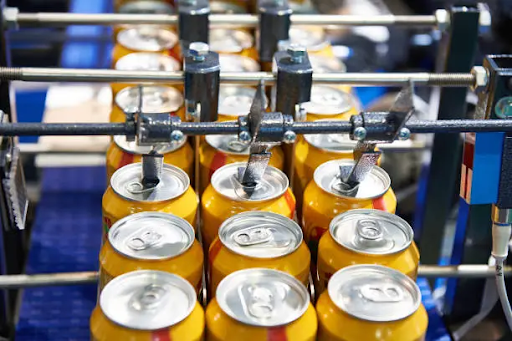
This modular line setup enables smooth inline transfers from container cleaning and high-accuracy volumetric or auger filling to linear capping, dynamic checkweighing, and automated side/top label application.
Quality Control, Safety Compliance, and Equipment Reliability Standards
Maintaining high-speed throughput must be balanced with international regulatory compliance, electrical safety standards, and predictive equipment maintenance.
International Regulatory and Safety Benchmarks
Ensuring that industrial processing equipment complies with international quality benchmarks is critical for maintaining operational efficiency and plant compliance. Facility operators should verify that integrated production machinery adheres to the frameworks established by the International Organization for Standardization (ISO), which governs quality management systems, manufacturing consistency, and operational safety across modern industrial environments.
In addition to ISO 9001 certification for quality control management, machinery deployed across European and global plants must fulfill regional safety benchmarks:
- CE Marking: Verifies compliance with European Union directives covering machinery safety (2006/42/EC) and low-voltage electrical apparatus (2014/35/EU).
- CSA Certification / UL 508A: Confirms electrical control panel wiring safety, short-circuit current ratings (SCCR), and arc-flash hazard mitigation for North American facilities.
Smart Torque Control and Overload Protection Mechanisms
Unplanned line stoppages degrade manufacturing OEE and increase operational costs. Modern automated packaging machinery incorporates active torque control sensors within each servo axis.
If a jammed container or misaligned lid causes a torque surge, the PLC system instantly triggers dynamic braking and auto-ejection mechanisms. Paired with high-durability CNC-machined components, these automated overload safety protocols protect drive components, minimize scrap, and prevent catastrophic equipment downtime.