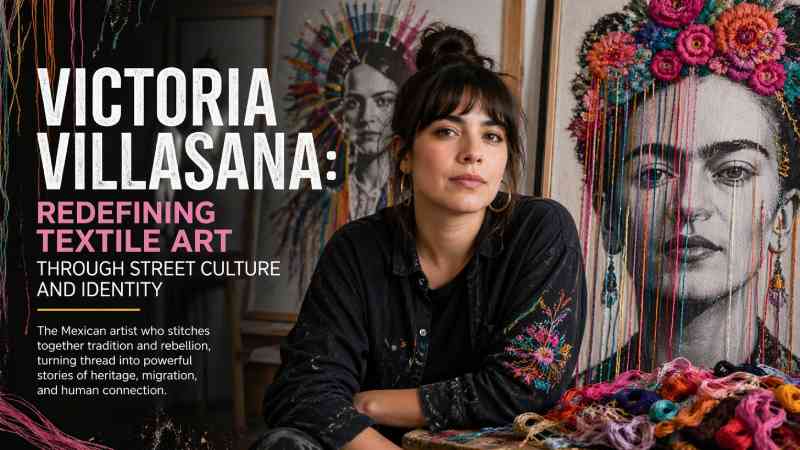
Victoria Villasana stands as one of the most distinctive voices in contemporary art, seamlessly blending traditional craftsmanship with modern urban expression. Her work challenges conventional artistic boundaries by merging embroidery—a medium often associated with domestic craft—with bold street art influences and photographic imagery. The result is a striking visual language that is both deeply personal and universally resonant.
In an era where art increasingly intersects with identity, culture, and global narratives, Victoria Villasana has carved out a unique space. Her work speaks to themes of migration, heritage, femininity, and the human experience, all while maintaining an unmistakable aesthetic defined by vibrant threads and layered textures.
Early Life and Cultural Roots
Victoria Villasana was born in Guadalajara, Mexico, a city known for its rich artistic traditions and cultural vibrancy. Growing up in a creative environment, she was surrounded by influences that would later shape her artistic direction. Mexican culture, with its deep connection to textiles, craftsmanship, and storytelling, played a fundamental role in her development.
From a young age, she displayed a natural inclination towards visual expression. However, her journey into art was not immediate or straightforward. Like many artists, she explored different creative paths before discovering the medium that would define her career.
Her early exposure to traditional Mexican textiles—embroidered garments, woven fabrics, and handcrafted designs—left a lasting impression. These elements would later resurface in her work, not as nostalgic references, but as evolving symbols integrated into contemporary narratives.
Education and Creative Exploration
Victoria Villasana pursued formal education in design, which provided her with a strong foundation in visual composition, colour theory, and conceptual thinking. However, her artistic voice truly began to emerge outside the confines of academic structures.
Before fully committing to fine art, she explored careers in fashion and floristry. These experiences were not merely transitional phases; they contributed significantly to her aesthetic sensibility. Fashion introduced her to textures, patterns, and wearable art, while floristry refined her understanding of composition and organic forms.
This multidisciplinary background became a cornerstone of her artistic identity. It allowed her to approach art not just as a visual medium but as an experiential and tactile practice.
Moving to London: A Turning Point
Relocating to London marked a pivotal moment in Victoria Villasana’s career. The city’s dynamic art scene, particularly its vibrant street art culture, provided her with new opportunities for experimentation and exposure.
London is known for its diverse artistic landscape, where traditional galleries coexist with public art spaces. It was within this environment that she began to develop her signature style—combining embroidery with photographic imagery and urban influences.
The street art scene in London played a crucial role in shaping her approach. Unlike traditional gallery art, street art is immediate, accessible, and often politically or socially charged. This aligned perfectly with her desire to create work that engages with real-world issues and connects with a broader audience.
The Signature Style of Victoria Villasana
Victoria Villasana’s work is instantly recognisable due to her distinctive technique of stitching colourful threads into black-and-white photographic portraits. This fusion of mediums creates a striking contrast that draws viewers in and invites deeper reflection.
The Role of Embroidery
Embroidery, historically associated with domestic craft and often undervalued in the fine art world, becomes a powerful tool in her hands. She reclaims this medium, elevating it to a form of contemporary artistic expression.
Her use of thread is not merely decorative. It carries symbolic meaning, representing:
- Connection and interconnectedness
- Movement and transformation
- The complexity of human identity
By leaving threads loose and uncut, she introduces an element of imperfection and fluidity. This deliberate choice reflects the idea that identity and life itself are constantly evolving.
Integration of Photography
Photography serves as the foundation of many of her works. She often uses portraits of cultural icons, historical figures, or anonymous individuals, transforming them through the addition of embroidery.
The contrast between the monochromatic base image and the vibrant threads creates a visual tension that enhances the emotional impact of the piece. It also bridges the gap between past and present, tradition and modernity.
Influence of Street Art
The influence of street art is evident in her bold compositions and thematic choices. Her work often carries a sense of urgency and relevance, addressing issues such as migration, cultural identity, and social justice.
Street art’s accessibility also aligns with her philosophy of making art inclusive rather than exclusive. Even when displayed in galleries, her work retains the raw energy and immediacy of urban art.
Themes and Messages in Her Work
Victoria Villasana’s art is deeply rooted in storytelling. Each piece conveys a narrative that invites viewers to reflect on broader social and cultural issues.
Cultural Identity and Heritage
One of the central themes in her work is cultural identity. As a Mexican artist living and working internationally, she navigates multiple cultural influences. Her art reflects this duality, celebrating heritage while embracing global perspectives.
The use of traditional embroidery techniques alongside modern imagery symbolises the blending of past and present, local and global.
Migration and Globalisation
Migration is another recurring theme. In a world where people are constantly moving across borders, her work explores the emotional and cultural implications of displacement and belonging.
Threads in her artwork often symbolise connections that transcend geographical boundaries, highlighting the shared human experience.
Feminism and Empowerment
Victoria Villasana also addresses issues related to gender and empowerment. By using a medium traditionally associated with women’s work, she challenges societal perceptions and reclaims space within the art world.
Her portrayal of female figures often emphasises strength, resilience, and individuality.
Human Connection
At its core, her work is about connection—between people, cultures, and ideas. The threads that weave through her compositions serve as visual metaphors for these connections, reminding viewers of the intricate networks that shape our lives.
Notable Works and Collaborations
Over the years, Victoria Villasana has produced a wide range of works that have been exhibited internationally. Her pieces have appeared in galleries, public spaces, and commercial collaborations.
Portrait Series
Her portrait series is among her most recognised work. These pieces often feature well-known figures or anonymous individuals, transformed through her signature embroidery technique.
Each portrait tells a story, blending personal identity with broader cultural narratives.
Commercial Collaborations
Victoria Villasana has collaborated with major global brands, including those in fashion, entertainment, and technology. These collaborations demonstrate her ability to adapt her artistic style to different contexts while maintaining authenticity.
Rather than compromising her artistic integrity, these projects allow her to reach wider audiences and bring her message to new platforms.
Public Art and Installations
In addition to gallery work, she has created large-scale installations and public art pieces. These works bring her art into everyday spaces, making it accessible to people who might not typically engage with contemporary art.
Public installations also reinforce her connection to street art, maintaining a dialogue between the artist and the community.
The Creative Process
Victoria Villasana’s creative process is both meticulous and intuitive. It involves several stages, each contributing to the final piece.
Concept Development
Every artwork begins with an idea or theme. This could be inspired by personal experiences, cultural observations, or global events.
She often researches her subjects extensively, ensuring that each piece carries depth and authenticity.
Selection of Imagery
Photography plays a crucial role in her work. She carefully selects or creates images that align with her concept.
The choice of subject is deliberate, as it forms the foundation upon which the embroidery will be built.
Embroidery and Composition
The embroidery stage is where the transformation occurs. Using colourful threads, she adds layers of texture and meaning to the image.
This process requires precision and patience, as each stitch contributes to the overall composition.
Final Presentation
The finished artwork is presented in a way that highlights both the photographic and textile elements. The interplay between these mediums creates a multidimensional experience for the viewer.
Influence on Contemporary Art
Victoria Villasana’s work has had a significant impact on contemporary art, particularly in the way it challenges traditional hierarchies between fine art and craft.
Redefining Craft
By incorporating embroidery into fine art, she elevates a medium that has historically been undervalued. This shift encourages a broader appreciation of craftsmanship and its role in contemporary art.
Bridging Disciplines
Her work blurs the boundaries between different artistic disciplines, including photography, textile art, and street art. This interdisciplinary approach reflects the evolving nature of art in the modern world.
Inspiring Emerging Artists
Many emerging artists draw inspiration from her innovative techniques and thematic depth. She has opened new possibilities for combining traditional methods with contemporary concepts.
Global Recognition and Exhibitions
Victoria Villasana’s work has been exhibited in various countries, earning her international recognition. Her ability to resonate with diverse audiences speaks to the universality of her themes.
Her exhibitions often attract a wide range of viewers, from art enthusiasts to casual observers. This broad appeal is a testament to her ability to create work that is both visually engaging and intellectually stimulating.
The Emotional Impact of Her Art
One of the most compelling aspects of Victoria Villasana’s work is its emotional resonance. Her pieces evoke a range of feelings, from curiosity and admiration to introspection and empathy.
The use of thread adds a tactile quality that enhances this emotional connection. Viewers are drawn not only to the visual elements but also to the physical presence of the materials.
This sensory experience sets her work apart, making it memorable and impactful.
Challenges and Evolution
Like any artist, Victoria Villasana has faced challenges throughout her career. Navigating the art world, maintaining authenticity, and balancing commercial opportunities with artistic integrity are ongoing considerations.
However, these challenges have contributed to her growth. Her work continues to evolve, reflecting changes in her perspective and the world around her.
She remains committed to exploring new ideas and pushing the boundaries of her medium.
FAQs
1. What makes Victoria Villasana’s art unique?
Her combination of embroidery with photography and street art creates a distinctive visual style that blends traditional craft with modern expression.
2. Where is Victoria Villasana based?
She divides her time between Mexico and the United Kingdom, working internationally across various projects.
3. What themes does Victoria Villasana explore in her work?
Her art often focuses on cultural identity, migration, feminism, and human connection.
Conclusion
Victoria Villasana represents a powerful fusion of tradition and innovation. Through her work, she redefines the possibilities of textile art, transforming it into a contemporary medium capable of addressing complex social and cultural themes.
Her journey from Guadalajara to the global art stage is a testament to the transformative power of creativity and perseverance. By blending embroidery, photography, and street art, she has created a unique artistic language that resonates across cultures and disciplines.