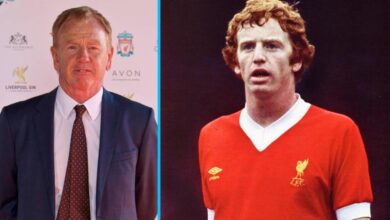
Alan Curbishley was born on November 8, 1957, in Forest Gate, East London—a place deeply connected to football culture and working-class grit. Growing up in the shadow of Upton Park, it was almost inevitable that football would shape his identity. From a young age, he displayed a calm temperament and strong understanding of the game, qualities that would later define his managerial career.
His journey began at West Ham United, where he joined as an apprentice. At a time when English football was far more physical and less tactical than today, Curbishley learned to survive through intelligence rather than flair. Playing as a midfielder, he developed a reputation for discipline, positional awareness, and reliability—traits that often go unnoticed but are invaluable in building strong teams.
Although he never reached superstar status as a player, his career was steady and respectable. He represented clubs such as Birmingham City, Aston Villa, Charlton Athletic, and Brighton & Hove Albion. These experiences across different levels of English football gave him a broad perspective that would later influence his managerial philosophy.
Playing Career: Learning the Game from Within
Curbishley’s playing career spanned nearly two decades, during which he made over 450 league appearances. While he was never the headline player, he was often the glue that held teams together. Managers valued him for his consistency, work ethic, and ability to read the game—a skill that cannot be taught easily.
At West Ham United, he came through the ranks during a period when the club was producing technically gifted players. Being surrounded by such talent allowed him to refine his own understanding of football dynamics. Later moves to Birmingham City and Aston Villa exposed him to different styles and managerial approaches, enriching his football education.
His time at Charlton Athletic as a player would prove particularly significant. It was here that he began to understand the inner workings of a club beyond just playing. He observed how structure, culture, and leadership affected performance—lessons that would become central to his future success as a manager.
Transition into Management: A Defining Decision
The transition from player to manager is often difficult, but for Curbishley, it felt like a natural progression. In 1991, he took charge of Charlton Athletic, initially as a joint manager. The club was struggling financially and competitively, making it one of the toughest jobs in English football at the time.
What set Curbishley apart was his patience. Instead of chasing quick fixes, he focused on building a solid foundation. He emphasized discipline, organization, and team unity—principles that were not glamorous but incredibly effective. Over time, he transformed Charlton from a struggling side into a well-structured, competitive team.
His early years were marked by steady progress rather than immediate success. This gradual improvement reflected his belief in long-term planning. In an era where managers are often judged within months, Curbishley’s approach was refreshingly different.
Charlton Athletic Era: Building Something from Nothing
Curbishley’s tenure at Charlton Athletic remains one of the most remarkable managerial stories in English football. Over 15 years, he took the club from the lower divisions to the Premier League, achieving promotion in 1998 and again in 2000.
What made this achievement even more impressive was the limited financial resources at his disposal. Unlike bigger clubs, Charlton could not rely on expensive signings. Instead, Curbishley focused on smart recruitment, team cohesion, and tactical discipline. He built a squad that functioned as a unit rather than relying on individual brilliance.
The 2003–04 season stands out as the peak of his success, with Charlton finishing 7th in the Premier League. This was not just a good season—it was a statement. It showed that a well-managed team with a clear identity could compete with financially stronger clubs.
Equally important was the stability he brought to the club. In modern football, where managerial turnover is high, his 15-year spell is almost unheard of. He created a culture of trust and continuity, allowing players to develop and perform consistently over time.
West Ham United: A Return Home with Challenges
In 2006, Curbishley returned to West Ham United as manager, a move that felt like coming full circle. The club was in crisis, facing relegation from the Premier League. Once again, he was tasked with stabilizing a struggling team.
His impact was immediate. West Ham produced a remarkable turnaround, famously avoiding relegation on the final day of the season. This “Great Escape” remains one of the most memorable survival stories in Premier League history.
The following season saw further improvement, with the team finishing in the top half of the table. However, his time at the club was cut short due to disagreements with the board over transfer decisions. This departure highlighted one of the recurring challenges in modern football—balancing managerial authority with executive control.
Despite the abrupt end, his time at West Ham reinforced his reputation as a manager capable of delivering results under pressure.
Life Beyond Management: A Different Role in Football
After leaving West Ham, Curbishley stepped away from frontline management, choosing instead to take on roles behind the scenes. He later worked with Fulham as a technical director and in coaching capacities.
This phase of his career allowed him to share his knowledge without the constant pressure of match results. His insights into team building, player development, and club structure proved valuable in these roles. It also reflected his adaptability—he was not limited to one aspect of football but could contribute in multiple ways.
While many fans hoped to see him return to management, he seemed content focusing on broader aspects of the game. This decision underscored his pragmatic nature and understanding of the evolving football landscape.
Family and Personal Influence
An often-overlooked aspect of Curbishley’s life is his family background, particularly his relationship with Bill Curbishley. Bill is a well-known music manager who has worked with major artists, creating a fascinating contrast between the worlds of football and music.
Despite their different careers, both brothers share a commitment to professionalism and long-term success. This connection adds an interesting dimension to Alan Curbishley’s story, highlighting how discipline and strategic thinking can lead to success in entirely different industries.
Curbishley himself has always maintained a low profile. He is known for his grounded personality and focus on the game rather than media attention. This humility has earned him respect across the football community.
Managerial Style and Philosophy
Curbishley’s managerial style can best be described as pragmatic and disciplined. He prioritized defensive organization, teamwork, and consistency over flair and unpredictability. While this approach may not always produce entertaining football, it is highly effective in achieving results.
One of his key strengths was his ability to maximize the potential of his players. Rather than relying on star signings, he developed systems that allowed average players to perform above expectations. This ability to extract value from limited resources is a hallmark of great managers.
He also placed a strong emphasis on mental strength. His teams were known for their resilience, particularly in difficult situations. Whether fighting relegation or competing against stronger opponents, they rarely collapsed under pressure.
Legacy in English Football
Alan Curbishley’s legacy is not defined by trophies or headlines but by stability, consistency, and intelligent management. In a football world increasingly driven by short-term results, his career serves as a reminder of the value of patience and long-term planning.
His work at Charlton Athletic stands as a blueprint for smaller clubs aiming to compete at higher levels. It shows that success does not always require massive investment—clear strategy and strong leadership can be equally powerful.
Moreover, his influence extends beyond the clubs he managed. Many players who worked under him have spoken about the discipline and professionalism he instilled. These qualities continue to shape their careers long after their time with him.
FAQs about Alan Curbishley
Who is Alan Curbishley?
Alan Curbishley is a former English footballer and manager best known for transforming Charlton Athletic into a stable Premier League club.
What is Alan Curbishley famous for?
He is most famous for his 15-year managerial spell at Charlton Athletic, where he built a competitive team with limited resources.
Which clubs did Alan Curbishley manage?
He managed Charlton Athletic and West Ham United, achieving notable success with both clubs.
Why did Alan Curbishley leave West Ham United?
He resigned in 2008 due to disagreements with the club’s board over transfer decisions and control.
Is Alan Curbishley related to Bill Curbishley?
Yes, Alan Curbishley is the brother of Bill Curbishley, a well-known music manager.
Conclusion
Alan Curbishley remains one of the most respected figures in English football, not because of flashy achievements but because of his substance and consistency. From his early days as a dependable midfielder to his transformative years at Charlton Athletic and his impactful spell at West Ham United, his journey reflects dedication and intelligence.
His story is a powerful example of how success in football is not always about star power or financial strength. Sometimes, it is about understanding the game, building strong foundations, and staying committed to a vision over time. In that sense, Curbishley is not just a manager—he is a quiet architect of one of football’s most enduring lessons.