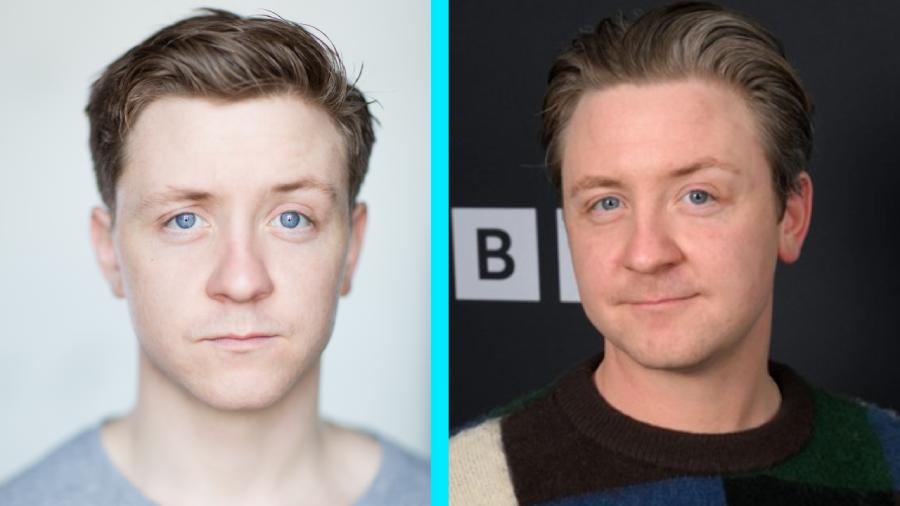
If you’ve been glued to BBC One lately, there’s a good chance you already know Mike Noble’s face even if his name hasn’t fully landed yet. He’s the quietly menacing right-hand man in This City Is Ours, the kind of performer who can hold a scene with a look instead of a line. But here’s the thing most casual viewers don’t realise: long before Noble was sharing the screen with Sean Bean, he was a baby being passed around a Liverpool rehearsal room while his mother, the actor and artistic director Margaret Connell, got on with her own work in the theatre. That detail tells you almost everything about how this particular actor came to be. Let’s get into the full story.
Who Exactly Is Mike Noble?
Mike Noble is an English actor from Liverpool who has spent well over a decade quietly building one of the more respectable CVs in British stage and screen work. He isn’t a tabloid fixture, he doesn’t chase headlines, and he’s not the sort of name that trends for the wrong reasons. Instead he’s the actor that casting directors keep coming back to because he delivers, whether the job is a gritty Royal Court premiere or a high-budget streaming drama. Most people right now know him as Banksey in This City Is Ours, but if you scratch the surface you’ll find a working actor who has been turning up in serious productions for years, gradually earning the kind of reputation that outlasts any single breakout role.
Growing Up Inside Liverpool’s Theatre Scene
It’s hard to overstate how much Liverpool runs through Mike Noble’s story. He didn’t stumble into acting as a teenager who fancied a go on the school stage; he was, by his own account, basically raised in and around the theatre from the moment he was born. That’s a different kind of upbringing entirely. While other kids were learning the rhythms of a playground, Noble was absorbing the rhythms of rehearsal rooms, watching actors find their characters, listening to directors shape a scene. Liverpool has long produced a remarkable stream of acting talent, and Noble is very much part of that lineage, someone who grew up understanding the craft from the inside before he ever had to audition for anything. That early immersion gave him a head start that no drama school could fully replicate.
Margaret Connell: The Mother Who Lit the Spark
The single most important figure in Mike Noble’s origin story is his mum, Margaret Connell, an actor and artistic director with deep roots in Liverpool’s theatre world. Noble has spoken warmly about how his path into acting was effectively decided before he could even talk. Connell joined the Playhouse Youth Theatre when she was around 32 and Noble was still a baby, and so he came along for the ride, finding himself in the youth theatre “in a pram, getting passed around and watching rehearsals,” as he has put it. He’s been candid that he simply wouldn’t have become an actor without that experience. There’s something lovely about that: a mother pursuing her own creative life and, almost as a by-product, handing her son a future. Margaret Connell didn’t just introduce Noble to the theatre; she made it feel like home, the most natural place in the world for him to end up. That maternal influence is the quiet engine behind everything he’s gone on to do.
From the Playhouse Youth Theatre to the Professional Stage
The Playhouse Youth Theatre wasn’t just a sentimental footnote for Noble, it was the actual launchpad. He started his career there more than two decades ago, which means by the time he was a young adult he already had years of practical grounding behind him. Youth theatre is one of those underrated British institutions that turns curious kids into confident performers, and in Noble’s case it provided both the spark and the structure. What’s striking is how loyal he has remained to that world. Plenty of actors get a taste of London success and never look back at the regional companies that raised them, but Noble has always seemed to carry his Liverpool theatre roots with pride rather than treating them as a stepping stone he’s grown out of.
Making His Mark on the London Stage
By the time Noble had established himself, he was racking up the kind of theatre credits that make industry people sit up. He appeared in Mike Bartlett’s Game at the Almeida, one of those bold, conceptual pieces that asks an audience to look at violence and voyeurism through an uncomfortable new lens. He took on Jim Cartwright’s seminal Road at the Royal Court in 2017, in a fresh production directed by the brilliant John Tiffany, sharing a stage with the likes of Michelle Fairley and Faye Marsay. He also played Christopher in The Curious Incident of the Dog in the Night-Time for the National Theatre, a famously demanding role that requires enormous physical and emotional precision. Add to that The Almighty Sometimes at the Royal Exchange, Cougar at the Orange Tree, and Bad Roads back at the Royal Court, and you have an actor who has been entrusted with serious, challenging material at some of Britain’s most respected venues. This is not a CV built on luck; it’s built on the kind of consistency that directors quietly prize.
A Long-Awaited Liverpool Homecoming
For all his London work, there was one milestone that took Noble a surprisingly long time to reach: performing professionally on a Liverpool stage. Despite having been part of the city’s theatre scene since infancy, he didn’t make his professional Liverpool debut until Corrina, Corrina, Chloe Moss’s tense shipboard thriller, which premiered at the Everyman. That production, a co-production with the acclaimed company Headlong, finally brought Noble home in a professional capacity, and he spoke about how meaningful it was to perform in the very city that shaped him. There’s a poetic neatness to it: the boy who grew up watching rehearsals in Liverpool returning, decades later, as a seasoned professional to take the lead. It closed a loop that had been open since the days Margaret Connell was carrying him through those youth theatre rehearsals.
The Screen Career: Quietly Impressive
While the stage has been Noble’s foundation, his screen work is where a wider audience has gradually come to know him. He’s been a reliable presence across British television and film for years, popping up in productions that span genres and tones. He appeared in Home Fires, the period drama set against the backdrop of wartime England, and took roles in The Capture, the twisty surveillance thriller, and Trigger Point, the high-pressure bomb-disposal series. He featured in The Long Shadow, the sober dramatisation of a major real-life investigation, and in Help, the acclaimed pandemic-era drama. On the film side he turned up in The Siege of Jadotville, the gripping account of an Irish UN unit under siege in the Congo, as well as genre fare like Kill Command. The through-line in all of this is range. Noble doesn’t get typecast easily because he keeps proving he can slot into wildly different worlds, from historical drama to taut contemporary thrillers.
Bugge in Disney’s Shardlake
One of the roles that raised Noble’s profile internationally was his turn as Bugge in Shardlake, the lavish Tudor mystery series. Adapted from C.J. Sansom’s beloved novels and given a glossy, atmospheric treatment, Shardlake gave Noble the chance to play in a richly textured historical setting, all candlelit corridors and political intrigue. Streaming series like this one tend to travel far beyond their home market, which means Noble’s work suddenly reached viewers who might never have caught his stage performances or his earlier British TV roles. It’s the kind of credit that broadens an actor’s reach without compromising the quality of the work, and it slotted neatly into his pattern of choosing projects with genuine substance behind them rather than chasing the flashiest available part.
Banksey in This City Is Ours
And then came This City Is Ours, the role that has arguably done the most to push Mike Noble into the national conversation. The BBC crime drama, set in the Liverpool underworld and quickly nicknamed the “Scouse Sopranos,” became the broadcaster’s biggest new drama launch of its year, pulling in an average of around 5.8 million viewers. Noble plays Banksey, the trusted right-hand man and enforcer to James Nelson-Joyce’s central character, Michael Kavanagh. It’s a role that demands a particular kind of controlled intensity, the sense of a man who is loyal, dangerous, and quietly always thinking. There’s a lovely real-world resonance to the casting too, given that Noble grew up alongside Nelson-Joyce, so the on-screen brotherhood between their characters is built on an actual lifelong friendship. The series proved popular enough to be renewed for a second series, with filming taking place across Liverpool and Spain, and Noble returning as Banksey. For an actor so rooted in Liverpool, landing a defining role in a drama that celebrates the city feels almost too fitting.
What Makes Mike Noble Such a Compelling Actor
So what is it that makes Noble worth watching? Part of it is restraint. In an era where some performers reach for the biggest possible choice in every scene, Noble understands the power of holding back, of letting tension simmer rather than boil over. He brings a lived-in authenticity to working-class characters in particular, which makes sense given his background, but he’s far too versatile to be boxed into one type. His theatre training gives his screen work a kind of discipline and physical awareness that you can feel even when he’s barely moving. Directors trust him with quiet, pivotal moments because he doesn’t waste them. He’s the sort of actor who elevates the people around him, the steady presence that makes an ensemble feel real. That’s a rarer and more valuable quality than raw charisma, and it’s why his career has had such staying power.
Liverpool Roots and Why They Still Matter
It would be easy to treat Noble’s Liverpool background as mere biography, a box to tick before getting on with the career highlights. But it genuinely shapes who he is as a performer. Liverpool has a fierce, distinctive creative identity, and the actors it produces often carry a particular warmth and grit. Noble belongs to a generation of Scouse talent that has been increasingly visible on British screens, and dramas like This City Is Ours have deliberately set out to showcase and support that local talent. There’s a sense that Noble isn’t just an actor who happens to be from Liverpool, but one who actively represents the city’s creative spirit. Coming up through its youth theatre, returning to perform on its stages, and now starring in one of its defining recent dramas, he embodies a kind of full-circle relationship with his hometown that feels genuinely earned rather than manufactured.
What’s Next for Mike Noble
With This City Is Ours having struck such a chord and a second series on the way, Noble is in a strong position. He’s reached that sweet spot in a career where the foundational work is done, the reputation is solid, and the bigger opportunities tend to start arriving on their own. The smart money says he’ll continue doing what he’s always done, balancing meaty screen roles with the occasional return to the stage that clearly still means so much to him. Given his track record of choosing projects with real depth over easy fame, it seems unlikely he’ll suddenly veer into hollow blockbuster territory. Instead, expect more of the considered, character-driven work that has defined him so far, hopefully with the wider recognition that his talent has long deserved.
FAQs
Who is Mike Noble?
Mike Noble is an English actor from Liverpool who is best known for playing Banksey in the BBC crime drama This City Is Ours and Bugge in Disney’s Shardlake. He has more than a decade of experience on London’s most respected stages, including the Royal Court, the Almeida, and the National Theatre, and is regarded as one of the steadier, more versatile character actors of his generation.
Who is Mike Noble’s mother, Margaret Connell?
Margaret Connell is Mike Noble’s mother and an actor and artistic director with strong ties to Liverpool’s theatre world. She joined the Playhouse Youth Theatre when Noble was a baby, which meant he effectively grew up surrounded by rehearsals and performances. Noble credits her and that early exposure as the reason he became an actor at all.
What is Mike Noble best known for?
Right now Mike Noble is best known for This City Is Ours, the hugely popular BBC drama dubbed the “Scouse Sopranos,” in which he plays the enforcer Banksey. He’s also widely recognised for his role in Shardlake and for a string of acclaimed stage performances, including Road, Game, and The Curious Incident of the Dog in the Night-Time.
Is Mike Noble actually from Liverpool?
Yes. Mike Noble is a genuine Liverpudlian who was raised within the city’s theatre scene from infancy. He started out at the Playhouse Youth Theatre and grew up alongside fellow Liverpool actor James Nelson-Joyce, his co-star in This City Is Ours, which makes their on-screen partnership a reflection of a real lifelong friendship.
What stage work has Mike Noble done?
Noble has built an impressive theatre CV over more than a decade. Highlights include Mike Bartlett’s Game at the Almeida, Jim Cartwright’s Road at the Royal Court, The Curious Incident of the Dog in the Night-Time for the National Theatre, The Almighty Sometimes at the Royal Exchange, and Corrina, Corrina at the Liverpool Everyman, which marked his long-awaited professional debut in his home city.
Conclusion
Mike Noble’s story is a refreshing one in an industry that often rewards noise over substance. Here’s an actor who was quite literally raised in the theatre, handed his calling by his mother, Margaret Connell, before he could even speak, and who has spent the years since honouring that inheritance with careful, committed work rather than chasing the spotlight. From a pram in a Liverpool youth theatre to a starring role in the BBC’s biggest drama launch of the year, his trajectory has been steady, principled, and deeply rooted in the city that made him. As This City Is Ours continues to grow and his profile rises with it, Noble looks set to become one of those enduring British performers whose names you trust the moment you see them in the credits. And if you ever want to understand where it all began, you only have to look back to Margaret Connell and a baby being passed around a Liverpool rehearsal room.