The Architecture of Smart Stores: How Electronic Shelf Labeling (ESL) Powers Modern Retail Automation

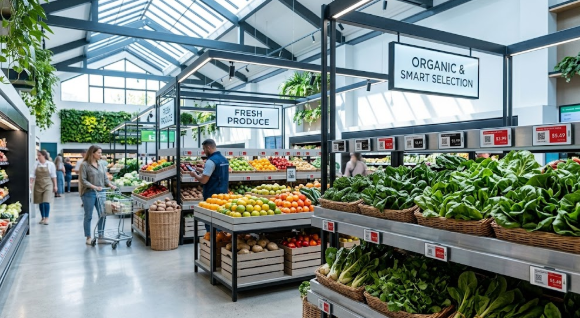
Physical retail spaces are undergoing a structural shift toward automation. While digital storefronts update pricing algorithms programmatically across millions of catalog items in seconds, brick-and-mortar stores have long remained constrained by physical paper, localized manual distribution, and fragmented shelf management.
To resolve this operational gap, enterprise retail chains are transitioning from static paper placards to connected shelf architectures. Deploying intelligent edge hardware eliminates operational latency while converting physical shelf space into an active digital interface.
The Operational Bottlenecks of Legacy Retail Merchandising
The Hidden Overhead of Manual Paper Labeling
In a high-density supermarket or consumer electronics outlet carrying 20,000 to 45,000 active SKUs, price maintenance represents a continuous labor drain. Floor associates spend thousands of collective hours each quarter printing perforated label sheets, physically traversing aisles, stripping expired tags, and slotting replacements into plastic shelf channels.
This recurring manual process introduces major operational bottlenecks:
- Store associates spend 25 to 45 seconds manually locating, verifying, and slotting each individual paper shelf tag.
- Weekly promotional cycles create massive labor backlogs that delay store openings and sales rollouts.
- Routine administrative maintenance pulls floor staff away from high-value customer service and active merchandising.
- Printing consumables, specialty cardstock, and extruded plastic channel waste continuously inflate store-level operating budgets.
Pricing Inconsistencies and Regulatory Compliance Risks
The velocity of modern commerce requires dynamic price adjustments based on regional competitor benchmarks, wholesale supply shifts, and local foot traffic patterns. Paper-based systems are structurally incapable of reflecting intraday price modifications, resulting in lost margin opportunities.
Furthermore, discrepancies between shelf-edge pricing and central point-of-sale (POS) registers introduce severe commercial friction:
- Pricing mismatches at checkout trigger transaction disputes, lane congestion, and cart abandonment.
- Inadvertent overcharging exposes retailers to severe statutory penalties under trade measurement and consumer protection legislation.
- Mismatched online-versus-in-store pricing damages brand credibility among mobile-equipped shoppers comparing prices on the sales floor.
Engineering the Connected Store: Core Components of ESL Infrastructure
At the hardware layer, deploying a reliable shelf-edge IoT network requires specialized components capable of surviving demanding store conditions while maintaining persistent connectivity. System developers like ZhSunyco build integrated ESL platforms featuring multi-band base stations and ultra-low-power electronic paper tags, enabling automated, millisecond-level price synchronization across thousands of SKUs without disrupting point-of-sale operations.
Enterprise ESL ecosystems operate as a unified, three-tier architecture: edge display endpoints, localized RF base stations, and central management middleware.
Ultra-Low-Power E-Paper Technology and Optical Legibility
Unlike conventional liquid crystal (LCD) or active-matrix OLED panels that demand continuous electric current to maintain illumination, bi-stable e-paper consumes energy exclusively during display refreshes. Microscopic charged pigment capsules suspend within transparent micro-cavities, locking their physical position once an electrostatic field is applied.
This physical mechanism yields distinct operational advantages:
- Zero static power draw enables 5 to 10 years of continuous operation from integrated lithium coin cells.
- Reflective optical characteristics provide paper-like readability under direct ambient store lighting and sunlight.
- A wide 180-degree viewing angle prevents visual distortion from low shelf tiers or angled consumer vantage points.
- Multi-color electronic ink pigment systems support promotional visual accents without increasing operational power demand.
Wireless Transmission Networks: Dedicated RF vs. Standard Protocols
Synchronizing tens of thousands of display tags across a multi-story retail footprint requires a high-density communication architecture. Commercial Wi-Fi networks are poorly suited for this volume because managing tens of thousands of continuous client handshakes introduces extreme channel congestion and drains endpoint batteries.
Enterprise ESL implementations deploy specialized Sub-1GHz RF or proprietary 2.4GHz communication backbones. These industrial base stations operate with dynamic frequency agility, hopping across non-interfering channels to avoid consumer smartphone interference and in-store WLAN traffic.
Base station hardware coordinates batch-level broadcast frames alongside cryptographic confirmation protocols. The system verifies successful over-the-air screen updates and reports battery health, ambient operating temperature, and RF signal strength back to the central console.
Operational Efficiencies: Dynamic Pricing and Omnichannel Alignment
Real-Time Price Elasticity and Automated Promotions
Automated digital pricing bridges the gap between digital merchandising analytics and physical store shelves. Centralized software engines can push synchronized promotional discounts, regional index shifts, or currency-adjusted prices across an entire chain of regional branches within seconds.
This rapid-response capability protects commercial margins across sensitive product segments:
- Perishable Waste Reduction: Fresh produce, meat, and dairy items can be dynamically discounted in stepped increments as expiration windows approach, reducing product shrinkage.
- Intraday Demand Balancing: Heavy afternoon foot-traffic periods can feature calibrated pricing adjustments to maximize revenue density per square meter.
- Omnichannel Alignment: Physical retail locations can mirror e-commerce flash sales or match competing online marketplaces instantly, eliminating customer showrooming friction.
Micro-Fulfillment Optimization via Pick-to-Light Guidance
With physical supermarkets increasingly functioning as localized micro-fulfillment hubs for Buy-Online-Pick-Up-in-Store (BOPIS) orders, picking speed determines the profitability of retail last-mile fulfillment. Locating small items within high-density health, beauty, or grocery aisles represents the largest bottleneck for fulfillment staff.
Modern ESL tags incorporate high-luminance, multi-color LED indicators that support automated Pick-to-Light routing workflows:
- Handheld picking terminals trigger targeted flashing signals on specific item tags as warehouse or store pickers enter an aisle.
- Color-coded LED pulses allow multiple fulfillment associates to pick different customer orders within the same aisle concurrently.
- Integrated Near Field Communication (NFC) chips allow pickers or retail customers to tap smartphones against labels to surface extended product specs or inventory locations.
Deployment Considerations: Durability, Range, and ERP Integration
Mitigating RF Interference in Metal-Dense Commercial Spaces
Commercial warehouse-club formats and standard grocery stores present challenging radio frequency environments. Towering steel shelving, structural metal columns, and refrigerated display equipment create physical barriers that cause signal reflection, absorption, and multipath fading.
Overcoming RF attenuation requires deliberate system architecture:
- Utilizing low-frequency Sub-1GHz RF bands that penetrate metal fixtures more effectively than standard 2.4GHz signals.
- Establishing overlapping base station cell topologies to provide line-of-sight redundancy across parallel shopping aisles.
- Employing bi-directional packet verification to confirm that every tag successfully receives and renders price changes.
Extreme Environment Readiness: Cold Chain and Freezers
Deploying electronic labels across complex retail footprints requires specialized hardware variants engineered for harsh operational conditions. Supermarkets include diverse micro-climates, from dry goods shelving to humid produce misting racks and commercial walk-in freezers.
Hardware selection must satisfy rigorous industrial benchmarks:
- Cold-Chain Engineering: Low-temperature batteries rated to -20°C prevent voltage dropouts in commercial freezer units.
- Ingress Protection: High-humidity produce departments demand IP65 or IP67 hermetic seals to stop internal condensation and water intrusion.
- Structural Durability: Reinforced polycarbonate casings protect internal display ribbons from shopping cart impacts.
- Enterprise Synchronization: Robust middleware ensures automated REST API synchronization between ESL gateways and central ERP databases like SAP or Oracle.
The Future of Shelf-Edge Intelligence in Global Enterprise Retail
Interactive Displays as Retail Media Network (RMN) Endpoints
As physical retail spaces evolve into media channels, shelf-edge displays are becoming dynamic interaction points. High-density digital shelf tags bridge the gap between static merchandising and programmatic retail media networks.
By combining dynamic displays with scannable QR codes and integrated NFC chips, retailers deliver contextual content directly at the shelf edge:
- Shoppers scan dynamic labels to view brand videos, allergen warnings, and verified customer reviews.
- Consumer brands run sponsored campaigns on shelf-edge displays during specific hours of peak shopper foot traffic.
- Retailers gather anonymized customer interaction data to optimize product placement and promotional timing.
Quantifying the Long-Term Return on Investment
Evaluating an ESL deployment purely through the lens of eliminated paper printing understates the financial returns. A complete capital expenditure model accounts for margin recovery, regulatory compliance savings, and rapid promotional responsiveness.
Enterprise deployments consistently reach full capital payback within 12 to 18 months. Accelerating promotional turnaround allows merchandising teams to react immediately to wholesale cost shifts, capture perishable revenue, and drive sustained basket expansion.
As retailers transition toward automated store workflows, shelf-edge digitization is fast becoming a standard operational requirement rather than an experimental luxury. As detailed by business analyses on Forbes, modern enterprise IoT investments deliver measurable returns primarily by eliminating recurring manual labor and providing the agile data infrastructure necessary for real-time inventory management. Connecting physical merchandise displays directly to cloud intelligence transforms the shelf edge from a passive operational cost into a responsive commercial asset.