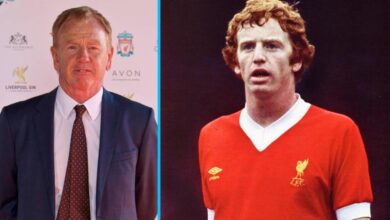
Darren Anderton is one of those footballers who, the moment you say his name to anyone who watched the game in the 1990s, gets an instant nod of respect followed by a wistful sigh about what might have been. He was elegant, two-footed in his thinking if not his striking foot, and blessed with a delivery from wide areas that most modern wingers would happily sell a kidney for. He spent the bulk of his career pulling strings for Tottenham Hotspur, lit up two of England’s most beloved tournaments, and yet his story is forever shaded by the cruel nickname that followed him around: “Sicknote.”
Early Life and Southampton Roots
Born on 3 March 1972 in the Bitterne area of Southampton, Darren Robert Anderton grew up steeped in football the way a lot of talented English kids of his generation did, playing constantly and showing enough natural ability that scouts started circling early. He cut his teeth in the Southampton Tyro League and turned out for a local side called Itchen Saints during a particularly strong spell for the team, which is exactly the kind of grassroots grounding that tends to produce technically sound players rather than purely athletic ones. There’s a nice bit of irony in his backstory too, given that a Southampton-born lad would go on to become a hero at Portsmouth, a club whose rivalry with Saints is about as friendly as a knife fight. That early environment, though, clearly shaped the kind of player he became: composed, comfortable on the ball, and never in a rush.
Breaking Through at Portsmouth
Anderton’s professional life properly began at Portsmouth, where he was signed as an apprentice by manager Alan Ball, a man who knew a thing or two about gifted attacking players. He announced himself at just 18 by scoring at Anfield in an FA Youth Cup tie against Liverpool that finished 2–2, the sort of stage that tends to separate the prospects from the pretenders. His senior debut came in October 1990 as a substitute against Cardiff City in the League Cup, and he quickly racked up 20 appearances in that first season before becoming a genuine regular under Jim Smith in the 1991–92 campaign. The defining moment of his Pompey spell, and arguably the launchpad for everything that followed, came in 1992 when he scored in an FA Cup semi-final against Liverpool as a 20-year-old, putting himself firmly on the radar of the country’s biggest clubs.
The £1.75 Million Move to Tottenham
That FA Cup heroics did exactly what you’d expect, and in the summer of 1992 Tottenham Hotspur paid Portsmouth £1.75 million to bring the young winger to north London. For a club with Spurs’ reputation for flair and attacking football, Anderton was a logical fit, even if the move came with the usual weight of expectation that lands on any pricey young signing. It’s worth remembering how big a leap this was at the time, moving from a second-tier club to one of the founding members of the brand-new Premier League, and the fee reflected just how highly his potential was rated. He didn’t set the world alight instantly, but the foundation was laid for what would become a relationship lasting twelve years and defining his entire career.
Becoming a Spurs Mainstay
After a slightly slow start, Anderton settled into life at White Hart Lane and became a fixture, typically operating as a right winger and forming part of an exciting attacking unit alongside Teddy Sheringham and a young Nick Barmby. His twelve-year stay produced 299 league appearances and 35 league goals, with all-competition totals running to roughly 350-plus games and somewhere in the region of 48 to 51 goals depending on which records you trust. What the raw numbers don’t fully capture is how central he became to the way Spurs played, supplying crosses and assists that team-mates feasted on, and bringing a calmness to the side that made him a fan favourite. He stayed loyal through managerial chaos and repeated transfer speculation, and even scored against bitter rivals Arsenal during the 2003–04 season, a goal that did him no harm whatsoever in the affections of the Tottenham faithful.
The “Sicknote” Nickname and the Injury Curse
No honest account of Darren Anderton’s career can skip the elephant in the room, which is the brutal run of injuries that repeatedly stalled his momentum just as he hit top form. The nickname “Sicknote” was reportedly coined by former Portsmouth goalkeeper Andy Gosney, and while it was probably meant in dressing-room jest, it stuck like glue and followed him for the rest of his playing days. Hernia operations, groin problems, and a string of muscular issues cost him months at a time, including most of the 1995–96 season and large chunks of the years either side of it. It’s genuinely one of football’s great “what ifs,” because when fit he looked like a player capable of being among the very best of his generation, and the injuries robbed both him and the watching public of seeing that version of him as often as we should have.
England, Euro 96, and That Agonising Post
For all the frustration of his club injuries, Anderton timed his international peaks beautifully, and he became a key man for England during a golden window of national-team affection. He made his debut under Terry Venables against Denmark in 1994 and went on to win 30 caps, scoring seven goals, which is a tidy return for a wide player. His finest tournament was undoubtedly Euro 96 on home soil, where he started every match and helped England reach the semi-finals as the whole country lost its mind to “Three Lions” and a wave of optimism. The moment that still makes Spurs and England fans wince came in that semi-final against Germany, when his shot in golden-goal extra time clipped the inside of the post and stayed out, the width of a coat of paint away from sending England to the final.
The 1998 World Cup and the Beckham Comparison
Two years later, despite ongoing fitness worries, Anderton was recalled to Glenn Hoddle’s squad for the 1998 World Cup in France, and he repaid the faith by starting on the right wing ahead of a then out-of-favour David Beckham in the opening matches. That selection tells you everything about how Hoddle viewed him, and the manager later wrote in his World Cup diary that he rated Anderton’s crossing as the equal of Beckham’s and considered him the better defender of the two. Coming from a coach in the middle of a major tournament, that’s serious praise, and it underlines that Anderton was no passenger riding the coattails of bigger names. He featured across England’s matches until the heartbreaking round-of-16 exit to Argentina, capping a tournament that confirmed his status as a genuine international-class operator when his body allowed.
The Manchester United Move He Turned Down
One of the most fascinating chapters in Anderton’s story is the transfer that never happened, when Manchester United came calling in the summer of 1995 at the absolute peak of Sir Alex Ferguson’s dynasty-building. Anderton chose to stay at Tottenham, a decision he later openly admitted regretting, and the reasons were a mix of personal happiness in north London and circumstance. He revealed years afterwards that manager Gerry Francis was desperate not to lose another key man, having already seen Jürgen Klinsmann and Gheorghe Popescu leave that summer, with Nick Barmby also edging towards an exit. It’s an easy decision to second-guess with hindsight, given the medals he might have collected at Old Trafford, but it also speaks to a loyalty and contentment that defined his whole career.
Silverware: The 1999 League Cup
For a player of his quality across more than a decade in the top flight, Anderton’s trophy cabinet is leaner than it should be, which again loops back to those injuries and to Tottenham’s general inconsistency during his years there. The standout success was the 1998–99 League Cup, which Spurs lifted for their first major trophy in eight years, with Anderton very much part of the team that delivered it. He was a runner-up in the same competition in 2002, when Tottenham lost the final 2–1 to Blackburn Rovers, so he experienced both sides of cup-final day at Wembley and the old Millennium Stadium era. It isn’t a haul that fully reflects his talent, but the 1999 winner’s medal at least gives his Spurs legacy the silverware footnote it deserves.
Leaving Tottenham: Birmingham, Wolves, and Bournemouth
All good things end, and Anderton’s Tottenham chapter closed in the summer of 2004 in slightly sour circumstances, as he was keen to stay and had been promised a new deal by David Pleat, only for incoming manager Jacques Santini to advise against it and the club to backtrack. He moved on a free transfer to Birmingham City, where his highlight was scoring the winner in a 1–0 victory at Anfield, before reuniting with his former Tottenham and England coach Glenn Hoddle at Wolverhampton Wanderers for the 2005–06 season. After his Wolves contract wasn’t renewed, he dropped down to League One with AFC Bournemouth in September 2006 on a pay-as-you-play basis, immediately announcing himself with a stunning 40-yard free kick on his debut against Scunthorpe United. He even bagged his first career hat-trick at the age of 34 against Leyton Orient, proving the class never really left him even as the legs slowed.
The Fairytale Final Goal
Footballers rarely get the send-off their careers deserve, but Darren Anderton somehow scripted himself one of the great farewells in the lower divisions. By 2008 he was Bournemouth’s club captain, having been handed the armband by manager Kevin Bond, and he’d helped spearhead a survival push the previous season even though a points deduction for entering administration ultimately sent the Cherries down. On 4 December 2008 he announced he would retire, and in what turned out to be his final appearance he came off the bench and scored the winning goal with a spectacular volley in the 88th minute, sealing a 3–2 victory. To bow out of an 18-year, roughly 447-game professional career with a last-gasp winner like that is the kind of ending you’d be told was too far-fetched if it appeared in a film script.
Life After Football: Punditry and Legacy
Since hanging up his boots, Anderton has largely stepped into the media side of the game, working as a pundit and in-studio analyst, most notably for Canada’s TSN network during tournaments like Euro 2012. He’s remained a popular and articulate voice on the game, frequently revisiting those Euro 96 and World Cup 98 memories that an entire generation of England fans hold dear. His legacy is a slightly bittersweet one: a player of obvious elegance and crossing ability whose peak was repeatedly interrupted, leaving fans to imagine the fully fit version that flickered into view at major tournaments. Even so, he’s remembered fondly as a genuine Tottenham favourite and a key figure in one of England’s most romanticised eras, which is no small thing to leave behind.
FAQs
What position did Darren Anderton play?
Anderton primarily played as a right winger or right midfielder, though he occasionally operated in a more advanced attacking role. He was best known for his crossing and delivery from wide areas.
Why was Darren Anderton called “Sicknote”?
The nickname came from his long and repeated battles with injuries throughout his career, which kept him sidelined for extended spells. It was reportedly first coined by former Portsmouth goalkeeper Andy Gosney.
How many caps did Darren Anderton win for England?
He earned 30 caps for England and scored seven goals between 1994 and 2002. He started every match for the side at both Euro 96 and the 1998 World Cup.
Which clubs did Darren Anderton play for?
He played for Portsmouth, Tottenham Hotspur, Birmingham City, Wolverhampton Wanderers, and AFC Bournemouth. Tottenham was his main club, where he spent twelve years.
Did Darren Anderton win any trophies?
His main honour was the 1998–99 League Cup with Tottenham Hotspur. He was also a runner-up in the same competition in 2002.
Conclusion
Darren Anderton’s career is a reminder that a footballer’s legacy isn’t measured purely in medals or appearance totals, but in the impression they leave on the people who watched them. He was a beautifully balanced player whose talent was never in doubt, even if his fitness too often was, and the affection he still commands from Tottenham and England supporters tells its own story. From that FA Cup semi-final goal as a Portsmouth youngster, through the agony of the post against Germany, to that unforgettable final volley for Bournemouth, his journey had genuine drama and heart. “Sicknote” may have been the nickname, but “what might have been” is the phrase that truly defines him, and there are few higher compliments you can pay a player than knowing fans still wish they’d seen even more of him.