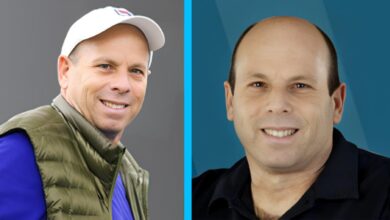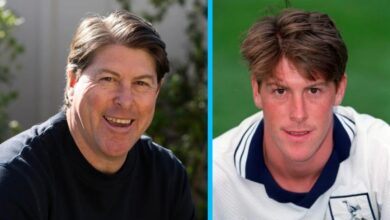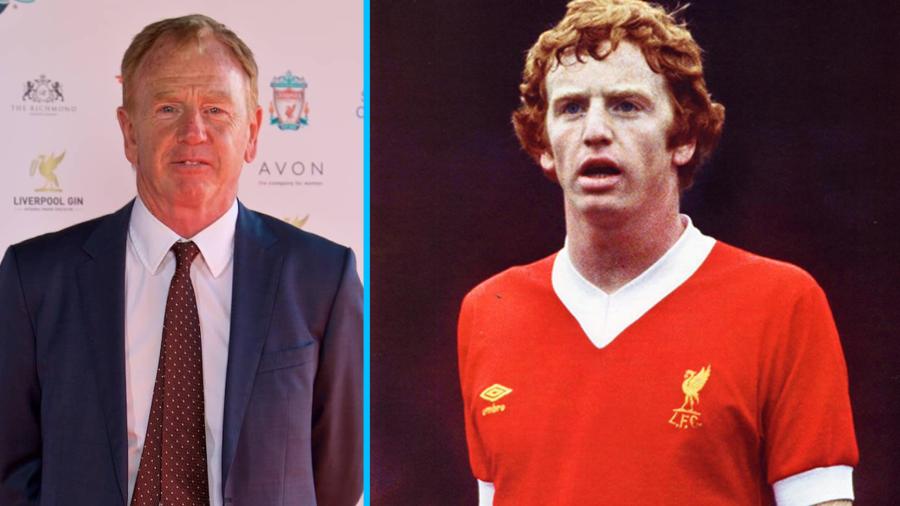
David Fairclough is a retired English professional footballer and one of the most iconic figures in Liverpool FC’s history. Known worldwide by his famous nickname “Supersub,” he earned a permanent place in football folklore through his ability to change matches the moment he stepped off the bench. His story is one of talent, timing, and quiet determination — a man who shaped some of Liverpool’s greatest moments without ever fully commanding a regular starting place.
Who Is David Fairclough?
David Fairclough was born on 5 January 1957 in Liverpool, England. He grew up in the shadow of Anfield and from an early age was deeply connected to Liverpool FC. As a boy, he idolised club legends Roger Hunt and Ian St John. That childhood dream became reality when Liverpool scouted him through the Liverpool Schoolboys team and signed him as an apprentice in July 1973, aged 16, under the legendary Bill Shankly.
On the pitch, Fairclough was a fast, instinctive striker — all raw pace and sharp finishing. He made his first-team debut on 1 November 1975, coming off the bench in a 1–0 league win over Middlesbrough. That first appearance already hinted at what was to come: a career built on explosive, match-defining moments.
David Fairclough Career
Early Years at Liverpool (1975–1983)
David Fairclough spent eight years at Liverpool. In that time he made 154 appearances, scored 55 goals, and played a part in one of the most successful eras in the club’s history. His career ran alongside some of Liverpool’s greatest ever players — Kevin Keegan, John Toshack, Kenny Dalglish, and Ian Rush — which made holding down a regular starting spot extremely difficult.
In his debut season of 1975–76, Fairclough scored seven crucial goals in just 14 appearances, nine of them as a substitute, helping Liverpool win the First Division title. It was a stunning introduction to senior football, and it immediately marked him out as a player who could make things happen.
Despite fierce competition for places, he remained a trusted member of the squad throughout his time at Anfield. Manager Bob Paisley turned to him when a match needed changing — and Fairclough almost always delivered.
The Supersub Nickname
The nickname “Supersub” was never one David Fairclough particularly enjoyed, but it followed him for the rest of his career and long into retirement. It came from his habit of coming off the bench and producing decisive moments when they were needed most. While many players struggle to make an instant impact after entering a match, Fairclough had a rare gift — he stepped onto the pitch and immediately affected the game.
Of his 154 Liverpool appearances, 92 were starts and 62 were as a substitute. He actually started more games than he came off the bench. Yet the moments he produced as a substitute were so dramatic, so memorable, that the Supersub tag stuck permanently.
Most Famous Goal — St Etienne 1977
The most celebrated moment of David Fairclough’s career came on 16 March 1977 in the European Cup quarter-final second leg against French giants Saint-Étienne at Anfield. Liverpool had lost the first leg in France and needed to turn the tie around at home. The atmosphere was electric — but with time running out, Liverpool were level on aggregate and Saint-Étienne led on away goals.
Bob Paisley sent Fairclough on with around 20 minutes remaining. With just six minutes left, he received a long ball forward, held off two Saint-Étienne defenders and drove the ball powerfully into the net at the Kop end. Anfield erupted. Liverpool were through to the semi-finals — and went on to win the European Cup that season for the very first time.
It remains one of the most celebrated goals in Liverpool FC history, and the moment most people picture when they hear the name David Fairclough.
Other Career Highlights
Beyond the Saint-Étienne goal, Fairclough contributed significantly to Liverpool’s trophy haul:
He scored in both legs as Liverpool hammered Kevin Keegan’s Hamburger SV 7–1 on aggregate in the European Super Cup. He started the 1978 European Cup Final, a 1–0 win over Club Brugge that retained the trophy. He scored his only Liverpool hat-trick on 9 February 1980 in a thrilling 5–3 win over Norwich City at Carrow Road. He also scored a breathtaking Merseyside derby goal, dribbling past six Everton defenders before firing past goalkeeper Dai Davies — a goal he considered the finest of his career.
Career After Liverpool
David Fairclough left Liverpool on 4 July 1983 following a loan spell with Toronto Blizzard in North America. He moved on to Swiss club FC Lucerne, then returned to England for spells at Manchester City, Norwich City, Oldham Athletic, and Rochdale. He also played three seasons in Belgium with Beveren before finishing his career at Tranmere Rovers, Wigan Athletic, and non-league Knowsley United. He retired from professional football in 1991.
David Fairclough Goals and Stats
At Liverpool, David Fairclough’s record stands as follows:
- Total appearances: 154
- Goals scored: 55
- Starts: 92
- Substitute appearances: 62
- Win rate: 53.9%
- Goal average: One goal every 2.8 games
- League goals: 34
These numbers tell the story of a player who was consistently effective when given the chance — a goal ratio many regular starters would be proud of.
David Fairclough Wife and Personal Life
David Fairclough was married to Jan Fairclough, a beloved presence in his life. Tragically, Jan passed away on 9 April 2011 after collapsing from a sudden brain haemorrhage on the morning of 6 April. She died three days later. Her loss was devastating for Fairclough and their family.
Before a Liverpool versus Manchester City match on 11 April 2011, Anfield held a minute of silence in Jan’s memory, alongside tributes to the 96 Hillsborough victims and soldier Mark Burgan.
David and Jan had two children — a son, Tom, and a daughter, Sophie.
David Fairclough Net Worth
David Fairclough’s exact net worth has never been publicly confirmed. Based on his professional career from 1975 to 1991 — spanning clubs across England, Europe, and North America — and his subsequent work in media and journalism, his estimated net worth is believed to be in the region of £500,000 to £1 million.
It is worth remembering that footballers of the 1970s and 1980s earned a fraction of what modern players command. Fairclough was well paid for his era but did not benefit from the multi-million pound contracts that arrived with the Premier League.
David Fairclough Life After Football
When David Fairclough retired from professional football in 1991, he did not walk away from the game. During his playing days, he had already completed a course with the National Council for the Training of Journalists (NCTJ), quietly preparing for the next chapter.
In retirement, he built a career as a freelance journalist, covering football for a range of outlets. He became a respected football pundit, known for thoughtful and honest analysis. He has also been a regular on the after-dinner speaking circuit, sharing memories from his time at Anfield.
Fairclough put his story on paper in his autobiography, “Supersub” — an honest account of his career, the weight of being labelled a substitute, and the personal experiences that shaped the man behind the nickname.
He now lives in Formby, Liverpool, close to the city that made him. He remains a firm favourite among supporters and was voted 18th in the 100 Players Who Shook the Kop poll in 2006 — a fan vote by Liverpool FC’s official website with 110,000 supporters worldwide taking part.
David Fairclough Legacy
David Fairclough represents something rare in football — a player remembered not for hundreds of appearances or armfuls of trophies, but for moments. His story proves that a legacy is not always built over ninety minutes, week after week. Sometimes it is built in six minutes, on a March night at Anfield, with a whole city holding its breath.
His goal against Saint-Étienne in 1977 is still shown on television nearly fifty years on. It is still discussed by Liverpool fans who were there and fans who were not even born. That single moment — created by a substitute, with the clock ticking down on a European Cup tie — is worth more in the memory of football than many a player’s entire career.
FAQs
What is David Fairclough’s nickname?
David Fairclough is known as “Supersub” — a nickname earned at Liverpool FC for his ability to come off the bench and score crucial goals at critical moments.
What is David Fairclough’s most famous goal?
His most famous goal was scored against Saint-Étienne in the 1977 European Cup quarter-final at Anfield. With six minutes remaining, he ran onto a long ball and drove it into the net, sending Liverpool through to the semi-finals. They went on to win the trophy.
How many goals did David Fairclough score for Liverpool?
David Fairclough scored 55 goals for Liverpool FC in 154 appearances, including 34 in the league.
What did David Fairclough do after retiring from football?
After retiring in 1991, David Fairclough worked as a freelance journalist and football pundit, appeared regularly on the after-dinner speaking circuit, and wrote his autobiography, “Supersub.”
Where does David Fairclough live now?
David Fairclough lives in Formby, Liverpool, England.
Who was David Fairclough’s wife?
David Fairclough was married to Jan Fairclough, who passed away on 9 April 2011 following a brain haemorrhage. They had two children, Tom and Sophie.
What is David Fairclough’s net worth?
David Fairclough’s net worth is estimated at between £500,000 and £1 million, based on his football career and subsequent work in media and journalism.
Conclusion
David Fairclough may never have been a guaranteed starter, but he was always a guaranteed match-winner. From the terraces of Cantril Farm to the greatest stages in European football, his journey is a reminder that greatness comes in many forms. Not every legend plays every week. Some arrive late, change everything in an instant, and leave a mark that lasts a lifetime.
For Liverpool fans, the name David Fairclough will forever bring one image to mind — a red-shirted striker bursting onto a long ball, holding off defenders, and sending Anfield into pure euphoria. That is the power of a moment. And David Fairclough had more of them than most.