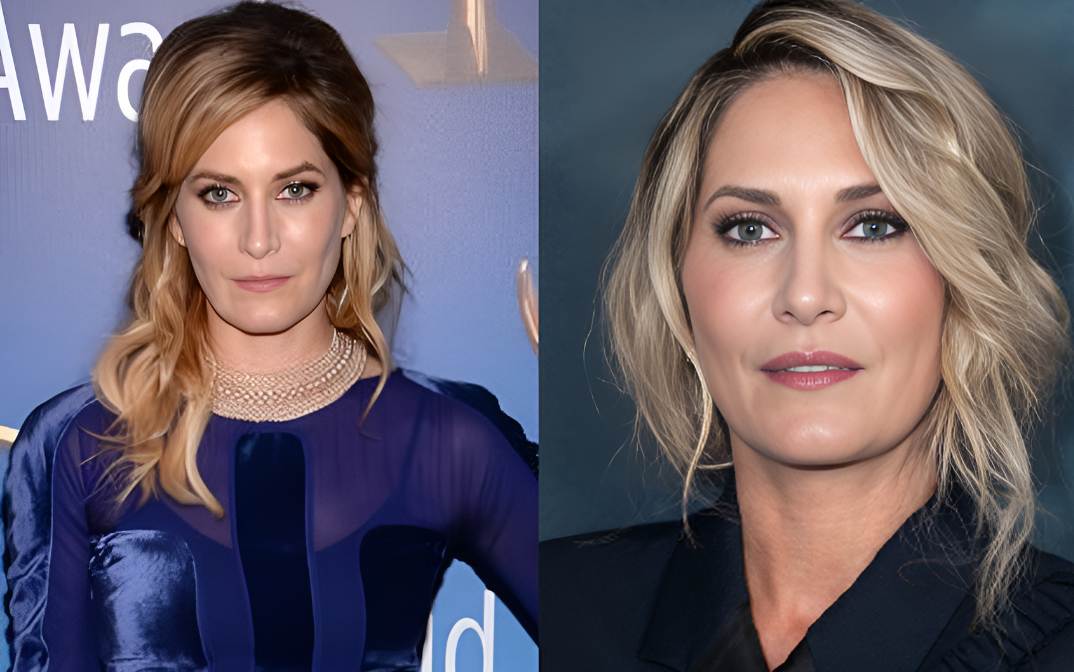
If you’ve watched a prestige drama in the last decade and walked away thinking, “How did they make a story I already knew the ending to feel this tense?” — there’s a decent chance Maggie Cohn had a hand in it. She isn’t a household name in the way that the actors who deliver her lines are, and that’s mostly by design. Cohn belongs to that increasingly rare breed of writer who lets the work do the talking while she stays comfortably out of the spotlight. But for anyone who pays attention to who actually shapes the shows we binge, her name keeps showing up in all the right places.
Who Is Maggie Cohn, Really?
Maggie Cohn is an American screenwriter and producer based in Los Angeles, and she’s built her reputation almost entirely on prestige television and film. Her credits read like a checklist of the projects that critics and award voters tend to obsess over: American Crime Story, Narcos: Mexico, The Staircase, and the feature film Lou. What ties all of that together isn’t a genre so much as a sensibility — Cohn gravitates toward stories about real events, messy human behavior, and the uncomfortable gray areas where truth and perspective don’t quite line up. She’s not chasing spectacle; she’s chasing the question underneath the headline.
From Vassar to the Writers’ Room
Before any of the awards or the marquee credits, there was Vassar College, where Cohn earned degrees in Political Science and Film. That combination tells you a lot about how her brain works. The political science background shows up in the way she approaches institutions, power, and the systems that grind ordinary people into news stories — and the film side gives her the craft to actually dramatize all of it. It’s a useful pairing for someone who would go on to specialize in true-crime and fact-based storytelling, where you constantly have to balance what really happened against what makes for compelling drama. A lot of writers can do one or the other. Cohn seems to genuinely care about both, and you can feel that tension working in her favor across her whole filmography.
American Crime Story: The Breakout
If there’s a single project that put Cohn firmly on the map, it’s American Crime Story. Working on Ryan Murphy’s acclaimed anthology series — particularly the installment centered on the assassination of Gianni Versace — earned her some of the highest honors in the industry. She picked up a Writers Guild of America Award in 2019 for her work on the series, and she also shares in a Producers Guild of America Award tied to the same project. That’s a meaningful double win, because it signals that the people who write for a living and the people who produce for a living both recognized what she brought to the table. Anthology true-crime is deceptively hard to write well; you have to honor real victims, avoid sensationalism, and still keep an audience hooked through a story whose outcome they already know. Cohn made it look effortless, which is usually the surest sign that it wasn’t.
Narcos: Mexico and the Crime-Drama Engine
Somewhere in the middle of building her true-crime credentials, Cohn also wrote for Narcos: Mexico, Netflix’s sprawling chronicle of the rise of the drug trade and the agents trying to dismantle it. On the surface, a cartel epic looks like a very different animal from a courtroom drama, but the underlying muscles are the same: morally complicated characters, institutions failing the people they’re supposed to protect, and the slow, grinding machinery of how crime and consequence actually unfold. Her involvement in a show of that scale speaks to her range — she can operate in the intimate, character-driven mode and in the big, propulsive, geopolitical mode without losing the thread of why any of it matters on a human level. That versatility is exactly what keeps writers like her in steady demand across very different kinds of projects.
The Staircase: True Crime, Reimagined
By the time The Staircase arrived, Cohn was no longer just a contributing writer — she was a driving creative force, working as both a writer and producer on the limited series. Based on the infamous case of Michael Peterson, who was tried for the death of his wife Kathleen, the show wasn’t content to simply re-litigate the facts. Instead, it dug into the unsettling idea that “the truth” is something we assemble from competing narratives, biases, and the very act of storytelling itself. That meta-layer — a true-crime drama that’s quietly interrogating how true crime gets made — is exactly the kind of intellectual ambition that defines Cohn’s best work. Her writing on the series earned her another Writers Guild of America Award nomination in 2023, cementing her reputation as one of the genre’s most thoughtful voices rather than just one of its busiest.
Going Cinematic with Lou
Television may be Cohn’s home turf, but she’s proven just as comfortable on the big screen. She wrote the screenplay for Lou, the Netflix action thriller starring Allison Janney and Jurnee Smollett, which traded the slow-burn courtroom tension of her TV work for something far more kinetic. It’s a smart move for a writer to stretch like that. A taut thriller demands a different rhythm — tighter, faster, more physical — and pulling it off shows that Cohn’s strengths aren’t locked to a single mode. Whether the form is a measured limited series or a propulsive feature, the through-line stays the same: characters under pressure, making choices that reveal who they really are.
What’s Next: The Challenger
Cohn isn’t slowing down. One of her most anticipated upcoming projects is The Challenger, a limited series drawn from Meredith Bagby’s 2023 book about the groundbreaking class of NASA astronauts that helped reshape the space program — and the Space Shuttle Challenger tragedy that followed. Kristen Stewart is attached to star, and in March 2026 it was reported that Amazon Prime Video had ordered the series. On paper, it’s a perfect fit for Cohn: a real, emotionally charged historical event, a cast of complicated real people, and an institution under intense scrutiny. It’s the kind of material she’s spent her whole career learning how to handle, and it suggests she’s about to deliver another story that’s as much about human ambition and loss as it is about the events that made the news.
A Private Life in a Public Industry
For someone so embedded in stories about public figures, Cohn is remarkably guarded about her own life. The one detail that has pulled her into the gossip orbit is her relationship with actor Colin Firth, which began around 2022. The two are widely reported to have connected on the set of The Staircase, where Firth played Michael Peterson while Cohn worked behind the scenes as a writer and producer. Beyond that, she’s kept things deliberately low-key, with no real social-media footprint and very little public commentary about her personal world. In an era where many creators chase visibility, that restraint feels almost like a statement — a writer who’d rather you remember the work than the headlines.
The Cohn Signature
What makes Maggie Cohn worth watching isn’t any single project; it’s the consistency of her instincts. Across cartels, courtrooms, and soon a space program, she keeps returning to the same fundamental obsessions: how truth gets shaped by who’s telling the story, how institutions fail the individuals inside them, and how ordinary people behave when the pressure becomes unbearable. She writes with restraint where a lesser writer would reach for melodrama, and she trusts the audience to sit with ambiguity rather than spoon-feeding them a tidy moral. That discipline is exactly why her name carries weight in writers’ rooms even if it doesn’t always make the trailers.
Conclusion
Maggie Cohn is the kind of creative force the industry quietly depends on — the writer whose fingerprints are all over the shows people can’t stop talking about, even if her own name rarely trends. From her award-winning work on American Crime Story to the layered ambition of The Staircase, the genre-stretch of Lou, and the upcoming promise of The Challenger, she’s carved out a niche as one of the smartest interpreters of real-life drama working today. She doesn’t seem interested in being famous; she seems interested in being good, and in telling stories that respect both the facts and the audience. In a landscape crowded with noise, that steady, intelligent approach is exactly what makes her work stand out — and it’s a safe bet that her sharpest stories are still ahead of her.