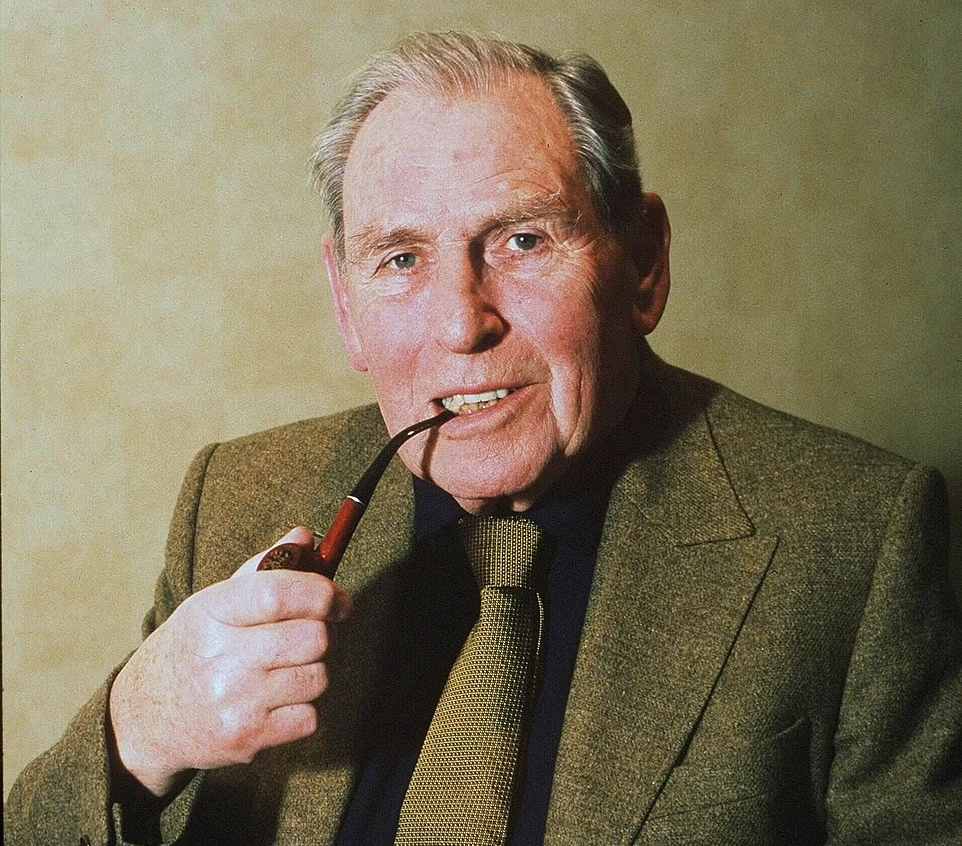
Few voices in sport have carried the weight, clarity, and emotional resonance of Kenneth Wolstenholme. For generations of football fans, his commentary did more than narrate matches—it captured the very soul of the game. His words during England’s most historic footballing moment became permanently etched into cultural memory, transforming him from a broadcaster into a national institution.
Early Life and Background
Kenneth Wolstenholme was born on 17 July 1920 in Worsley, Lancashire, a region deeply rooted in working-class culture and sporting tradition. Growing up in the North West of England, he was naturally exposed to football from an early age, but his path to broadcasting was far from straightforward.
Before entering the world of media, Wolstenholme served in the Royal Air Force during the Second World War. His service was not merely symbolic—he flew over 100 operational missions as a bomber pilot, demonstrating remarkable courage under pressure. For his bravery, he was awarded the Distinguished Flying Cross (DFC) and a Bar, honours that reflected both skill and resilience.
This wartime experience would later shape his broadcasting style. His calmness under pressure, measured tone, and ability to articulate events clearly in high-stakes moments were qualities forged in the skies long before he ever stepped behind a microphone.
Transition into Broadcasting
After the war, Kenneth Wolstenholme transitioned into journalism and broadcasting, joining the BBC in the late 1940s. At a time when radio was still the dominant medium, his voice quickly gained recognition for its clarity and authority.
His early work included a variety of sports, but it was football that ultimately defined his career. By the 1950s, he had become one of the BBC’s leading football commentators, covering major domestic and international fixtures.
What set Wolstenholme apart was not flamboyance or theatricality. Instead, he brought a sense of dignity and precision to commentary. He allowed the game to speak for itself, stepping in only when necessary to guide listeners through the action.
Rise to National Prominence
The 1950s and 1960s marked the golden era of Kenneth Wolstenholme’s career. As television began to replace radio as the primary medium for sports coverage, his voice seamlessly adapted to the new format.
He became the original commentator for the BBC’s iconic programme Match of the Day, which revolutionised how football was consumed in the UK. His role in the show helped establish a standard for football broadcasting that persists today.
During this period, he covered:
- Numerous FA Cup Finals
- European Cup matches
- International fixtures involving England
- Multiple FIFA World Cups
For many viewers, Kenneth Wolstenholme was football. His voice accompanied the most important matches of the era, making him a constant presence in British households.
The 1966 World Cup Moment
No discussion of Kenneth Wolstenholme is complete without revisiting the moment that immortalised him in sporting history: the final of the 1966 FIFA World Cup Final.
Held at Wembley Stadium, the match between England and West Germany was already dramatic, but it was the closing moments that became legendary. As England pushed forward in extra time, fans began to spill onto the pitch, anticipating victory.
Then came the decisive moment. Geoff Hurst scored his third goal, sealing England’s 4–2 win.
Wolstenholme’s commentary captured the chaos and triumph perfectly:
“Some people are on the pitch… they think it’s all over… it is now!”
The brilliance of this line lies in its spontaneity. It was not scripted or rehearsed—it was an instinctive reaction to unfolding events. Yet it encapsulated the moment so completely that it has been replayed, quoted, and referenced countless times ever since.
Commentary Style and Technique
Kenneth Wolstenholme’s style was defined by restraint, clarity, and precision. Unlike many modern commentators who rely on dramatic flair, he believed in letting the game dictate the narrative.
Clarity Over Noise
His delivery was measured and articulate. He avoided unnecessary embellishment, ensuring that listeners and viewers could follow the action without distraction. This clarity was particularly important in the early days of broadcasting, when visual coverage was limited or absent.
Timing and Instinct
One of his greatest strengths was knowing when to speak—and when to remain silent. He understood that moments of high drama often required space, allowing the crowd noise and atmosphere to convey emotion.
Authenticity
Kenneth Wolstenholme never attempted to dominate the broadcast. Instead, he positioned himself as a guide, helping audiences understand what they were witnessing without overshadowing the event itself.
Influence on Modern Commentary
The legacy of Kenneth Wolstenholme extends far beyond his own career. His approach to commentary laid the groundwork for future generations of broadcasters.
Modern commentators, whether consciously or not, continue to draw on his principles:
- Respect for the game
- Clear and concise delivery
- Emotional restraint balanced with authenticity
Even as broadcasting has evolved—with advanced graphics, multiple camera angles, and real-time analytics—the core philosophy that Wolstenholme embodied remains relevant.
Life Beyond Football
While football defined his public persona, Kenneth Wolstenholme’s life was rich with other interests and achievements.
He worked across various BBC programmes, including sports coverage beyond football. He also contributed to radio broadcasting, demonstrating versatility across formats.
Despite his fame, he remained a relatively private individual. He was not driven by celebrity status but by a genuine passion for his craft. This humility further enhanced his reputation among colleagues and audiences alike.
Recognition and Legacy
Kenneth Wolstenholme passed away on 25 March 2002, but his legacy endures. He is remembered not only as a commentator but as a cultural figure who helped shape the way football is experienced.
His famous line from 1966 has transcended sport, becoming part of British popular culture. It has been referenced in television, music, and everyday conversation, often used to signify a moment of finality or triumph.
Additionally, his contributions to broadcasting have been widely acknowledged by historians and commentators. He is often cited as one of the greatest sports broadcasters of all time.
The Enduring Power of His Voice
What makes Kenneth Wolstenholme truly remarkable is not just what he said, but how he said it. His voice carried authority without arrogance, excitement without exaggeration, and clarity without complexity.
In an age where commentary can sometimes feel overproduced, his work serves as a reminder of the power of simplicity. He trusted the audience to engage with the game, providing just enough guidance to enhance their experience.
FAQs
Who was Kenneth Wolstenholme?
Kenneth Wolstenholme was a British football commentator best known for his work with the BBC and his iconic commentary during the 1966 World Cup Final.
What is Kenneth Wolstenholme famous for?
He is most famous for his line, “They think it’s all over… it is now,” spoken during England’s victory in the 1966 World Cup Final.
Did Kenneth Wolstenholme serve in the military?
Yes, he served as a bomber pilot in the Royal Air Force during the Second World War and was awarded the Distinguished Flying Cross.
What made Kenneth Wolstenholme’s commentary unique?
His style was calm, clear, and precise, focusing on the action rather than dramatic exaggeration, which made his commentary timeless.
Was Kenneth Wolstenholme involved in Match of the Day?
Yes, he was the original commentator for Match of the Day, helping to establish it as a cornerstone of football broadcasting.
Conclusion
Kenneth Wolstenholme remains one of the most influential figures in sports broadcasting history. His voice did more than describe football—it defined how the game was experienced by millions. From his wartime service to his unforgettable moment in 1966, his life was marked by excellence, professionalism, and quiet brilliance.
In an ever-changing media landscape, his legacy continues to inspire. His words, delivered with perfect timing and authenticity, remind us that sometimes the simplest expressions carry the greatest power.