Mitigating Fleet Downtime: Sourcing Standards, Precision Tolerances, and Supply Chain Resilience in the Automotive Aftermarket


In commercial fleet management, logistics distribution, and specialized vehicle restoration, mechanical reliability is directly tethered to bottom-line profitability. For fleet directors, procurement specialists, and workshop engineers, asset availability dictates operational cadence.
When mission-critical vehicles sit idle due to component failure, secondary operational friction compounds rapidly across delivery schedules, client service-level agreements (SLAs), and driver utilization rates.
Mitigating these failures requires a shift away from reactive procurement toward predictive, engineering-led component sourcing that prioritizes dimensional accuracy, metallurgy, and stringent quality assurance frameworks.
The Cost of Vehicle Inaction: Supply Bottlenecks and Component Obsolescence in Fleet Logistics
Vehicle Off Road (VOR) events represent one of the most severe financial drains in modern commercial transport logistics. For medium- and heavy-duty commercial fleets, an unserviceable vehicle can incur direct and indirect downtime costs exceeding $1,200 to $1,800 per day.
This exposure increases when fleets rely on legacy vehicle platforms or specialized machinery where original equipment manufacturers (OEMs) have decommissioned primary tooling. Procuring low-volume legacy parts through original dealership networks frequently entails backorder delays extending from 6 to 9 months.
Faced with severe operational backlogs, procurement managers often explore two problematic alternatives: unverified salvage units from scrap yards or low-tier gray-market replicas. Both introduce severe mechanical risks:
- Microstructural Fatigue in Salvage Parts: Salvaged structural brackets and suspension components often harbor sub-surface micro-fissures and residual stress concentrations resulting from historical duty cycles.
- Elastomeric Hardening: Decommissioned rubber mounts and seals sourced from aging inventory suffer from plasticizer evaporation, ozone micro-cracking, and diminished sealing elasticity.
- Dimensional Drift in Gray-Market Replicas: Unregulated fabricators often cut corners by utilizing worn tooling, causing loose tolerances that trigger assembly interference and accelerated wear on adjacent driveline parts.
When navigating critical parts obsolescence and protracted OEM backorders, commercial fleet reliability engineers must look beyond unverified salvage markets toward certified fabrication facilities capable of reproducible reverse engineering. Operating benchmarks from specialized tier producers such as Sunway Autoparts demonstrate that sourcing components through a vertically integrated aftermarket auto parts manufacturer allows fleet maintenance teams to maintain original equipment fitment tolerances and structural integrity while reducing replacement procurement lead times by up to 55%.
By establishing reliable technical partnerships with certified aftermarket fabricators, fleet operators insulate their balance sheets from extended OEM lead times while maintaining strict asset roadworthiness.
Metrology and Reverse Engineering: Replicating Obsolete OEM Geometries
Achieving exact mechanical interchangeability for an obsolete automotive component requires moving far beyond superficial envelope dimensions. Comprehensive reverse engineering demands industrial metrology to map functional datums, draft angles, fastener pitch circles, and internal fluid pathways.
High-resolution non-contact blue-light scanners capture intricate external freeform surfaces at resolutions. Coordinate Measuring Machines (CMM) then verify internal concentricity, bore alignments, and perpendicularity to ensure perfect alignment with adjacent engine or chassis interfaces.
To prevent dynamic vibration and localized stress fatigue across structural assemblies—such as powertrain brackets, suspension links, and steering knuckles—fabricators must adhere to strict industrial engineering standards:
- Machining Tolerances: CNC turning and 5-axis milling centers must maintain tight machining tolerances within ± 0.01mm to ± 0.05mm on mating splines, bearing journals, and press-fit sleeves.
- Harmonic Resonance Suppression: Precision dynamic balancing and tight concentricity tolerances on rotating pulleys and drive flanges eliminate high-frequency harmonics that degrade seal faces.
- Surface Roughness Limits: Dynamic sealing journals and hydraulic fluid distribution interfaces require a mirror finish to prevent localized fluid weeping and premature gasket degradation.
Beyond metallic components, elastomeric formulations for engine mounts, suspension control arm bushings, and hydraulic seals require advanced polymer formulation to withstand extreme operating conditions:
- Tailored Elastomer Chemistries: Specifying Ethylene Propylene Diene Monomer (EPDM) for coolant and weatherstripping systems, Nitrile (NBR) for fuel contact, and Fluoroelastomers (FKM) for high-temperature oil and turbocharger seals.
- ASTM D1149 Ozone Cracking Resistance: Formulations must endure accelerated static ozone exposure without macroscopic surface fissures.
- Fluid Swell and High-Temperature Creep: Elastomers must limit volume swell in aggressive synthetic hydrocarbons to under 12% per ASTM D471, ensuring sustained clamping forces across broad temperature sweeps.
Metallurgy and Environmental Durability: Mitigating Premature Fatigue Failure
Automotive running gear and chassis hardware operate in challenging mechanical environments marked by dynamic shock loads, torsional deflection, and severe atmospheric exposure. Installing replacement hardware without metallurgical and chemical validation creates severe risks of sudden structural fatigue.
Component engineers must align replacement alloy chemistry and thermal treatments with original vehicle operating parameters:
- Cast Aluminum Specifications: High-stress structural mounts require switching from generic secondary die-castings to A356-T6 gravity-cast or low-pressure aluminum, achieving a yield strength and elongation above 5%.
- High-Tensile Alloy Steels: Suspension control arms, sway bar links, and towing hardware demand quenched and tempered 4140 chromium-molybdenum steel or AISI 1045 medium carbon steel to guarantee tensile strengths exceeding 650 MPa.
- Finite Element Stress Verification: Structural component geometries must undergo digital Finite Element Analysis (FEA) to detect and eliminate acute interior radii that act as stress concentrators during heavy braking and cornering.
Environmental durability also requires robust surface finishing. Commercial highway fleets operating in coastal regions or on winter roads treated with aggressive calcium and magnesium chloride de-icers require advanced industrial corrosion barriers:
- Zinc-Nickel (Zn-Ni) Alloy Electroplating: Imparts sacrificial galvanic protection with an electrodeposited alloy of 12% to 16% nickel, providing a durable barrier that passes 480 to 720 hours of ASTM B117 neutral salt spray without red rust.
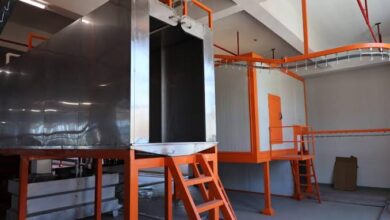
- Cathodic Electro-Deposition (E-Coating): Delivers a cross-linked organic epoxy barrier across complex internal cavities and recesses, ensuring high chemical resistance against road solvents and hydraulic fluids.
- Type III Hardcoat Anodizing: Applied to exposed functional aluminum hardware at film thicknesses, imparting an abrasion-resistant surface hardness exceeding 60 Rockwell C.
For exterior lighting assemblies and auxiliary electromechanical enclosures, environmental testing must verify both optical clarity and ingress protection. Housings must satisfy IP67 or IP68 water immersion and dust exclusion benchmarks, withstand multi-axis vibration per SAE J575, and feature UV-stabilized polycarbonate lenses that prevent photolytic yellowing and micro-crazing.
Key Takeaways
| Area | Key Takeaway | Impact/Data |
| Sourcing | Partner with certified integrated manufacturers | Cuts lead time 55%; saves $1,800/day |
| Tolerances | Enforce strict CNC machining limits | Requires ±0.01mm to ±0.05mm |
| Materials | Specify task-specific elastomers and alloys | Swell <12%; Steel >650 MPa |
| Coatings | Apply Zinc-Nickel electroplating | Withstands 480-720 hrs salt spray |
| Quality | Mandate IATF 16949 & PPAP Level 3 | Process capability index >1.67 |
Supply Chain Governance: IATF Frameworks, Traceability, and Global Sourcing Strategy
Procurement reliability depends on institutionalizing quality control frameworks that guarantee batch-to-batch repeatability. Quality assurance teams must implement rigorous supplier verification across international aftermarket supply chains.
Adhering to IATF 16949 and ISO 9001 frameworks provides manufacturing consistency through structured, documented verification protocols:
- Production Part Approval Process (PPAP): Tier manufacturing partners must submit Level 3 PPAP documentation packages, including comprehensive control plans, Gage R&R studies, and Design/Process Failure Mode and Effects Analysis (FMEA).
- Statistical Process Control (SPC): Critical-to-quality dimensions across high-speed CNC turning and milling runs must demonstrate process capability indices exceeding 1.67, confirming consistent dimensional stability.
- Spectrometric Material Verification: Incoming raw billets and castings must undergo Optical Emission Spectrometry (OES) assays, supported by traceable Mill Test Reports (MTRs), to verify chemical composition against SAE/ASTM standards.
Establishing rigorous quality audit trails is essential to safeguard against uncertified counterfeit assemblies that compromise vehicle roadworthiness. As documented in industrial overviews of the automotive aftermarket, standardizing technical compliance across replacement channels ensures that remanufactured and non-OEM components consistently align with rigorous statutory safety and mechanical durability benchmarks.
Beyond manufacturing quality, procurement resilience depends on responsive supply chain architecture. Relying on single-source, reactive ordering leaves fleets exposed to international maritime congestion and geopolitical shipping disruptions.
Forward-thinking fleet operators deploy a diversified supply chain model. By pairing direct offshore tooling and manufacturing for high-precision components with regional buffer stocking for high-wear chassis consumables, commercial fleets maintain rapid replacement turnaround times while controlling capital expenditure.
Integrating comprehensive metrology, validated metallurgy, and structured IATF quality governance transforms aftermarket procurement from a point of vulnerability into a predictable driver of fleet uptime.