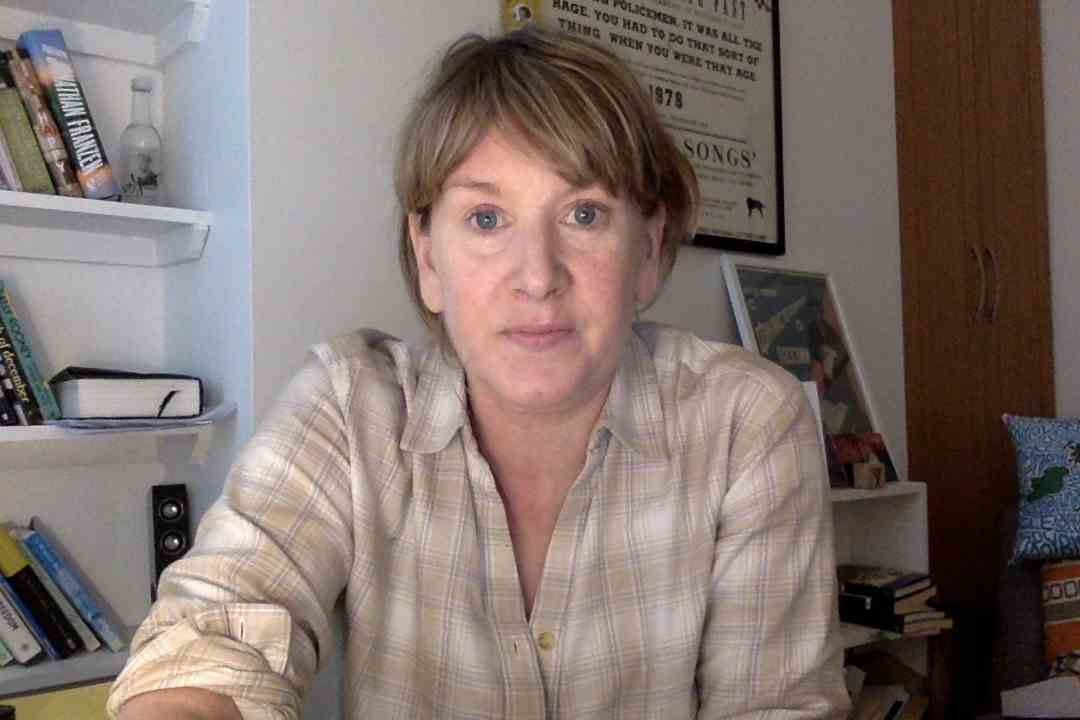
Modern poetry has many remarkable voices, but few have shaped contemporary Irish literature quite like Leontia Flynn. Known for her sharp intelligence, lyrical depth, and distinctive blend of humour and cultural reflection, she has become one of the most respected poets of her generation. Her work explores themes of memory, identity, technology, and family life while maintaining a clear, accessible poetic voice.
Over the past two decades, Flynn’s poetry collections have received widespread praise from critics and readers alike. Her writing captures the complexities of modern life while remaining rooted in the traditions of Irish poetry. At the same time, her academic career has allowed her to influence a new generation of writers and scholars.
Early Life and Background
The poet was born in 1974 in Downpatrick, County Down, Northern Ireland. Growing up in a region rich with literary heritage and natural beauty, she developed an early interest in literature and storytelling.
Her childhood environment played an important role in shaping her imagination. Coastal landscapes, rural communities, and the cultural atmosphere of Northern Ireland all contributed to her developing sense of language and imagery. Like many writers from the region, she was also influenced by the deep literary tradition of Irish poetry.
During her school years she showed a strong aptitude for reading and writing. Teachers recognised her talent early on, encouraging her interest in poetry and literature.
Later she attended Assumption Grammar School in Ballynahinch, where her fascination with language and poetic expression continued to grow. By the time she entered university, she had already developed a strong foundation in literature.
Education and Academic Development
Higher education played a crucial role in shaping Flynn’s literary voice. She studied English literature at Trinity College Dublin, one of Ireland’s most respected universities. This period exposed her to a wide range of literary traditions, including modernist poetry, classical literature, and contemporary Irish writing.
Following her undergraduate studies, she continued her academic journey at Queen’s University Belfast. There she pursued advanced research in literature and completed a doctoral degree focusing on the work of Northern Irish poet Medbh McGuckian.
Her academic training helped her develop a deep understanding of poetic form, literary theory, and cultural criticism. These elements later became visible in her poetry, which often blends intellectual insight with personal reflection.
She also completed postgraduate work at the University of Edinburgh, studying writing and cultural politics. This interdisciplinary perspective further broadened her understanding of literature within social and political contexts.
The Beginning of a Poetry Career
The early 2000s marked the beginning of her professional poetry career. Like many emerging poets, she first published individual poems in literary magazines and journals.
These early works quickly attracted attention from editors and critics. Her writing stood out because it combined technical skill with a distinctive voice that felt both contemporary and timeless.
Her breakthrough came with the publication of her first full poetry collection in 2004. The debut established Leontia Flynn as a major new voice in Irish literature and immediately earned critical recognition.
Breakthrough with These Days
Her debut collection These Days introduced readers to a fresh and confident poetic style. The book explores themes such as youth, relationships, personal reflection, and the experience of growing up in modern Ireland.
What distinguished the collection was its ability to combine intellectual depth with emotional clarity. The poems felt thoughtful without being distant, and reflective without becoming overly abstract.
Critics praised the work for its wit, formal precision, and engaging voice. The collection went on to win the prestigious Forward Prize for Best First Collection, one of the most significant awards in contemporary poetry.
The success of the book established Flynn as a poet to watch and laid the foundation for a long and influential literary career.
Expanding Her Voice in Later Collections
Following the success of her debut, she continued to develop her voice through a series of thoughtful and ambitious poetry collections.
Drives
Her second collection, Drives, expanded on themes of movement, travel, and personal identity. The poems explore journeys in both literal and emotional terms, reflecting on how people navigate relationships and life changes.
The collection demonstrated growing confidence and complexity in her work, confirming that her early success was no accident.
Profit and Loss
The next major collection, Profit and Loss, explored adulthood, parenthood, and the challenges of balancing personal life with social expectations.
Many of the poems in this book examine modern economic and cultural pressures, using humour and irony to highlight everyday struggles.
The collection was shortlisted for the prestigious T. S. Eliot Prize, further strengthening her reputation as one of the most important poets working today.
The Radio
Another highly praised collection, The Radio, explores communication, memory, and family relationships.
This book contains deeply personal poems reflecting on the experience of caring for a parent suffering from illness. At the same time, it explores the broader question of how technology shapes the way people communicate and understand the world.
The collection won the Irish Times Poetry Now Award and received widespread critical acclaim.
Taking Liberties
Her more recent work, Taking Liberties, continues to explore the intersections between personal identity, language, and politics.
The poems reflect a mature poetic voice capable of addressing complex subjects while remaining engaging and accessible.
Themes and Style
One of the reasons Flynn’s poetry resonates with readers is her ability to address serious topics with clarity and wit. Her work often moves seamlessly between personal reflection and broader cultural commentary.
Family and Personal Memory
Family relationships frequently appear in her poems. She writes with honesty about parents, children, and the complicated emotional connections within families.
Some of her most powerful poems reflect on illness and memory, exploring how families cope with change and loss.
Technology and Modern Life
Unlike many traditional poets, Flynn often writes about modern technology and digital culture. Her poems sometimes reference online information, media, and the changing ways people interact with knowledge.
This willingness to engage with contemporary subjects gives her work a fresh and modern perspective.
Humour and Irony
Despite addressing serious themes, Flynn’s poetry often includes humour and playful language.
This combination allows her to explore complex ideas without becoming overly heavy or abstract. The balance between seriousness and wit has become a hallmark of Leontia Flynn’s poetic style.
Intellectual Curiosity
Her academic background is visible in her writing. Many poems engage with literature, philosophy, and cultural history.
However, these references never feel overly academic. Instead, they enrich the poems and provide deeper layers of meaning.
Academic Career and Teaching
Alongside her poetry career, Flynn has built an impressive academic career. She teaches at the Seamus Heaney Centre for Poetry at Queen’s University Belfast.
The centre is one of the most respected institutions for creative writing in the United Kingdom. It has produced numerous successful poets and writers.
As a lecturer, she guides students through both the technical and creative aspects of poetry. Her teaching emphasises close reading, thoughtful writing, and an understanding of literary tradition.
Through her academic work, she continues to shape the future of poetry by mentoring emerging writers.
Awards and Recognition
Throughout her career, Flynn has received numerous awards and honours recognising her contribution to literature.
Among the most notable achievements are the Forward Prize for Best First Collection and the Irish Times Poetry Now Award.
She has also received the Rooney Prize for Irish Literature and was elected a Fellow of the Royal Society of Literature.
These honours highlight both the critical and cultural significance of her work.
Influence on Contemporary Poetry
Today, Flynn is widely regarded as one of the most important contemporary poets from Northern Ireland.
Her writing demonstrates how poetry can remain intellectually rich while still connecting with modern readers. She brings together tradition and innovation, creating poems that feel both rooted in history and relevant to contemporary life.
Many younger poets cite her work as an influence, particularly her ability to blend personal storytelling with cultural commentary.
In this way, Leontia Flynn continues to shape the direction of modern poetry.
Public Readings and Literary Presence
Beyond publishing books, Flynn regularly participates in literary festivals, readings, and academic conferences.
These events allow audiences to experience poetry as a spoken art form. Her readings are known for their clarity, warmth, and engaging delivery.
Such appearances also help bring poetry to wider audiences, demonstrating its continued relevance in modern culture.
The Importance of Her Work Today
The importance of Flynn’s poetry lies in its ability to speak to contemporary life while maintaining strong connections to literary tradition.
Her work addresses questions of identity, memory, family, and cultural change—topics that resonate with readers across generations.
At a time when poetry often struggles to reach mainstream audiences, her writing shows how the art form can remain both thoughtful and accessible.
Through her books, teaching, and public engagement, Leontia Flynn has become a central figure in modern British and Irish poetry.
FAQs
Who is Leontia Flynn?
She is a Northern Irish poet and academic known for award-winning poetry collections and her teaching role at Queen’s University Belfast.
Where was Leontia Flynn born?
She was born in Downpatrick, County Down, Northern Ireland in 1974.
What is Leontia Flynn known for?
She is known for poetry collections such as These Days, Drives, Profit and Loss, and The Radio.
Where does Leontia Flynn teach?
She teaches creative writing and literature at the Seamus Heaney Centre for Poetry at Queen’s University Belfast.
What themes appear in her poetry?
Her work often explores family relationships, memory, technology, identity, and modern life.
Conclusion
The career of Leontia Flynn demonstrates how poetry can evolve while remaining connected to tradition. Her work combines intellectual depth, emotional honesty, and sharp humour, creating poems that feel both thoughtful and approachable.
From her award-winning debut to her later collections, she has consistently produced poetry that reflects the complexities of contemporary life. At the same time, her academic work ensures that new generations of writers continue to engage with poetry as both an art form and a way of understanding the world.