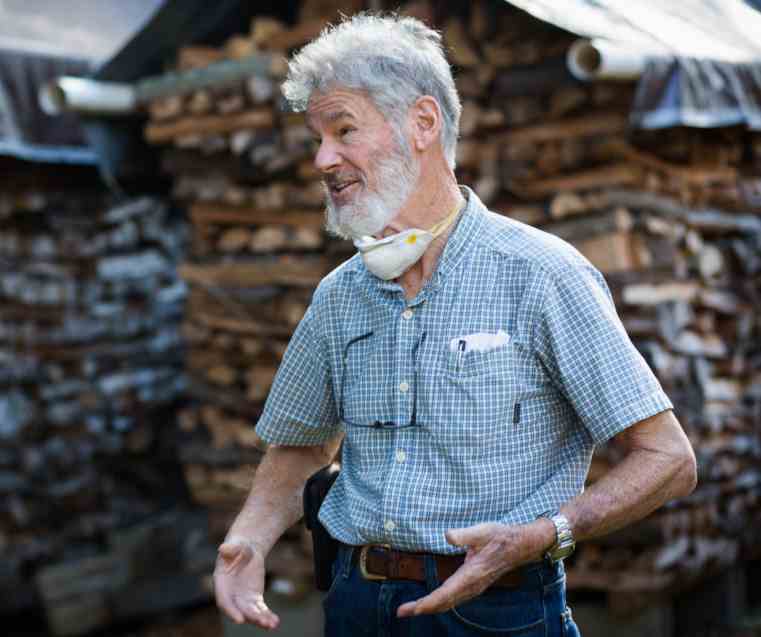
Marine ecosystems are among the most complex environments on Earth, filled with intricate relationships between organisms, habitats, and environmental forces. Scientists who dedicate their lives to studying these systems help the world better understand how oceans and coastal ecosystems function. One such influential scientist is Thomas Wolcott, a respected marine ecologist known for his extensive research on marine invertebrates, particularly crabs, and their ecological behaviour.
Early Life and Academic Foundations
The academic journey of Thomas Wolcott began with a strong interest in zoology and environmental science. Like many researchers in marine biology, his curiosity about how animals interact with their environments guided his educational path.
He completed his undergraduate studies in zoology at the University of California, Riverside. During this time, he developed a strong foundation in animal physiology, ecology, and biological systems. These early studies introduced him to the complex ways animals adapt to different environmental conditions.
After completing his undergraduate degree, he pursued advanced studies at the University of California, Berkeley, where he earned his doctorate in zoology. His doctoral research focused on the physiology and behaviour of marine organisms, particularly species that live in coastal and intertidal environments.
This period of academic training helped shape the scientific interests that would define the future research career of Thomas Wolcott.
Academic Career at North Carolina State University
Following the completion of his doctoral studies, Thomas Wolcott joined the faculty at North Carolina State University. The university’s Department of Marine, Earth, and Atmospheric Sciences provided a strong platform for research focused on coastal and marine environments.
Over the course of several decades, he played a major role in developing marine ecological research at the university. His responsibilities included teaching undergraduate and graduate courses, supervising doctoral students, and conducting extensive field studies along the Atlantic coast.
As an educator, he helped train numerous marine scientists who later went on to work in environmental research, academia, and conservation. His teaching style emphasised practical field experience and critical scientific thinking.
Through years of dedication to both teaching and research, Thomas Wolcott eventually earned the title of Professor Emeritus, recognising his long-standing contributions to the academic community.
Research Focus on Marine Invertebrates
One of the central themes of Thomas Wolcott’s research career was the study of marine invertebrates. These organisms, which include species such as crabs, molluscs, and small crustaceans, play crucial roles in maintaining ecological balance in marine habitats.
Many marine ecosystems rely on these species for nutrient cycling, food webs, and habitat structure. Understanding their behaviour and physiology is therefore essential for scientists studying marine biodiversity.
Thomas Wolcott focused particularly on crustaceans, especially crabs that inhabit coastal and estuarine environments. His research examined how these animals respond to environmental stress, locate food, avoid predators, and reproduce successfully.
By studying these behaviours in natural habitats, he helped reveal how marine species adapt to changing environmental conditions.
Studies on Crab Ecology and Behaviour
Perhaps the most widely recognised work of Thomas Wolcott involves the behavioural ecology of crabs. Crabs are fascinating marine animals with complex movement patterns, territorial behaviours, and reproductive strategies.
His research investigated how crabs interact with their surroundings, including sandy beaches, tidal flats, and estuarine systems.
One major area of study involved ghost crabs, which live along sandy beaches and are known for their remarkable speed and burrowing behaviour. By observing their activity patterns and feeding habits, researchers gained valuable insights into how these animals survive in dynamic coastal environments.
Another important research focus involved blue crabs, a species that holds significant ecological and commercial importance in the Atlantic region. Studies explored mating behaviour, migration patterns, and reproductive capacity.
Through these investigations, Thomas Wolcott contributed valuable knowledge that has been used in fisheries science and marine resource management.
Marine Physiology and Environmental Adaptation
Beyond behavioural studies, Thomas Wolcott also explored the physiological processes that allow marine animals to survive in difficult environmental conditions.
Coastal environments can experience dramatic fluctuations in temperature, oxygen levels, and salinity. Marine organisms must constantly adjust to these changes in order to survive.
His research examined how crustaceans regulate water and salt balance within their bodies, particularly when moving between different habitats. These physiological mechanisms are essential for animals living in intertidal zones where environmental conditions can change rapidly.
By understanding these adaptations, scientists gained a clearer picture of how marine species maintain stability in challenging ecosystems.
Technological Innovation in Marine Research
Another notable aspect of Thomas Wolcott’s work involved the development and use of advanced technology for studying marine organisms in their natural environments.
Traditional ecological research often relied heavily on direct observation. However, marine animals frequently move across wide areas or remain hidden beneath sand or water.
To overcome these challenges, researchers began using biotelemetry, a technique that involves attaching small electronic transmitters to animals in order to track their movements.
Thomas Wolcott played a role in advancing these methods, helping scientists track marine animals over long periods of time. This technology allowed researchers to observe migration patterns, habitat preferences, and behavioural responses to environmental changes.
Such innovations transformed the way scientists study marine ecosystems and provided a much more detailed understanding of animal behaviour in the wild.
Research on Larval Transport and Ocean Currents
Marine animals often have complex life cycles that include microscopic larval stages drifting through ocean waters before settling into adult habitats.
Thomas Wolcott studied how these larvae move through ocean currents and how their behaviour influences where they eventually settle.
This research area is particularly important because larval dispersal determines how marine populations spread and maintain genetic diversity.
Scientists developed experimental tools known as smart drifters, devices designed to mimic the movement of larvae in ocean currents. These instruments allowed researchers to study how currents transport organisms across coastal regions.
Through this work, Thomas Wolcott helped deepen scientific understanding of marine population dynamics and coastal ecosystem connectivity.
Contributions to Coastal Ecosystem Studies
Coastal environments face increasing pressure from human activities such as tourism, coastal development, and climate change. Understanding how these pressures affect wildlife is a crucial part of environmental conservation.
Thomas Wolcott conducted research examining how human activity influences beach ecosystems. One example involved studying the effects of off-road vehicles on beach-dwelling organisms.
These vehicles can disturb sand habitats and disrupt animal behaviour. By analysing these impacts, scientists were able to better understand how coastal ecosystems respond to human disturbance.
This research contributed to broader discussions about coastal management and environmental protection.
Scientific Publications and Academic Influence
Throughout his academic career, Thomas Wolcott authored and co-authored numerous scientific papers in marine biology and ecology.
These publications covered a wide range of topics including crab physiology, behavioural ecology, larval transport, and environmental adaptation.
His work has been cited extensively in scientific literature, reflecting the importance of his contributions to marine research.
Many of his studies continue to influence modern research in marine ecology, fisheries science, and environmental conservation.
In addition to publishing research, he served as a mentor to many graduate students who later built their own careers in marine science.
Collaboration with Other Scientists
Scientific progress often depends on collaboration, and Thomas Wolcott frequently worked with other researchers to expand the scope of marine ecological studies.
Among his notable collaborators was marine biologist Donna L. Wolcott, with whom he co-authored several influential studies on crab ecology and physiology.
Together, they explored topics such as reproductive behaviour, larval dispersal, and physiological adaptation in crustaceans.
Collaborative research allowed scientists to combine different areas of expertise, leading to deeper insights into marine ecosystem dynamics.
Recognition and Professional Achievements
The scientific community recognised the contributions of Thomas Wolcott through several professional honours.
One significant achievement was his election as a Fellow of the American Association for the Advancement of Science. This distinction is awarded to scientists who have made important contributions to advancing knowledge in their fields.
Such recognition reflects the lasting influence of his research on marine biology and ecological science.
His work continues to serve as a foundation for future research into marine ecosystems and coastal environmental processes.
Legacy in Marine Ecology
The legacy of Thomas Wolcott extends beyond his published research. Through decades of teaching, mentorship, and scientific discovery, he helped shape the field of marine ecology.
His research improved understanding of how marine animals behave, how they adapt to environmental stress, and how coastal ecosystems function as interconnected systems.
Today, many scientists continue to build upon the foundations established by his work.
As coastal ecosystems face increasing environmental challenges, the insights gained from his research remain highly relevant for conservation efforts and marine resource management.
FAQs
Who is Thomas Wolcott?
Thomas Wolcott is a marine ecologist and academic known for his research on marine invertebrates, particularly crab behaviour and coastal ecosystem dynamics.
What university did Thomas Wolcott work at?
He spent most of his academic career at North Carolina State University, where he served as a professor in marine science.
What was the main focus of Thomas Wolcott’s research?
His research focused on marine invertebrate ecology, behavioural studies of crabs, physiological adaptations of marine animals, and larval transport in ocean currents.
Did Thomas Wolcott contribute to marine technology research?
Yes, he helped advance the use of biotelemetry and tracking technology to study marine animals in their natural environments.
Why is Thomas Wolcott important in marine biology?
His work improved scientific understanding of coastal ecosystems, crab ecology, and marine animal behaviour, influencing both ecological research and fisheries science.
Conclusion
Thomas Wolcott stands as a respected figure in the field of marine ecology. Through decades of dedicated research, teaching, and collaboration, he contributed valuable knowledge about marine invertebrates and coastal ecosystems. His studies on crab behaviour, physiological adaptation, and larval dispersal helped scientists better understand how marine animals interact with their environments.