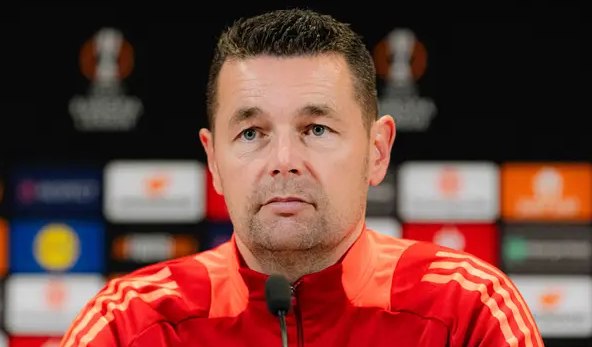
If you asked anyone in 2022 to name the next big thing in French coaching, Pierre Sage would not have been on the list. He had no glittering playing career to fall back on, no famous mentor whispering in his ear, and no fast-track project pulling him toward the top. What he had instead was a notebook, a UEFA Pro Licence, and a stubborn belief that football is, at heart, a teachable game. A few years later, that quiet belief has produced one of the most interesting coaching stories in Europe, and the man behind it is now sitting in the dugout at RC Lens with a Coupe de France medal and a Champions League ticket in his pocket.
From a Small Town in the Jura to the Sidelines of Ligue 1
Pierre Sage was born on 5 May 1979 in Lons-le-Saunier, a modest town in the Jura region of eastern France. It is not a place that produces national team stars on a conveyor belt, and Sage himself was never close to becoming one. He joined the youth setup of CS Belley at the age of six, played there as an amateur into his early twenties, and then had a short stint with Oyonnax Plastics Vallée. By his mid-twenties, it was clear that life as a player was not going to take him anywhere glamorous, so he did something most players never seriously consider until it is forced upon them. He started studying the game.
What is interesting is that Sage did not chase the spotlight after that pivot. He worked across the unglamorous corners of French football, taking roles in scouting, technical direction, youth coaching, and academy management at clubs like Châteauroux, Bourg-Péronnas, Chambéry, Sedan, Lyon-Duchère, and Red Star. None of those names will impress a casual observer, but each one taught him something. By the time he walked into the Olympique Lyonnais academy as a director in 2023, he had spent close to two decades absorbing every layer of the sport from the ground up.
The Lyon Earthquake of November 2023
When Lyon sacked Fabio Grosso in November 2023, the club was in chaos. They were rooted to the bottom of Ligue 1, the dressing room felt fractured, and the fans had already started pointing fingers at the boardroom. Most observers expected the club to bring in a recognised name, somebody with a heavy CV to settle the panic. Instead, they turned to their own academy director.
It looked like a stopgap. It became something else entirely.
Sage took over an unhappy squad and did the unglamorous work first. He simplified the structure, restored confidence in players who had stopped trusting themselves, and made the team genuinely difficult to play against. By the end of the season, Lyon had climbed out of the relegation zone, reached the Coupe de France final, and qualified for European football. The interim manager nobody had heard of was suddenly the manager nobody could stop talking about, and the club confirmed him permanently.
It was not a fluke. It was the kind of turnaround that only happens when the man in charge actually knows what he is doing.
A Coaching Style Built on Common Sense
If you watch a Sage team play, you will not see anything revolutionary at first glance. There is no exotic formation, no manifesto-style declaration about how football must be played. What you see instead is a side that knows exactly what it is doing in every phase of the game. The pressing has triggers, the build-up has shape, the transitions are quick but never reckless, and the defensive block is genuinely organised rather than just hopeful.
His preferred system tends to lean on three at the back with attacking wing-backs, but he is comfortable shifting to a back four when the matchup calls for it. What stays constant is the principle. Every player knows his job in possession, out of possession, and in the chaotic seconds when the ball is changing hands. That is the kind of clarity you can only get from a coach who has spent years thinking about football rather than playing it on autopilot.
He is also famously calm. Players who have worked with him describe a man who almost never raises his voice, who critiques tactics rather than people, and who treats the dressing room as a place for honest conversation rather than theatre. In a profession full of shouters and showmen, that emotional steadiness is its own competitive advantage.
The Lens Project
After his stint at Lyon ended in 2025, Sage was not out of work for long. On 2 June 2025, RC Lens announced him as their new head coach on a three-year deal, and the appointment immediately changed the energy around the club. Lens fans, who are among the most passionate in France, were curious. They had a coach who had punched above his weight at Lyon and now had a chance to build something from a stronger foundation.
What followed was a season that exceeded almost everyone’s expectations. Lens finished second in Ligue 1, qualifying for the Champions League, and they marched all the way to the Coupe de France final. On 22 May 2026, in front of a sold-out Stade de France, they beat Nice 3-1 to lift the trophy for the first time in their history. For a club that had not been to a cup final since 1998, it was the kind of night that gets remembered for generations.
The remarkable part is how unflashy the whole journey was. Lens did not buy a superstar to drag them there. They did not stumble into form. They simply got better, week after week, because the coach kept tweaking the right things at the right times.
The Liverpool Question and What Comes Next
After winning the cup, Sage did exactly what you would expect a coach with momentum to do. He fielded the inevitable questions about his future and started shutting doors. Despite reported interest from clubs across Europe, including a public link with Crystal Palace, he confirmed that he will stay at Lens for the upcoming Champions League campaign. The job is not finished.
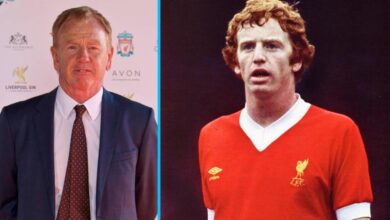
What did slip out, though, was something more revealing. Asked on Téléfoot which club he secretly dreams of coaching one day, he named Liverpool. It was an honest answer rather than a calculated one, and it told you something about how he sees his own ceiling. He is not coaching from a position of survival anymore. He is thinking about the biggest stages in the sport and considering himself a credible candidate for them. Not in an arrogant way, just in the way of a man who finally trusts what the last few years have proven about him.
FAQs
Q1: Who is Pierre Sage?
Pierre Sage is a French professional football manager, born 5 May 1979 in Lons-le-Saunier. He currently serves as the head coach of Ligue 1 club RC Lens and previously managed Olympique Lyonnais.
Q2: Did Pierre Sage play professional football?
No, Pierre Sage never played professional football. He spent his playing days as an amateur with CS Belley and Oyonnax Plastics Vallée before shifting fully into coaching, scouting, and academy work in his mid-twenties.
Q3: What has Pierre Sage won as a coach?
His biggest honour came on 22 May 2026, when he led RC Lens to their first ever Coupe de France title with a 3–1 win over Nice. He also guided Lens to a second-place Ligue 1 finish, qualifying the club for the Champions League.
Q4: Which club does Pierre Sage dream of coaching? I
n a Téléfoot interview, Sage revealed that Liverpool is his dream club to manage one day. For now, he has confirmed he will stay at RC Lens to lead them through their upcoming Champions League campaign.
Q5: Is Pierre Sage married or does he have children?
Pierre Sage keeps his personal life strictly private. There is no publicly confirmed information about his wife, children, or wider family, and he prefers to let his coaching work speak for itself.
Conclusion
It is tempting to file Pierre Sage away as a feel-good underdog story and move on, but doing that would miss the point. His career is a quiet argument against the idea that the only path to elite coaching runs through an elite playing career. He has shown that the work itself, when done seriously and consistently across many small jobs, can take you all the way. That is a message football has needed for a long time, and it is one a lot of young coaches will be paying close attention to.
He also keeps his private life genuinely private, which is rare in the modern game. There is almost nothing in the public record about his family, his marriage, or his personal world beyond football, and he seems to like it that way. The work is the story. The trophy in the Lens cabinet is the receipt. Whatever comes next, whether it is a Champions League run, another Coupe de France, or one day a phone call from Anfield, Pierre Sage has already done something most coaches never manage. He has made the football world stop and pay attention to the unglamorous path, and he has done it without raising his voice once.