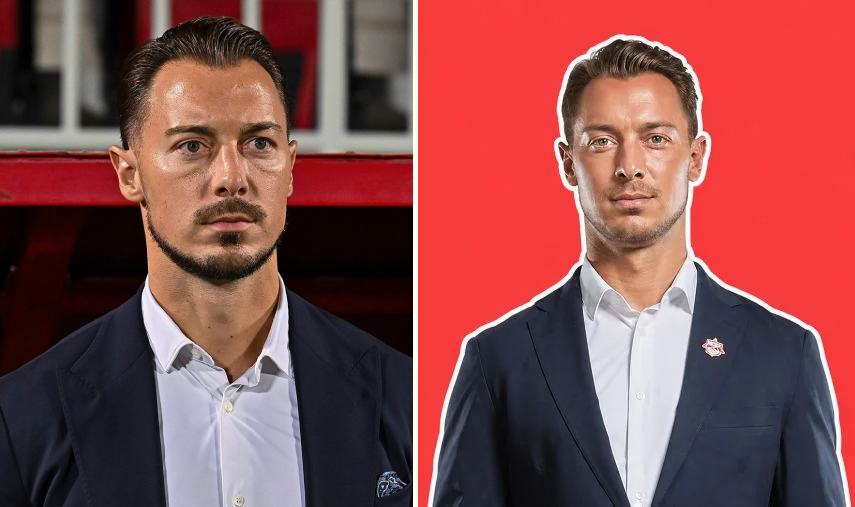
Every now and then a coach comes along who doesn’t quite fit the usual mould, and Matthias Jaissle is exactly that kind of figure. He never carved out a glittering playing career, he didn’t spend years grinding through the lower leagues as a manager, and he didn’t follow the well-trodden path of stepping into a big job through name recognition alone. Instead, he built his reputation the hard way, through results, sharp tactical thinking, and a willingness to take roles that most ambitious coaches would have turned their noses up at. Today, Matthias Jaissle is a German association football manager whose name keeps cropping up in conversations about the brightest young minds in the sport, and there’s a genuinely good reason for that. His story is one of resilience, reinvention, and a clear-eyed understanding of what modern football actually demands.
Who Exactly Is Matthias Jaissle?
Matthias Jaissle was born on 5 April 1988 in Nürtingen, a town in the southwest of Germany, and at the time of writing he is the head coach of Al-Ahli in the Saudi Pro League. If you only know him from recent headlines, you might assume he’s another European coach who chased a big paycheck in the Middle East, but that reading sells him badly short. He’s a deeply serious football person, the kind who thinks about the game in layers, and his career so far reflects a man who has consistently backed himself even when the conventional wisdom said he was moving too fast or taking on too much. He’s still relatively young for someone with the trophy cabinet he’s already assembled, which is part of what makes him such a fascinating case study in how a coaching career can be built in the present era.
From Defender to a Career Cut Short
Before any of the coaching success, there was a playing career, and it’s worth understanding because it shaped everything that followed. Jaissle was a centre-back, a position that tends to produce thoughtful, organised players who spend the whole match reading the game in front of them, and that’s a useful foundation for anyone who later moves into management. He came through the youth ranks at TSV Neckartailfingen before joining VfB Stuttgart, and he eventually made his way to TSG 1899 Hoffenheim, where the influential Ralf Rangnick brought him into the fold. Playing for Hoffenheim’s reserves and first team, Jaissle was part of the club’s rise through the German divisions, and his talent was recognised when he was called up to the Germany U21 national team in 2009. For a while it looked like he might push towards the senior set-up, but football has a cruel way of redirecting careers, and his ended far earlier than anyone expected.
The Injury That Changed His Path
Injuries are part of the game, but some of them carry a weight that goes well beyond the physical. Jaissle was forced to retire as a player at the age of just 26, in 2014, which is a brutal age to have your career taken away from you. Plenty of footballers in that situation drift away from the sport entirely, struggling to find a foothold once the thing they’ve built their identity around is suddenly gone. Jaissle did the opposite. Rather than letting the setback define him, he treated it as a fork in the road, and he chose the path that kept him inside the game he loved. That decision, made in the difficult aftermath of a premature retirement, turned out to be the moment that quietly set up everything he’s achieved since. There’s a certain steel in that choice, and you can see echoes of it in the way he later approached his coaching jobs.
Learning the Trade Inside the Red Bull System
If you want to understand how Matthias Jaissle became the coach he is, you have to understand the environment that moulded him, and that environment was the Red Bull football network. He began his coaching journey working with youth teams, including a stint with RB Leipzig’s youth setup, where he focused on developing players in the U17 age group and the broader academy structure. This is unglamorous work, the kind that doesn’t generate headlines, but it’s where a coach genuinely learns his craft. He’s teaching, observing, experimenting with ideas, and figuring out how to communicate complex concepts to players who are still learning the game. The Red Bull philosophy, with its emphasis on intense pressing, quick transitions, and aggressive, proactive football, became deeply embedded in his coaching identity during these years, and it’s a thread that runs through everything he’s done since.
A Detour to Denmark and a Return Home
Not every step in Jaissle’s development happened inside the Red Bull bubble, and that variety arguably made him a more complete coach. He spent time in Denmark as an assistant manager at Brøndby IF, which gave him exposure to senior professional football in a different country, with a different culture and different expectations. Working as an assistant at that level is invaluable, because you get to see the day-to-day realities of running a first team without carrying the full weight of the top job on your shoulders. You learn how players respond under pressure, how a dressing room functions, and how the abstract tactical ideas you believe in actually hold up against the chaos of real matches. When he eventually returned to the Red Bull system to take charge of Salzburg’s youth side, he came back as a more rounded figure, ready to make the leap into senior management on his own terms.
The Liefering Stepping Stone
In January 2021, Jaissle was handed his first senior managerial role at FC Liefering, the feeder club to Red Bull Salzburg that effectively functions as a bridge between the academy and the senior team. It was the perfect place for a young coach to cut his teeth, because the whole point of Liefering is development, and the pressure to win at all costs is lower than it would be at a club where the league table is everything. That said, Jaissle clearly impressed in the role, because he wasn’t there for long. His handling of young players, his tactical clarity, and his ability to get a team playing in the demanding Red Bull style marked him out as ready for something bigger. The Salzburg hierarchy, never shy about promoting from within and trusting younger coaches, decided he was the man to lead the senior side, and that’s when his career really took off.
The Salzburg Years and a Breakthrough on the Big Stage
The spell at Red Bull Salzburg is the chapter that turned Matthias Jaissle from a promising name into a coach the rest of Europe started paying close attention to. He won two Austrian Championships, in the 2021–22 and 2022–23 seasons, and added an Austrian Cup in 2021–22 to complete a domestic double in that first full campaign. Winning trophies in Austria with Salzburg is partly expected, given the club’s resources and dominance, but the manner in which his teams played, and the relentless standards he set, elevated the achievement beyond the routine. In his first batch of Austrian Bundesliga matches he racked up a points haul that ranked among the best ever recorded by a Salzburg manager over a comparable stretch, which tells you he hit the ground running rather than easing his way in.
The real headline moment, though, came in the Champions League. Salzburg had long been a regular in European competition without ever quite breaking through to the knockout phase of the Champions League, and Jaissle changed that. He led the club to the round of 16 for the first time in its history during the 2021–22 season, navigating a group that many pundits had written them off in. For a club of Salzburg’s stature to crack the last 16 of Europe’s premier competition was a genuine milestone, and it was Jaissle’s tactical approach and fearless mentality that made it happen. That run earned him serious recognition within Austrian football, including manager-of-the-year honours, and it put his name firmly on the radar of bigger clubs across the continent.
The Controversial Move to Al-Ahli
In the summer of 2023, Jaissle made the move that surprised plenty of observers, leaving Salzburg to take charge of Al-Ahli in Saudi Arabia. The timing and circumstances of his departure were contentious, coming as it did very close to the start of the new season, and it caused some friction with his former employers who felt the exit was handled in a way that left them in the lurch. From the outside, it looked like a coach prioritising a lucrative opportunity in the rapidly growing Saudi Pro League, and there’s no point pretending the financial dimension wasn’t part of the equation. But it’s also true that Saudi Arabian football was, and still is, undergoing a remarkable transformation, attracting major players and ambitious projects, and Jaissle clearly saw it as a chance to test himself in a new environment with a club determined to build something serious.
Building Something Real in Saudi Arabia
What’s most telling about Jaissle’s time at Al-Ahli is that he hasn’t simply collected a salary and coasted. He’s set about applying the high-pressing, aggressive footballing identity he honed in the Red Bull system, and he’s done it while adapting to a completely different league, a different climate, and a squad full of high-profile signings who all need managing. Coaching superstars is its own particular challenge, because egos and expectations can complicate even the best tactical plans, yet Jaissle has shown the ability to organise his teams and get them performing. His win rates across his managerial roles have consistently been strong, which speaks to a coach who travels well and doesn’t rely on a single set of favourable circumstances to succeed. That adaptability, the capacity to take a clear philosophy and make it work in wildly different contexts, is one of the qualities that separates good coaches from genuinely special ones.
Why Europe’s Big Clubs Keep Watching
It hasn’t escaped anyone’s notice that a German association football manager with this kind of profile, still in his late thirties, is exactly the sort of candidate that forward-thinking clubs love to monitor. Recent reports have linked him with a possible move to Liverpool, with the club’s ownership reportedly developing an appreciation for his tactical approach as they consider their long-term options. There would obviously be questions to answer if such a move ever materialised, not least the fact that he has never managed in the Premier League and that the jump from the Saudi Pro League to one of the biggest clubs in world football would be enormous. But the logic behind the interest is sound. He’s young, he’s tactically modern, and he was trained in one of the most respected coaching structures in European football. He’s frequently mentioned in the same breath as other bright German coaching talents like Julian Nagelsmann and Domenico Tedesco, which gives you a sense of the company he keeps in terms of reputation.
What Sets Jaissle Apart
Plenty of coaches can talk a good game about pressing and intensity, but Jaissle has actually delivered it, and delivered it across borders. His teams tend to be organised, brave, and proactive, reflecting the centre-back’s understanding of structure combined with the modern emphasis on winning the ball high up the pitch. He’s also proven himself a developer of players, a skill rooted in those formative years working with youth sides, which means he can improve a squad rather than simply manage the talent he’s handed. Perhaps most importantly, there’s a clarity to his career decisions. He’s never seemed interested in taking jobs purely for the sake of prestige, instead choosing roles where he can implement his ideas and prove himself on his own terms. That self-belief, forged in the difficult aftermath of an injury that ended his playing days far too soon, is arguably his defining trait.
FAQs
How old is Matthias Jaissle and where is he from?
The German association football manager was born on 5 April 1988 in Nürtingen, Germany, making him 38 years old. He grew up in the country’s southwest before joining the youth ranks at VfB Stuttgart.
Did Matthias Jaissle play professional football?
Yes. He was a centre-back who came through Stuttgart and Hoffenheim, even earning a Germany U21 call-up in 2009, before an injury forced him to retire early at the age of 26 in 2014.
What coaching style is Matthias Jaissle known for?
He favours an intense, high-pressing, transition-heavy approach rooted in the Red Bull football philosophy, with teams that are organised, brave, and proactive in winning the ball high up the pitch.
How did Matthias Jaissle start his coaching career?
He began within the Red Bull system, working with RB Leipzig’s youth setup, then served as an assistant at Brøndby IF in Denmark before taking his first senior job at FC Liefering in January 2021.
Why is Matthias Jaissle considered a top young manager?
His cross-border success, Champions League breakthrough with Salzburg, and consistently strong win rates have him ranked alongside coaches like Julian Nagelsmann and Domenico Tedesco among Europe’s brightest tactical minds.
Conclusion
Matthias Jaissle’s journey is a reminder that there’s no single route to the top of the coaching profession. A short playing career ended by injury could easily have been the end of his story, but instead it became the beginning of a far more interesting one. From the youth pitches of the Red Bull network to a historic Champions League breakthrough with Salzburg, and now to an ambitious project in Saudi Arabia, he has consistently proven himself wherever he’s gone. As a German association football manager who blends tactical sophistication with genuine resilience, he represents the kind of modern coach that the biggest clubs increasingly want to hire. Whether his next move takes him back to elite European football or keeps him building in the Saudi Pro League, one thing feels certain: the football world hasn’t heard the last of Matthias Jaissle, and his most compelling chapters may still be ahead of him.