The Commercial Waterfront Evolution: Engineering Modular Floating Platforms for Marinas and Eco-Tourism

The Capital Challenge in Commercial Waterfront Development
Commercial waterfront projects—ranging from coastal resorts and marina complexes to floating dining platforms—face escalating capital expenditures and protracted civil engineering timelines. Traditional marine infrastructure historically relied on poured reinforced concrete or deep-driven timber and steel piling systems.
However, these static installations introduce severe financial and structural bottlenecks for developers. Regulatory approval cycles for permanent benthic structures are lengthening due to environmental scrutiny over underwater construction.
Key capital and operational hurdles associated with traditional fixed piers include:
- Prohibitive site-prep costs: Heavy marine cranes, cofferdam installations, and specialized underwater pile-driving crews inflate initial Capital Expenditure (CAPEX).
- Extended construction timelines: In-water civil works require lengthy ecological permitting and remain vulnerable to severe weather delays.
- Permanent benthic disruption: Driven piles permanently alter subsurface sediment beds and disrupt local hydrodynamics.
Dynamic Adaptation to Coastal Tides and Extreme Weather
Fixed shoreline facilities remain static against shifting environmental forces, creating severe structural fatigue over continuous wave action. During extreme storm surges, wave energy battering the underside of rigid decks can cause catastrophic uplift failure.
Conversely, modular floating platforms utilize dynamic buoyancy and flexible articulated connections to mitigate direct wave loads.
- Floating assemblies rise and fall vertically alongside pilings or slide-mooring brackets, maintaining a uniform freeboard.
- Commercial vessels berthed at the platform remain aligned with mooring cleats across extreme tidal ranges.
- Elastic connection joints absorb localized kinetic energy, preventing stress concentration across the primary platform footprint.
Engineering Structural Integrity: High-Density Polyethylene (HDPE) Modular Systems
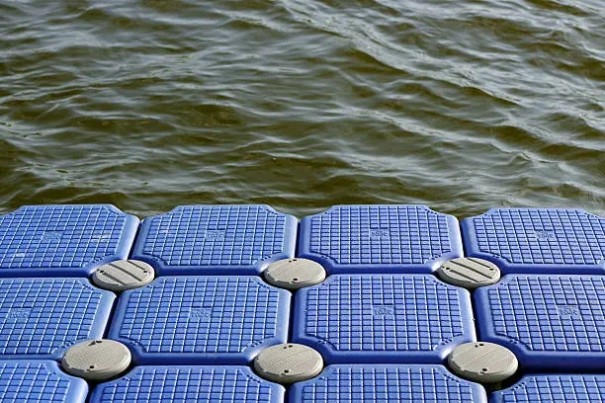
In high-traffic commercial applications such as floating walkways, dining platforms, and marina slips, structural longevity depends on resistance to environmental degradation and mechanical fatigue. Conventional materials often suffer from saltwater electrolysis or timber rot, whereas industrial-grade HDPE maintains structural resilience against ultraviolet radiation and continuous wave action. For commercial infrastructure projects, engineered modular floating dock systems manufactured by marine specialists such as Hisea Dock integrate 19mm-thick interlocking connecting lugs and concave geometric profiling to disperse kinetic wave stress, extending operational lifespans up to 30% beyond conventional stationary piers without demanding routine chemical preservation.
Modern engineering-grade High-Density Polyethylene (HDPE) exhibits exceptional torsional tear resistance, preventing structural fracturing when subjected to multi-directional wave currents. Unlike rigid timber or welded aluminum frames, polymer matrices flex micro-elastically under heavy loads.
To support high-volume commercial foot traffic, these systems incorporate specialized surface treatments and reinforced structural nodes:
- 19mm-thick connecting lugs: Heavy-duty structural attachment points engineered to withstand extreme shear and tensile forces.
- Integrated anti-skid pattern: Surface grooves molded directly into the polymer to ensure high slip resistance even under continuous saltwater spray.
- UV-stabilized polymer matrix: Additives blended during extrusion that prevent material embrittlement and surface degradation from solar radiation.
Modularity, Rapid Scalability, and Reconfiguration
Commercial hospitality and marina operations require physical infrastructure that adapts to fluctuating seasonal demands and changing vessel footprints. Traditional fixed piers are monolithic; expanding or altering their layout requires major civil engineering interventions.
Modular HDPE pontoon systems function as high-load, plug-and-play architectural blocks. Property managers can reconfigure layouts without deploying heavy offshore construction machinery.
- Seasonal capacity expansion: Add temporary viewing decks, PWC berths, or floating event spaces during peak tourism months.
- Rapid layout modification: Transition between single-berth marina slips and wide public promenades using standardized interlocking pins.
- Minimal operational disruption: Assembly and re-arrangement occur on the water surface without shutting down adjacent commercial facilities.
ROI and Life-Cycle Cost Evaluation for Developers
Evaluating the financial viability of commercial waterfront infrastructure requires analyzing Total Cost of Ownership (TCO) rather than initial capital outlay alone. Traditional materials carry substantial, compounding Operational Expenditure (OPEX) liabilities.
Timber structures require chemical stripping, resealing, and frequent structural plank replacements due to marine bore worms and rot. Aluminum installations demand routine non-destructive weld inspections and continuous anode replacements to combat galvanic corrosion.
A 20-year financial feasibility assessment reveals distinct economic advantages for polymer systems:
- Zero chemical treatments: Eliminates recurring maintenance budgets for water-sealed coatings and anti-corrosion paints.
- Reduced labor overhead: On-site maintenance staff can inspect and adjust modular connection pins without specialized marine contractors.
- Extended service lifecycle: High-grade HDPE structures maintain structural integrity for 15 to 20+ years in marine environments.
Consequently, while premium HDPE modular platforms align competitively with structural aluminum in initial CAPEX, their near-zero maintenance profile significantly increases project Return on Investment (ROI).
Sustainability Compliance and Coastal Zone Management
Developing hospitality infrastructure within sensitive estuaries and marine environments requires strict compliance with environmental protection frameworks. Minimizing seabed disruption is critical; progressive coastal zone management guidelines increasingly deter deep-driven structural piling that disturbs benthic habitats or risks leaching wood preservatives into aquatic food chains. Using chemically inert, floating polymer structures allows commercial developers to establish waterfront access while keeping sediment beds intact.
Environmental regulatory bodies increasingly favor floating polymer infrastructure for commercial coastal developments due to verifiable ecological benefits:
- Chemically inert composition: HDPE does not leach heavy metals, copper, or toxic chemical preservatives into surrounding aquatic ecosystems.
- Preserved benthic ecosystems: Eliminates the need for widespread seafloor dredging and permanent underwater pile fields.
- 100% material recyclability: Post-service polymer modules can be melted and re-extruded, supporting circular green-building certifications.
Key Takeaways
| Area | Key Takeaway | Impact/Data |
| Financial ROI | Slash 20-year OpEx by eliminating chemical sealing and pile repairs. | +30% lifespan over piers; 15-20+ yr durability. |
| Operations | Reconfigure modular layouts on-water without deploying heavy offshore machinery. | Zero facility downtime during seasonal expansions. |
| Engineering Specs | Enforce commercial-grade pontoon specs to handle high foot traffic and surges. | >400 kg/m² buoyancy load; 19mm lug thickness. |
| Eco Permitting | Fast-track approvals using non-leaching, pile-free floating architecture. | 100% recyclable; zero seabed dredging required. |
Executive Checklist: Specifying Modular Waterfront Infrastructure
Commercial developers, architects, and marina contractors must enforce rigorous technical criteria when specifying modular floating infrastructure. Selecting substandard consumer-grade docks for commercial applications risks structural failure and liability issues.
Use the following technical specification checklist to evaluate modular HDPE platforms for commercial deployment:
- Load Capacity & Buoyancy: Verify that point-load buoyancy exceeds 350 kg/m² for general pedestrian walkways and 400+ kg/m² for commercial dining or equipment platforms.
- Wall Thickness & Lug Reinforcement: Ensure pontoon wall thickness exceeds 7mm and connection lugs measure at least 19mm thick to resist tensile tear.
- UV Stabilization Rating: Confirm the material compound contains UV-8 or UV-15 inhibitors to prevent UV degradation over a 15-year minimum lifecycle.
- Surface Safety Compliance: Enforce molded anti-skid patterns and rounded safety corners that comply with public marina accessibility and safety codes.
- Dynamic Mooring Engineering: Specify elastic Seaflex mooring systems or pile-slide brackets engineered for the site’s specific 100-year storm wave height and tidal range.