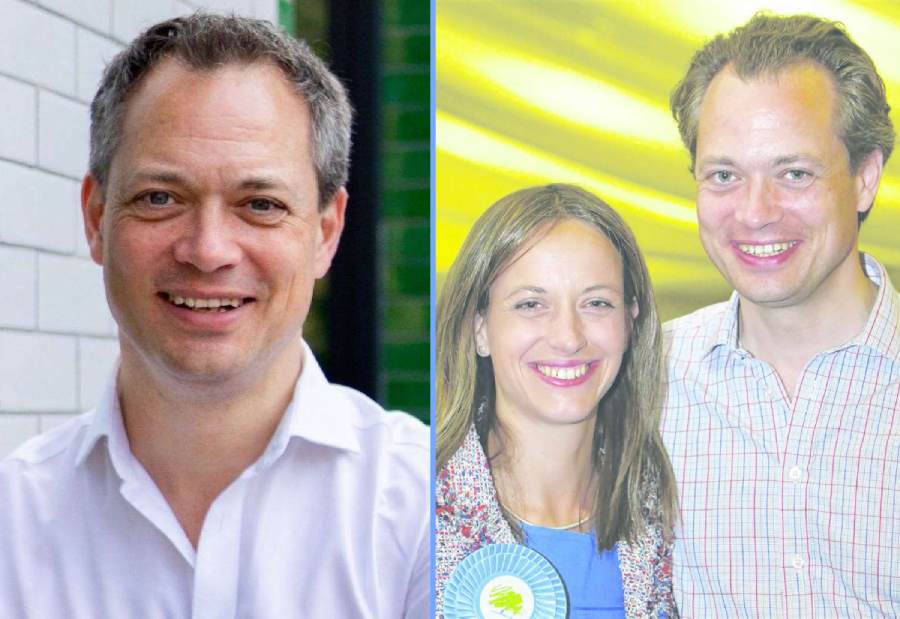
If you spend enough time looking at the people quietly building the businesses that will define the next few decades, you start to notice a pattern. The loudest names rarely belong to the most interesting builders. Marcus Whately is a good example of this. He is not a household name, he does not chase headlines, and he has somehow managed to spend twenty-five years founding and scaling companies across software, renewable energy, and food production without ever becoming a media personality. Yet his fingerprints are all over some genuinely consequential British ventures, and if you care about where clean energy and sustainable food are heading, his career is worth understanding.
Who Is Marcus Whately, Really?
At his core, Marcus Whately is a British entrepreneur and investor who has built a reputation around one stubborn idea: that doing the responsible thing and building a profitable business are not opposites. Over the course of his career he has launched and led companies in technology, renewable energy, and agriculture, and the common thread running through all of them is a belief that sustainability can be a commercial engine rather than a cost center. He has worn a lot of hats over the years, from software boss to energy financier to chief executive of a vertical farming operation, but the underlying mission has stayed remarkably consistent. He likes solving practical problems, and he likes solving them in ways that leave the world in slightly better shape than he found it.
Early Life and an Oxford Education
Whately’s story starts the way a lot of thoughtful entrepreneurs’ stories do, with a serious curiosity about how the natural world actually works. He studied Biological Sciences at Trinity College, University of Oxford, in the late 1990s, and that grounding in biology turned out to be more than just an academic footnote. A lot of people who study the sciences end up in research or corporate roles, but Whately took a different fork in the road. He used what he learned about ecological systems and scientific reasoning as the foundation for a career in business, which is a less obvious path than it sounds. Understanding how living systems balance inputs, outputs, and waste is, when you think about it, surprisingly good preparation for someone who would go on to spend decades trying to make industrial processes cleaner and more efficient. That scientific lens shows up again and again in the way he frames his ventures.
The Artisan Software Years
Before anyone associated his name with farms or biomass plants, Marcus Whately was a technology entrepreneur. In the early 2000s he founded a B2B software and technology business, building it up through a mix of steady organic growth and well-chosen acquisitions. This was not a hobby project. Under his leadership the company earned Microsoft Gold Partner status and delivered enterprise-grade technology to a roster of serious clients, including names like Starbucks, GlaxoSmithKline, Deloitte, and Autoglass. Those are not the kinds of customers who sign contracts with companies that cannot deliver, so winning and keeping them says a lot about how the business was run. After several years of building the company into a genuine player, Whately exited the business in the mid-to-late 2000s. That early chapter matters because it taught him how to scale an organization, manage demanding corporate relationships, and execute a successful exit, all of which became transferable skills he carried into capital-intensive industries later on.
Stepping Into Renewable Energy With Estover Energy
The pivot from software to renewable energy is where Whately’s career really starts to look distinctive. In 2009 he co-founded Estover Energy, a company focused on biomass and combined heat and power plants. The basic premise was straightforward but ambitious: help industrial clients, particularly food and pharmaceutical factories, replace carbon-heavy energy sources with cleaner alternatives that also made financial sense. This is a much harder kind of business than software. Energy infrastructure projects are slow, expensive, heavily regulated, and demand enormous amounts of patient capital before they ever produce a return. Whately spent roughly a decade as co-chief executive of the company, and during that time Estover raised around three hundred and seventy-five million pounds in institutional infrastructure capital. Raising that kind of money is not something you do with a good pitch deck and a smile. It requires credibility, a track record, and the ability to convince sophisticated investors that a long-horizon, capital-hungry project will actually deliver. The decarbonization work Estover did for factories was, in many ways, a preview of the larger sustainability mission that would come to define his later ventures.
GrowUp Farms and the Vertical Farming Bet
In 2018, Whately took the helm of GrowUp Group and its sister operation, GrowUp Farms, stepping into the world of vertical farming. If you are not familiar with the concept, vertical farming is exactly what it sounds like: growing crops in stacked, controlled-environment systems rather than in open fields. The appeal is enormous in theory. You can grow food close to where people actually live, use dramatically less land and water, avoid pesticides, and produce consistent harvests regardless of the weather outside. The challenge is that making the economics work at scale has defeated plenty of well-funded competitors. GrowUp Farms focused on producing fresh salad products through this kind of innovative, sustainable growing system, and Whately’s leadership there represented a logical extension of everything he had done before. It married his scientific background, his experience financing capital-intensive infrastructure, and his long-running belief in sustainability into a single venture aimed squarely at one of the biggest challenges humanity faces, which is how to feed a growing population without wrecking the planet in the process. It is worth noting that public references to his exact current role at GrowUp have varied over time, so anyone tracking his present-day involvement should check the company’s latest official materials.
Marcus Whately and Helen Whately: Two Careers, One Household
You cannot tell the full story of Marcus Whately without mentioning Helen Whately, because she is genuinely the more publicly recognized of the two. Helen Whately is a British Conservative politician who has served as the Member of Parliament for Faversham and Mid Kent, and who has held senior government positions, including Minister of State for Social Care. The couple reportedly met during their time at Oxford and married in 2005, and they have three children together. What makes the pairing interesting is the way their two worlds quietly overlap. Helen Whately’s political work has touched on health, social care, and policy areas that intersect with questions of energy and food, while Marcus Whately has spent his career building the kind of sustainable businesses that those policies often aim to encourage. It is a household where public service and private enterprise sit at the same dinner table, which is not something you see every day.
A Low Profile in a Loud World
One of the more striking things about Marcus Whately is how little he seeks the spotlight, especially considering what he has built and who he is married to. He does not have a Wikipedia page in his own right, he keeps his personal life firmly out of view, and he is far better known within investor circles and industry publications than he is to the general public. In an era where founders often treat personal branding as a core part of the job, this is almost refreshingly old-fashioned. The relative privacy around his family, including very limited public information about his children, reflects a deliberate choice rather than an accident. It suggests someone who would rather let the businesses speak for themselves than spend energy building a personality cult around his own name. For a journalist or researcher, this can be frustrating, but it tells you something real about the man’s priorities.
A Philosophy Built on Sustainability and Substance
If there is a single idea that unifies Marcus Whately’s career, it is the conviction that environmental responsibility and commercial viability can reinforce each other rather than fight. This is not a vague aspiration in his case. Every major venture he has touched, from decarbonizing factories through Estover Energy to growing pesticide-free salad in controlled environments at GrowUp Farms, has been a practical attempt to prove that point. He seems genuinely uninterested in sustainability as a marketing slogan and far more interested in it as an engineering and financial challenge to be solved. That distinction matters. Plenty of companies wave the green flag while changing very little about how they operate. Whately’s track record suggests someone trying to bake sustainability into the actual mechanics of a business, the way the energy is sourced, the way the food is grown, the way the capital is structured, rather than bolting it on as an afterthought.
What Makes His Approach Different
A lot of entrepreneurs are specialists. They find one industry, master it, and stay there. Whately is more of a translator, someone who takes the lessons learned in one sector and applies them in another. The discipline he developed managing demanding enterprise software clients carried over into managing complex energy projects. The fundraising muscle he built financing biomass infrastructure became useful when stepping into the capital-intensive world of vertical farming. The scientific instincts from his Oxford days inform the way he evaluates whether a sustainable technology will actually work or just sounds good in a press release. This ability to move across software, energy, and agriculture while keeping a consistent philosophy is rarer than it looks. Most people who try to be generalists end up shallow in everything. Whately has instead managed to go deep in several genuinely difficult fields, which is partly why investors have been willing to back him with serious money over the years.
Lessons Aspiring Founders Can Take From His Career
There is plenty to learn here even if you never plan to build a biomass plant or a vertical farm. The first lesson is patience. Whately’s most ambitious ventures operate on timelines measured in years and require enormous upfront investment before any payoff arrives, which is the opposite of the get-rich-quick mindset that dominates a lot of startup culture. The second lesson is that your background is rarely wasted. A biology degree might seem like an odd launchpad for an energy and food entrepreneur, but in his case it became a genuine competitive advantage. The third lesson is about reputation. Raising hundreds of millions of pounds and signing blue-chip clients only happens when people trust you to deliver, and that trust is built slowly through a track record of actually doing what you said you would do. Finally, his career is a reminder that you do not need to be loud to be influential. Quiet, consistent execution can build something far more durable than a viral moment ever could.
The Road Ahead for Sustainable Business
Where does someone like Marcus Whately fit into the bigger picture? Arguably, right at the center of it. The challenges his companies have tackled, cleaner industrial energy and more sustainable food production, are only going to grow in importance as climate pressures intensify and populations expand. The work of decarbonizing factories and rethinking how we grow food is not a niche concern anymore; it is rapidly becoming one of the defining economic stories of our time. Entrepreneurs who can make the sustainable option also the smart business option will be enormously valuable, and Whately has spent a quarter of a century practicing exactly that craft. Whatever he turns his attention to next, the underlying pattern is likely to hold: identify a hard, important problem, apply scientific rigor and patient capital, and build something that proves doing good and doing well can be the same thing.
FAQs
Who is Marcus Whately?
Marcus Whately is a British entrepreneur and investor with around twenty-five years of experience building companies across software, renewable energy, and sustainable food production. He is best known for co-founding Estover Energy and leading GrowUp Farms, and for his long-standing belief that environmental responsibility and profitability can go hand in hand.
Is Marcus Whately married to Helen Whately?
Yes. Marcus Whately is married to Helen Whately, the Conservative MP for Faversham and Mid Kent who has served as Minister of State for Social Care. The couple reportedly met at Oxford, married in 2005, and have three children, making them an unusual pairing of private enterprise and public service.
What companies has Marcus Whately founded or led?
He founded a B2B technology business in the early 2000s that became a Microsoft Gold Partner before he sold it, co-founded Estover Energy in 2009 to decarbonize industrial energy through biomass and combined heat and power, and took the helm of GrowUp Farms in 2018 to grow sustainable salad products using vertical farming.
What is Marcus Whately’s net worth?
There is no reliable public figure for his net worth, and he has never disclosed his personal finances. Given his successful business exits and senior roles in capital-intensive ventures, it is reasonable to assume he is comfortably wealthy, but any specific number floating around online is speculation rather than verified fact.
Why isn’t Marcus Whately better known to the public?
Despite his business achievements and his marriage to a prominent politician, Whately deliberately keeps a low profile, with no Wikipedia page of his own and very little personal information in the public domain. He is far better known within investor and industry circles than in mainstream media, which appears to be a conscious choice.
Conclusion
Marcus Whately is the kind of entrepreneur who is easy to overlook precisely because he is not trying to be seen. He has spent twenty-five years building real companies that solve real problems, from his early days running a successful technology business to co-leading a major renewable energy firm and then taking on the formidable challenge of vertical farming. His marriage to Helen Whately, one of British politics’ more recognizable figures, adds an intriguing dimension to his story, creating a household where public policy and private enterprise quietly inform one another. But the heart of the story is his consistent, unglamorous commitment to the idea that sustainability and profitability belong together. In a world full of noise, Marcus Whately is a reminder that some of the most meaningful work gets done by people who would rather build than broadcast. If you want to understand where energy and food are heading, his career is a quietly excellent place to start.